


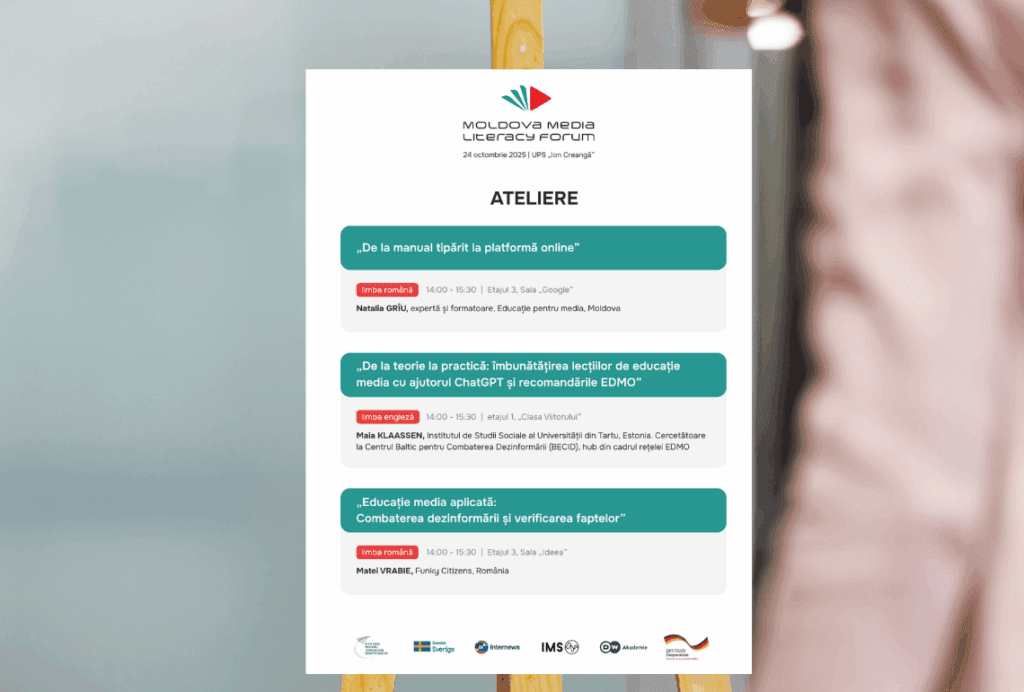
“From printed textbooks to online platforms”; “From theory to practice: improving media education lessons with ChatGPT and EDMO recommendations”; “Applied media education: combating misinformation and fact-checking” – these were the topics of the workshops organized as part of the Media Education Forum, held on October 24 in Chișinău.
Designed to share experience and best practices in the field, the workshops brought together teachers, library representatives, and other actors involved in the educational process to discuss new opportunities for teaching students to think critically.
The workshops were moderated by Natalia Grîu, media education expert and trainer (Moldova), Matei Vrabie, program manager at Funky Citizens (Romania), and Maia Klaassen, researcher at the Institute of Social Studies at the University of Tartu (Estonia).
Workshop "From printed textbook to online platform"
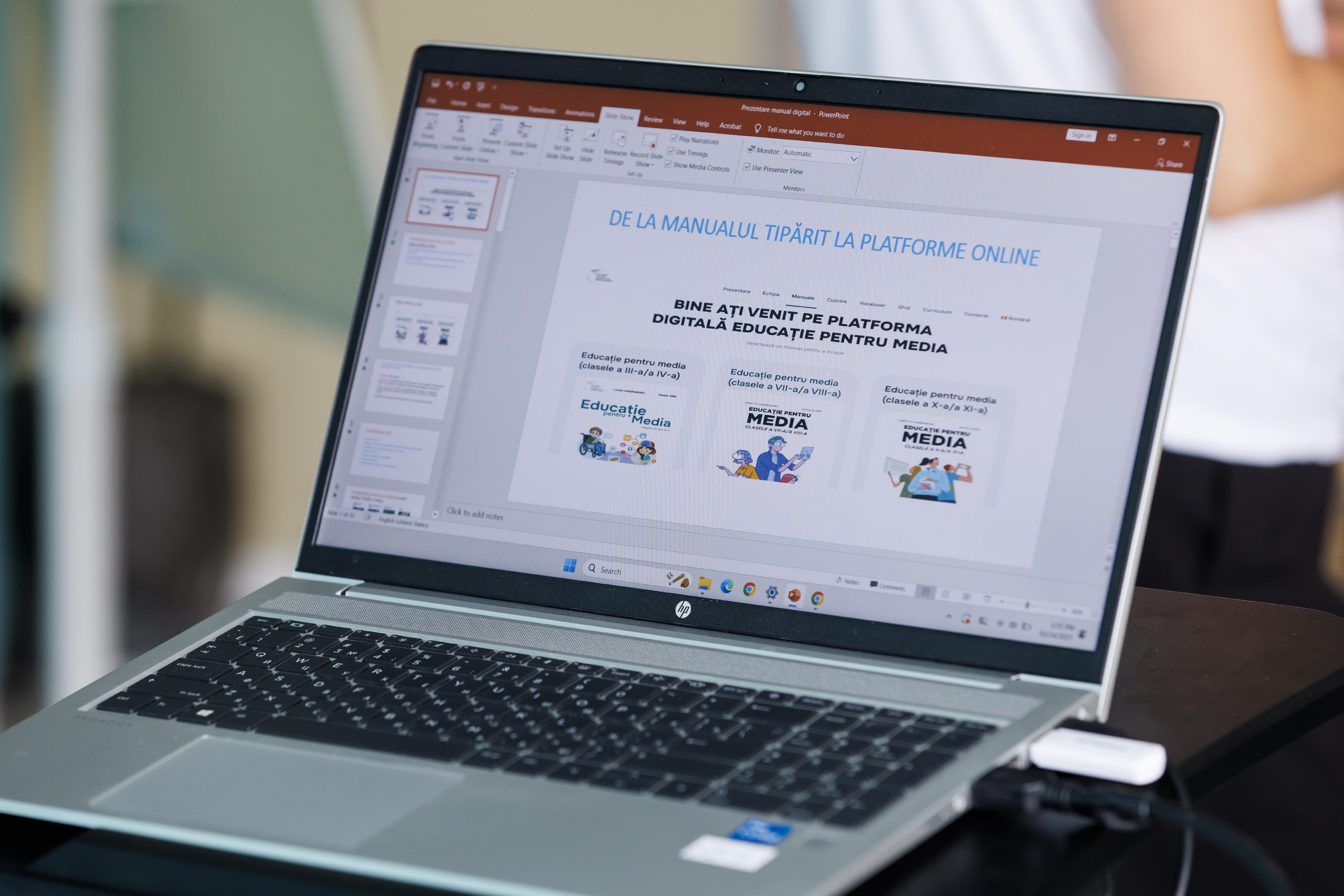
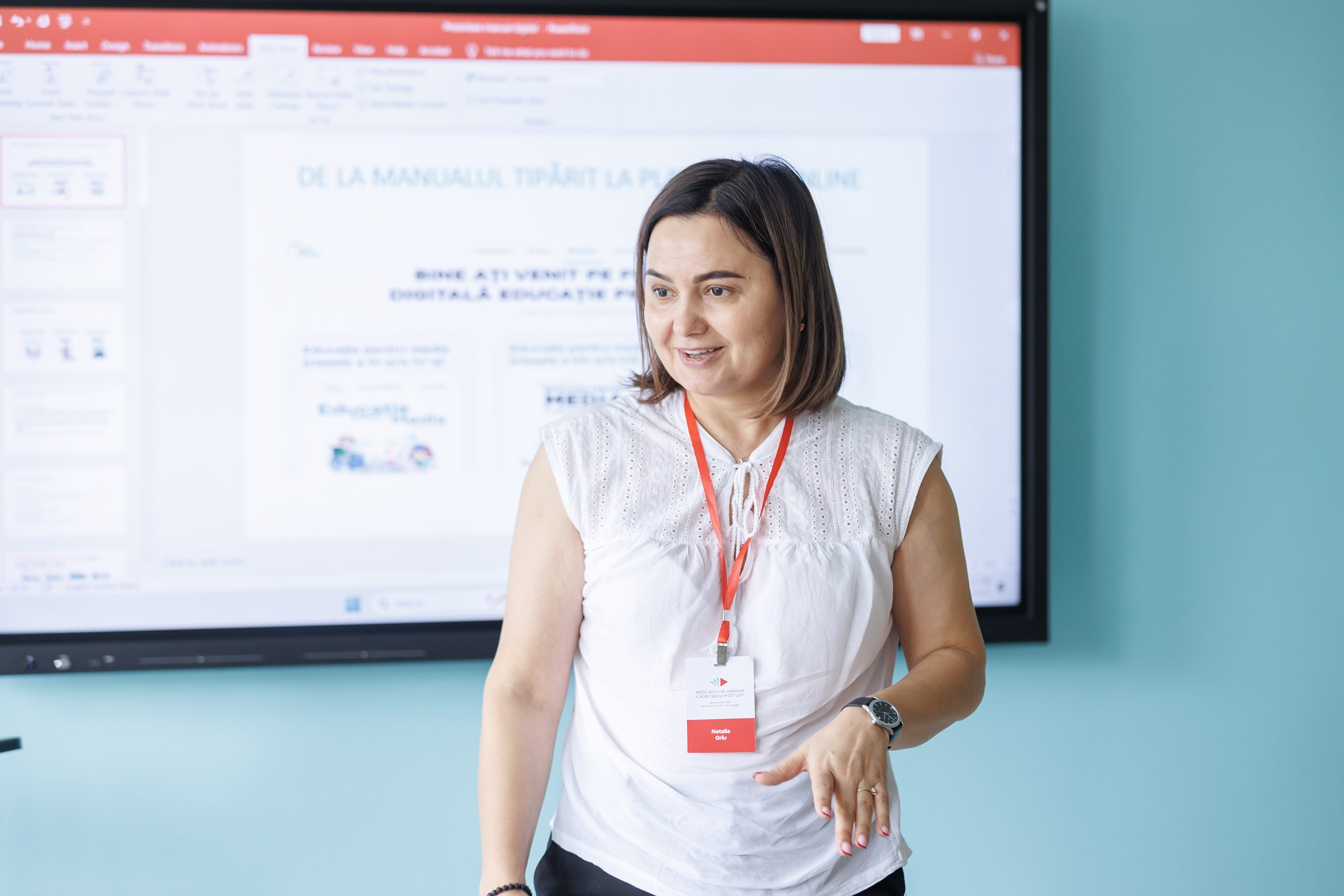
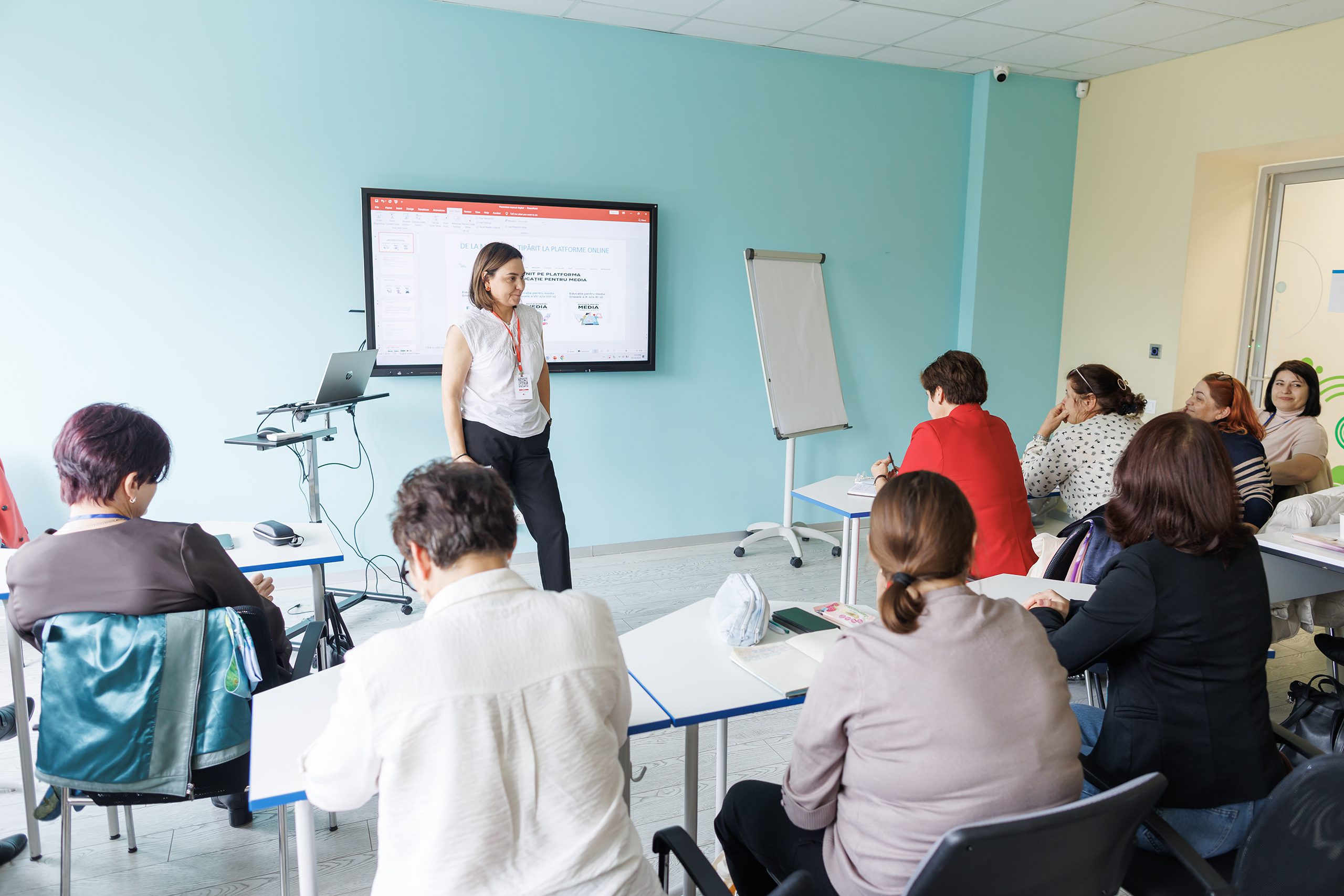
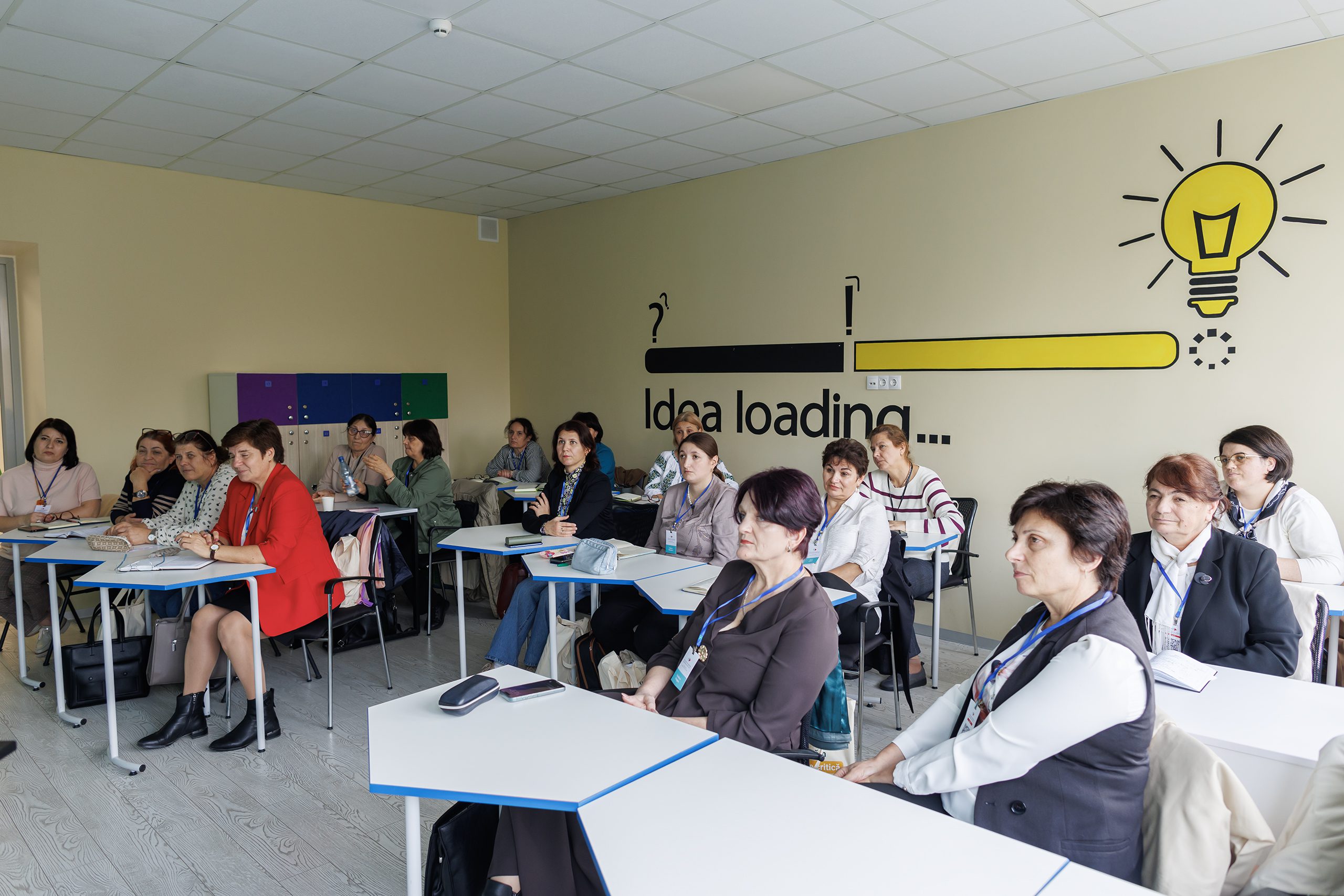
Teachers who chose to work in the workshop “From printed textbook to online platform,” moderated by Natalia Grîu, co-author of printed and digital media education textbooks, discussed the opportunities offered by the new educational resource.
“Media education is the first optional subject in our country that has a curriculum, a guide, and a printed and digital textbook. We can be proud that we are among the pioneers in this field in South-East Europe,” said Natalia Grîu. Speaking about the benefits of the digital textbook, the expert asked the participants to take the role of both teacher and student in order to better understand the opportunities offered by the digital textbook and to answer the question: “If I were a textbook, which would I want to be—printed or digital? And why?“
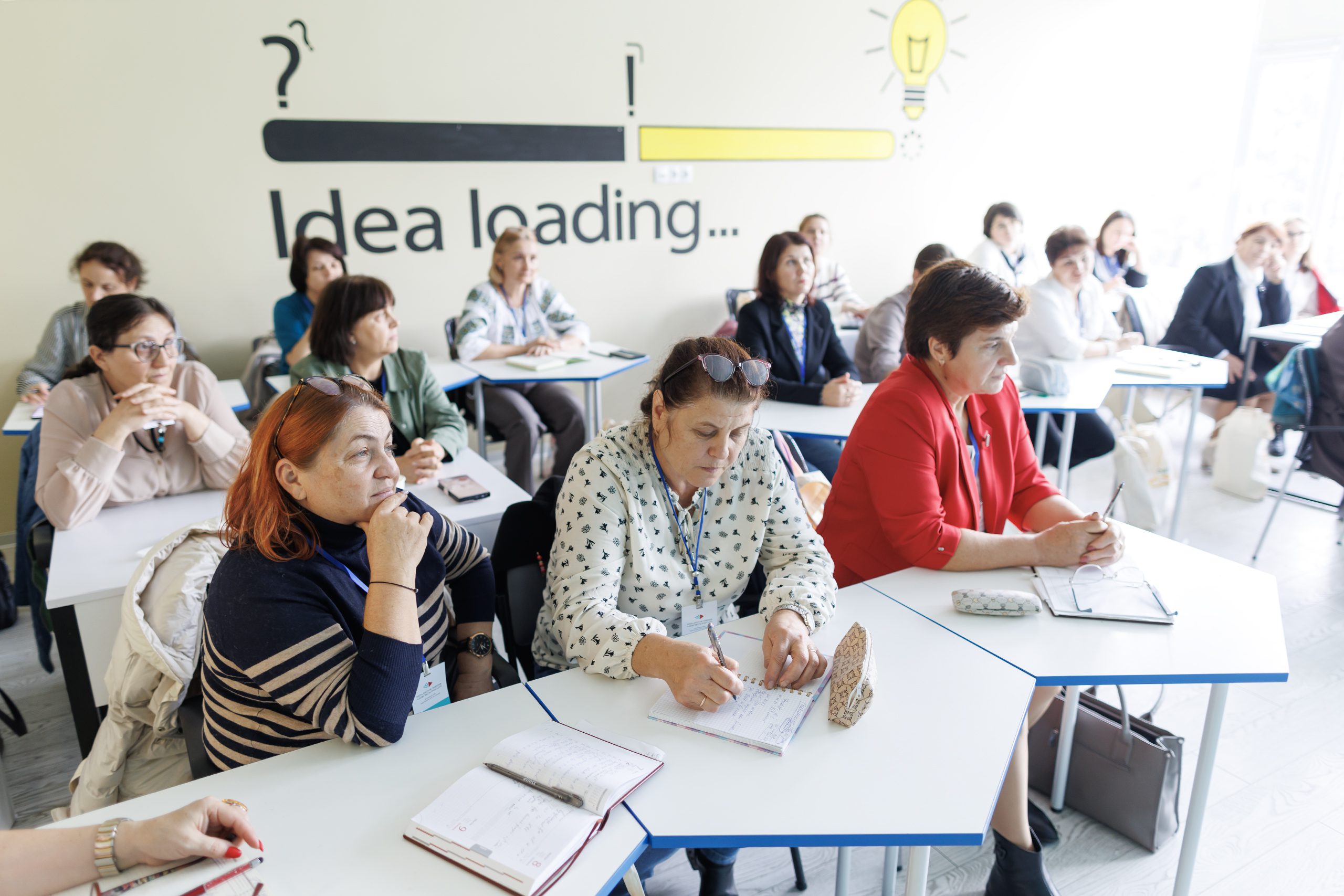
The answers were predominantly in favor of the digital textbook, which “helps teachers,” “students like it,” “it is a digital resource, but it does not replace the printed textbook in school,” “is useful to anyone, anywhere, just a click away,” “students are delighted with the printed textbook with digital support and look forward to their Media Education class.” The teachers also reviewed other professional advantages and benefits they encounter when teaching the content of this course, such as exploring new working methods and techniques, identifying tasks that stimulate reading, emphasizing critical analysis to encourage debate, using multimedia extensions, integrating video elements, performing interactive tasks in different formats, etc.
Workshop "From theory to practice: improving media education lessons with ChatGPT and EDMO recommendations"
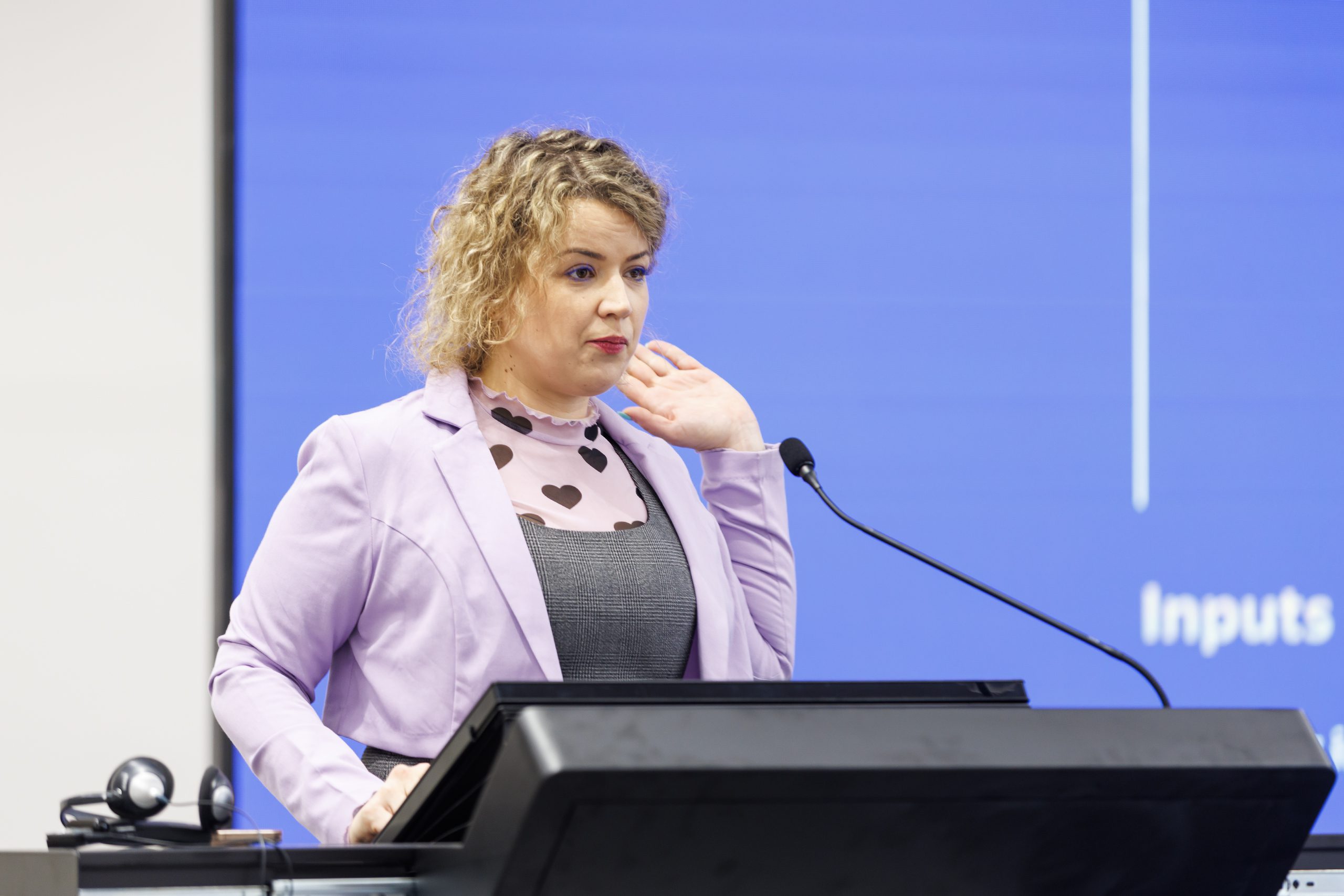
Maia Klaassen turned the workshop she moderated into a space for discussion, but also one that inspires the community of educators. After a presentation of the best and most effective practices for strengthening information resilience in the Baltic States (Estonia, Latvia, and Lithuania) in a plenary session at the Media Education Forum, the researcher continued the topic at the workshop “From theory to practice: improving media education lessons with ChatGPT and EDMO recommendations.”
“In Estonia, we have a very high level of teacher autonomy. Thus, each teacher decides for themselves how to apply the curriculum in class. Media education has been included in the curriculum in Estonia since 2011. However, for things to change visibly, simply including media education in the school curriculum is not enough. For a policy to be effective, a regulatory framework, accountability measures, and social norms are also necessary, and certain regulations need to be anticipated years in advance so that we don’t end up constantly running behind rapidly evolving technologies,” said Maia Klaassen.
The researcher also said that “one of the lessons she learned in Estonia is that she spent too much time discussing who we are fighting and how.” “For example, the fight against misinformation on social media is impossible to win today. We cannot turn back time. Therefore, instead of resilience, perhaps we should talk about resistance, and about media literacy as a tool that people can use to strengthen their resilience. We must fight for the right to quality information online,” urged the speaker.
During the workshop, participants learned about several types of successful interventions dedicated to social resilience and combating disinformation, carried out in Estonia and other European countries that are members of the EDMO hub, which includes Moldova and Ukraine. “Quality information today has to face several challenges, including those generated by artificial intelligence (AI). I encourage you to use AI, including in the media education segment. However, be vigilant. Check thoroughly. Don’t let AI manage content for you,” the expert concluded.
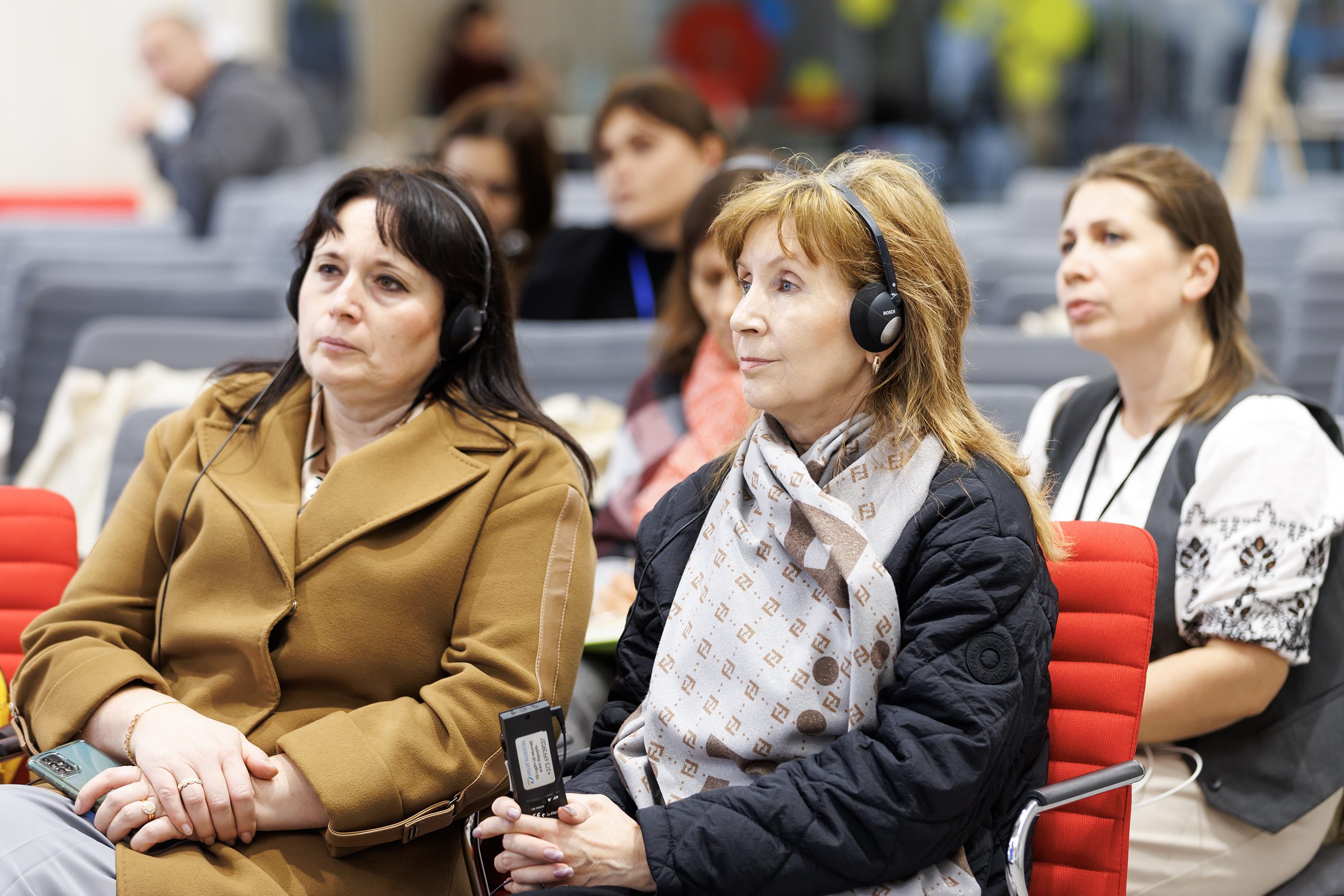
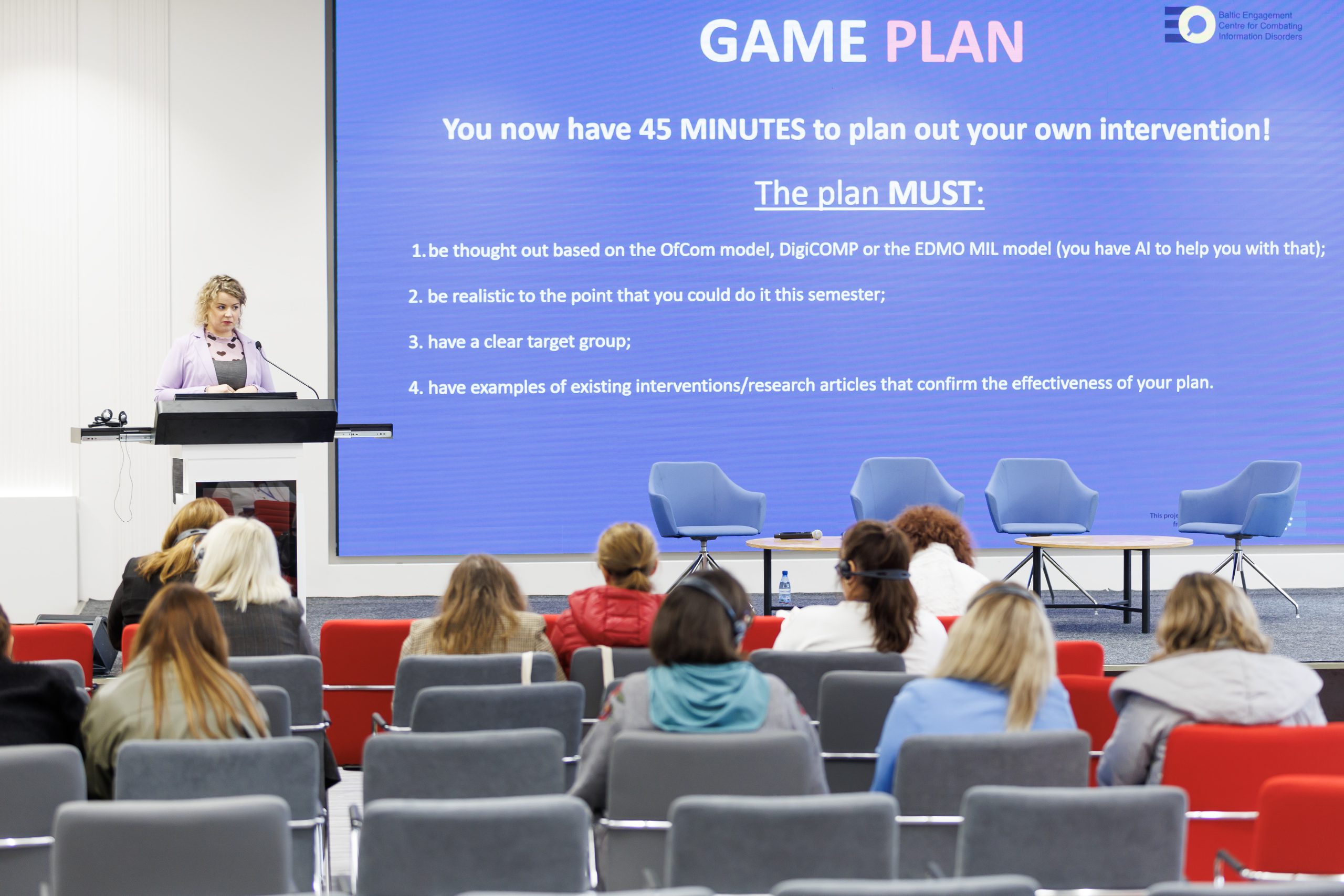
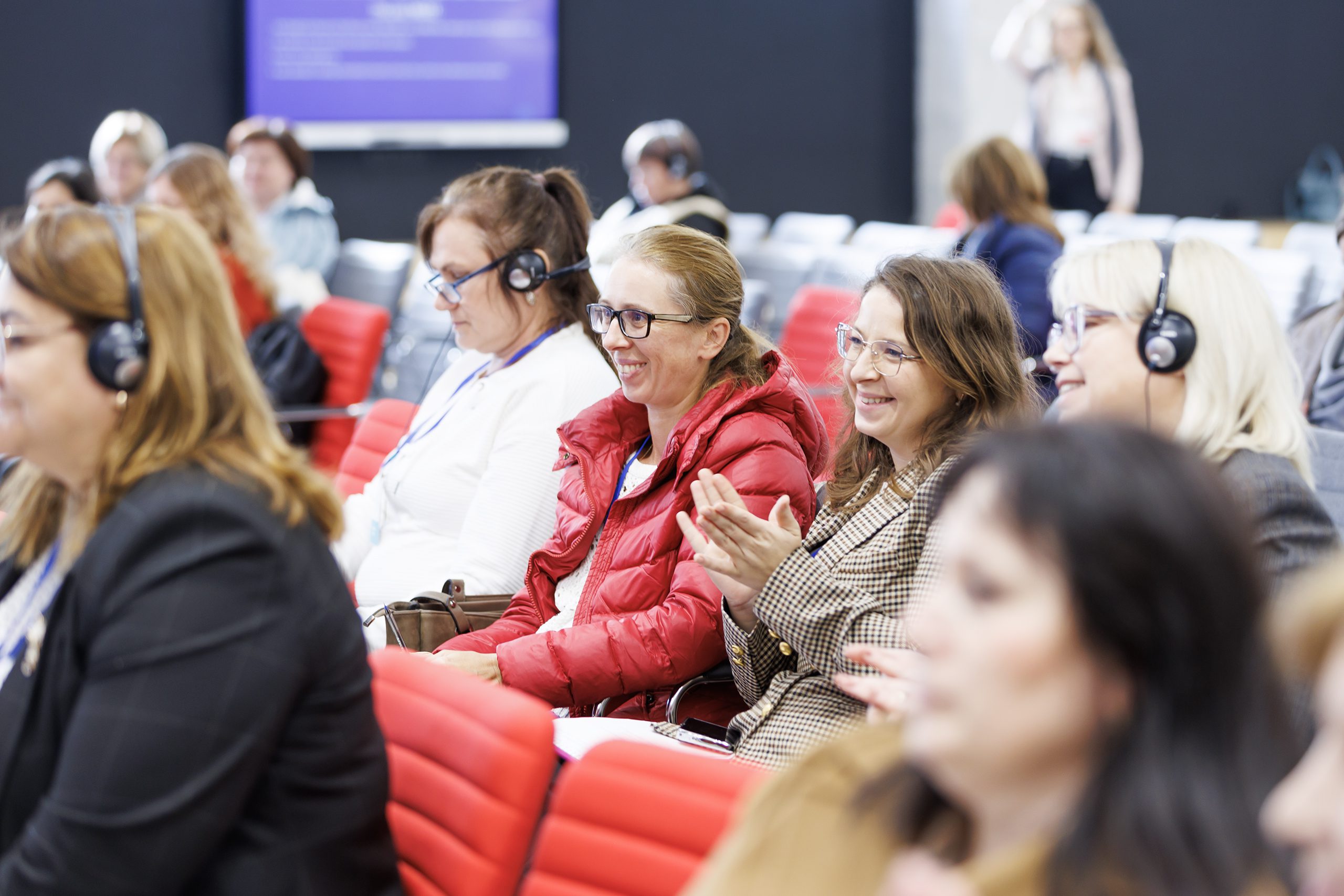
Workshop "Applied Media Education: Combating Disinformation and Fact-Checking"
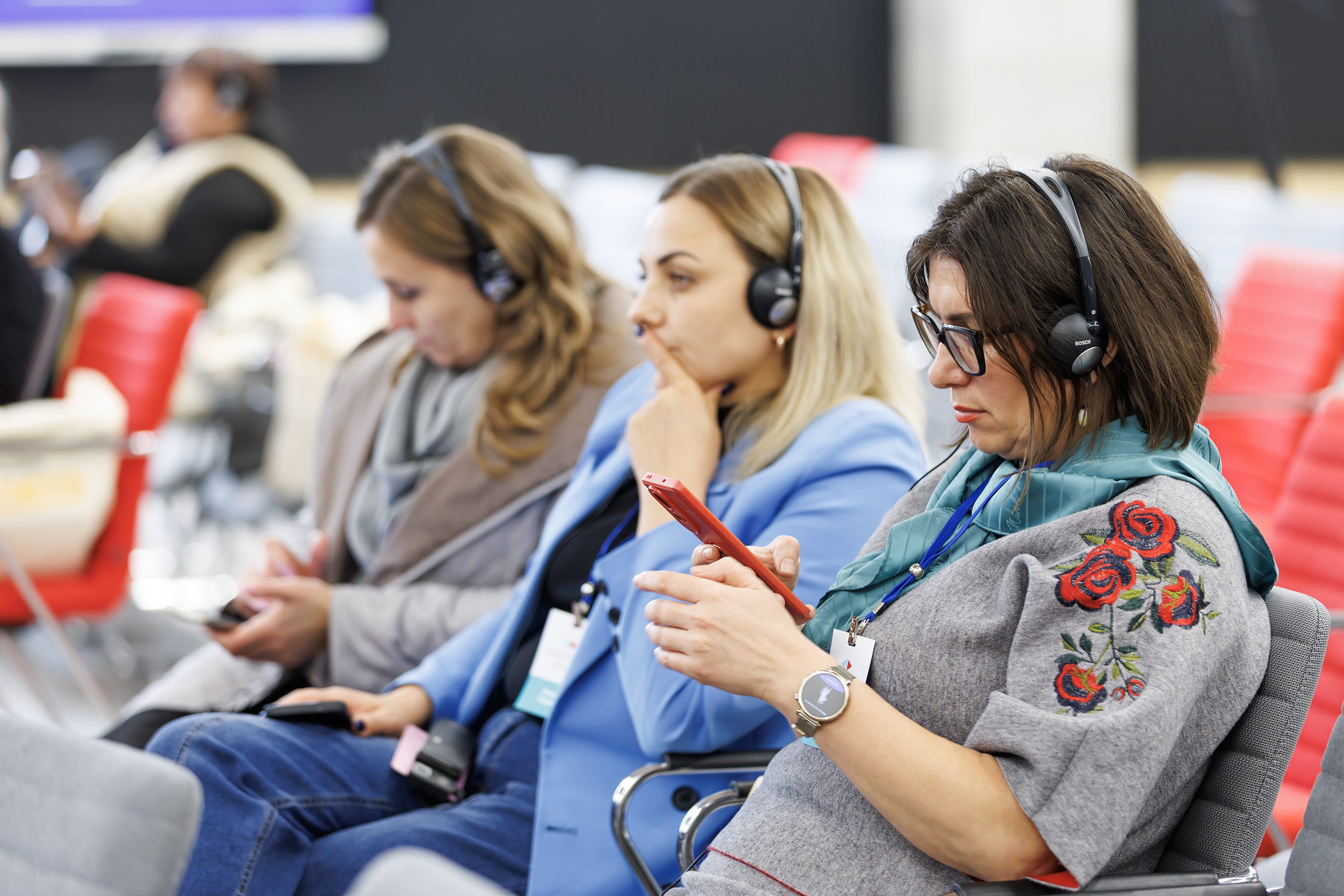
Matei Vrabie, university professor and program manager at Funky Citizens in Romania, brought together all those interested in “Applied Media Education: Combating Disinformation and Fact-Checking” for the workshop.
Speaking about his experience and that of his colleagues at Funky Citizens, Matei Vrabie pointed out that currently “combating disinformation and fact-checking is no longer just the responsibility of journalists. It is a civic responsibility of all content consumers. Every citizen has a duty to check sources, compare information, and critically analyze what they read or share. This attitude contributes to the formation of an informed community, capable of distinguishing between truth and manipulation, between opinion and verifiable fact,” he believes.
Another message that emerged from the workshop facilitated by Matei Vrabie is that fact-checking is no longer just the responsibility of media outlets, but also of schools, cultural centers, libraries, and citizens. “Everyone must develop their critical thinking skills, ask questions, and make informed choices based on the decisions they make,” said the expert.
Discussing what cases of disinformation they have recently encountered in the Media Education class they teach, as well as what types of false information they have encountered among their students, teacher Galina Sârbu from Brânzenii Vechi Gymnasium, Telenești district, mentioned that the biggest challenges remain social networks, where each user appears as a creator and consumer of content. “This contributes to the proliferation of falsehoods and misinformation when certain information is distributed without being verified by official sources,” the teacher noted.
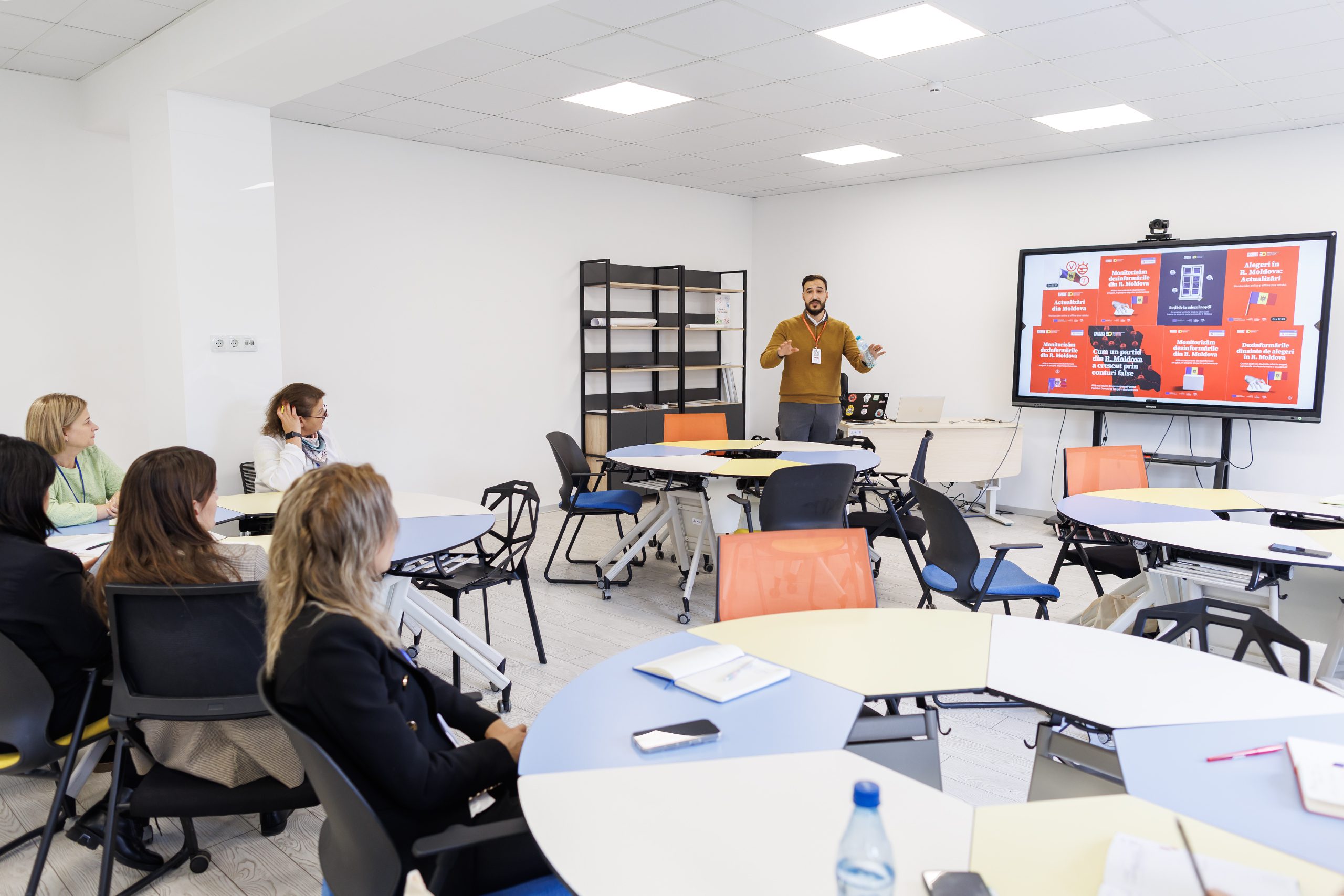
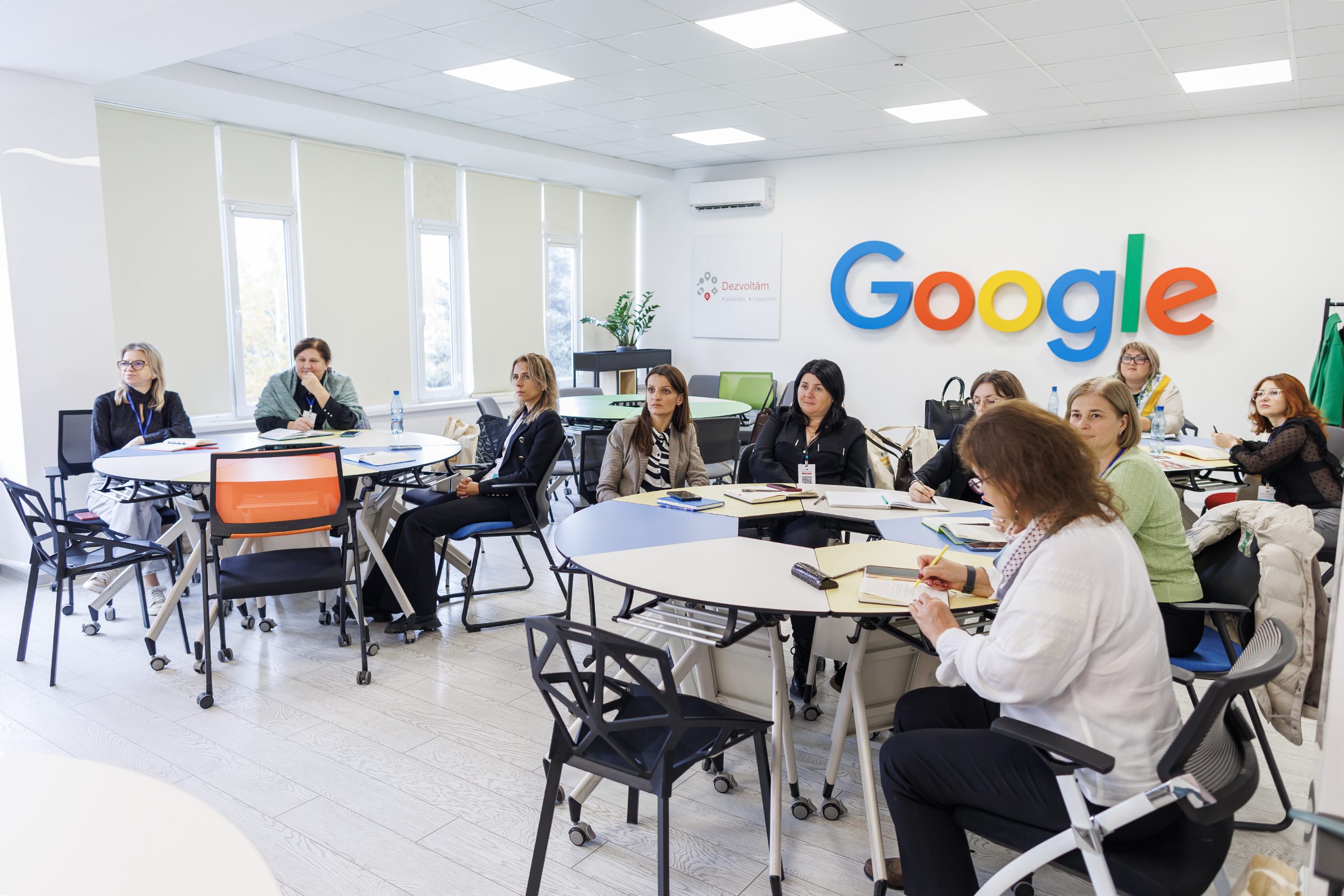
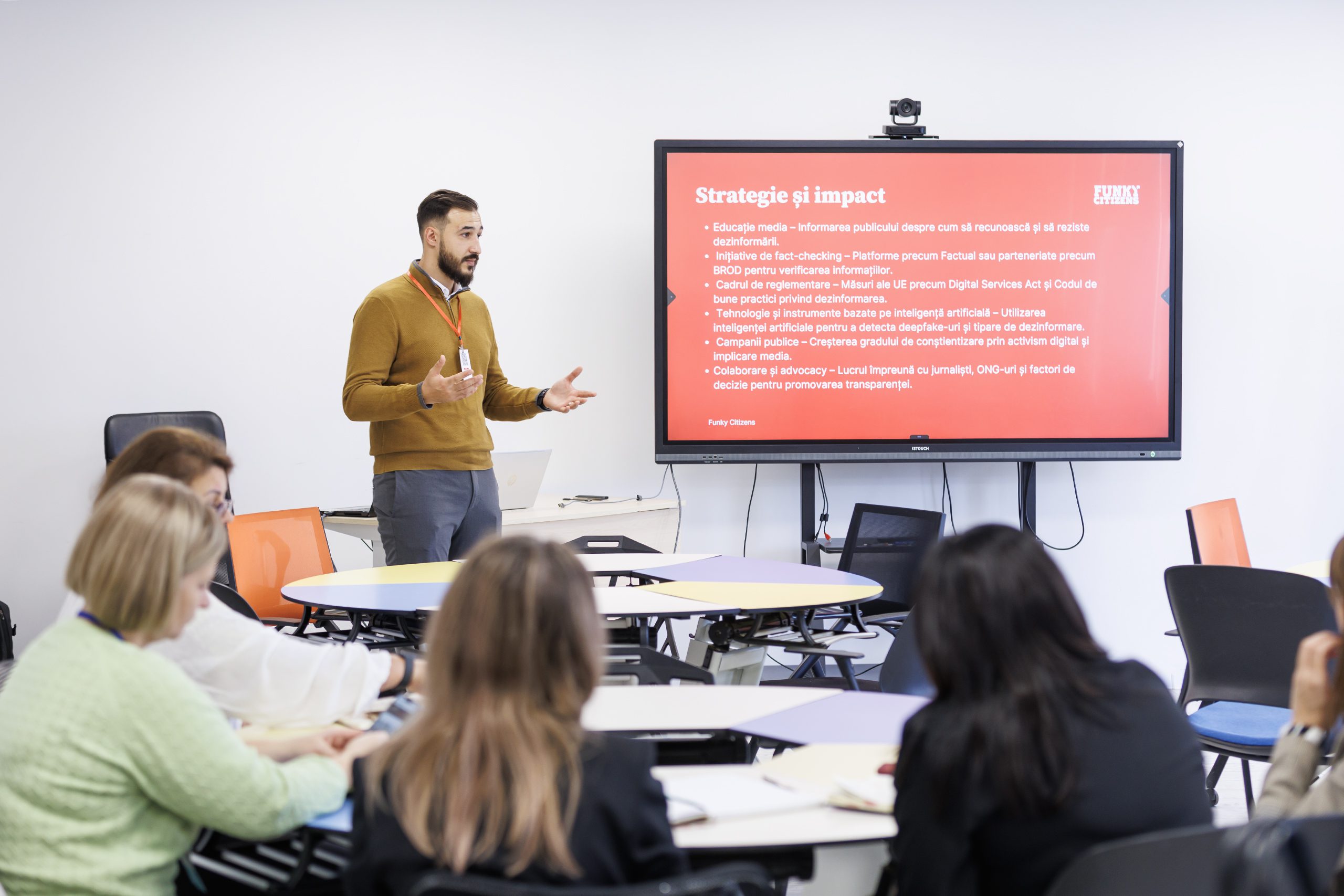
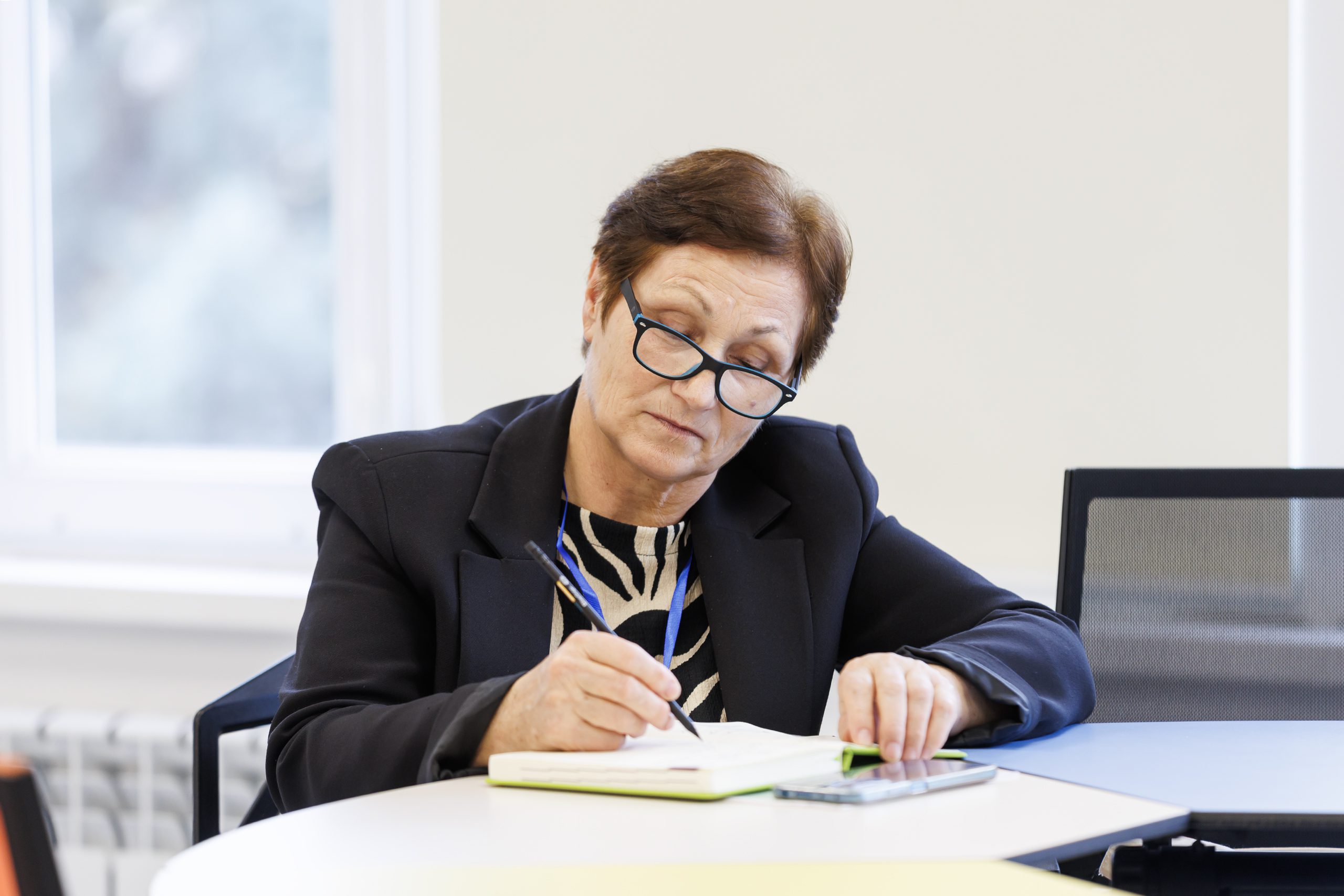
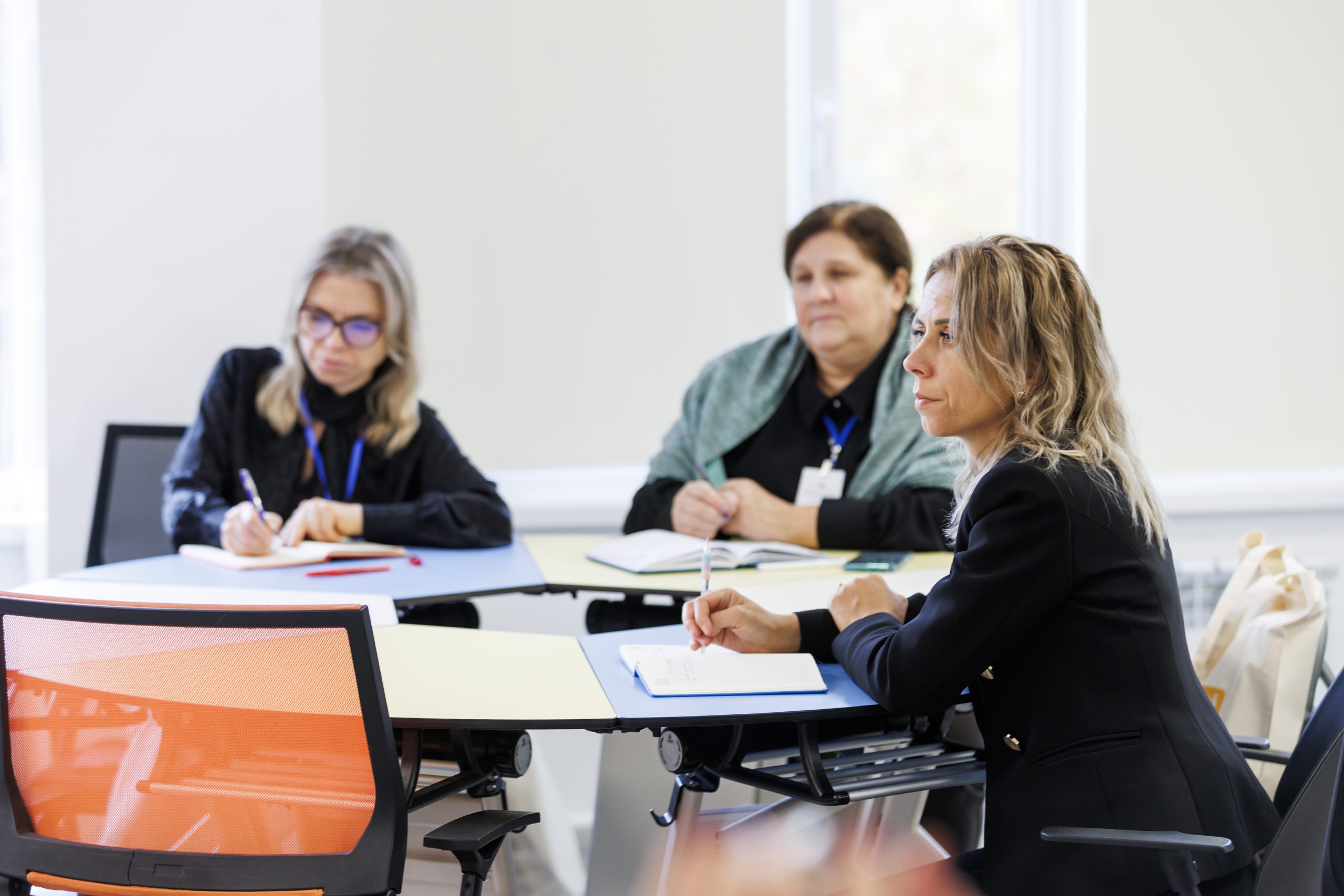
The third edition of the Media Education Forum was an opportunity to make statements, learn from the experiences of others, and outline new perspectives and activity plans for the coming years.
Elena Ciorici, Theoretical Lyceum “Alexei Mateevici“, Șoldănești
Those of us who came to the Forum are promoters of change. Through media education, we are shaping a generation that not only consumes information, but also understands, analyzes, and uses it responsibly. I accepted the challenge of teaching Media Education, and I am glad that students are becoming more critical of the information they interact with.
Victoria Vasilica, Institutional Management and Development Coordinator, Librarians Association of the Republic of Moldova
Participating in the third edition of the Media Education Forum is a valuable and inspiring experience. In an era of intense information flow and the amplification of fake news, such platforms for dialogue are becoming increasingly necessary for strengthening a responsible media culture. As a representative of the Librarians’ Association of the Republic of Moldova, I believe that libraries also have an active role to play in cultivating critical thinking and media literacy. Through educational activities, workshops, and resources offered to the public, librarians are partners in media literacy initiatives and actively contribute to the implementation of the Interministerial Plan for the Integration of Information and Media Literacy (AIM) actions.
Angela Suhin, teacher, deputy director for education, Merenii Noi Gymnasium-Kindergarten, Anenii Noi
The issues discussed at the Forum are very relevant and actual. I have taken away many useful ideas. We will now go to institutions to discuss them so that they can be put into practice. Each trainer managed to give us valuable recommendations to keep up with new trends in media education.
Rodica Buiacov, teacher at the Theoretical Lyceum “Onisifor Ghibu”, Orhei
Teaching Media Education since 2017, I have noticed that children’s interest in this optional subject has grown from year to year. I am happy when students choose Media Education from the list of optional subjects. They are often more advanced in technology, and we learn from them. That is why, it’s important that the content they are interested in is also found in other subjects.
Elena Lungu-Jalbă, teacher at the Theoretical Lyceum “Onisifor Ghibu“, Chișinău
The Media Education Forum is a true argument for the power of knowledge and critical thinking in a world dominated by information. I felt that every voice present was important, that together we can transform media education into a pillar of democracy. All the experts offered ideas and examples worth following – from national policies and innovative methods to success stories from the Baltic States, which have shown that media education can become a shield against manipulation and misinformation. I left this event with the firm conviction that media education is no longer a luxury, but a vital necessity for the education of younger generations.
The third Media Education Forum brought together around 100 participants: teachers, librarians, local and foreign experts, authorities, representatives of partner organizations, etc. The event, organized by the IJC every two years, facilitates the exchange of opinions and ideas, providing an opportunity to analyze trends and perspectives in the field.
The third edition of the Media Education Forum was organized by the Independent Journalism Center as part of the projects “Media Literacy Advancement and Support to Moldovan Media,” supported by Sweden and implemented by Internews, “Advancing Information and Media Literacy – Phase II,” implemented by International Media Support (IMS) with financial support from the Danish Government, and “Strengthening Media Education Skills in the Republic of Moldova: Piloting an Integrated Approach in Formal Education,” implemented in partnership with Deutsche Welle Akademie and with the support of the German Federal Ministry for Economic Cooperation and Development (BMZ).

