


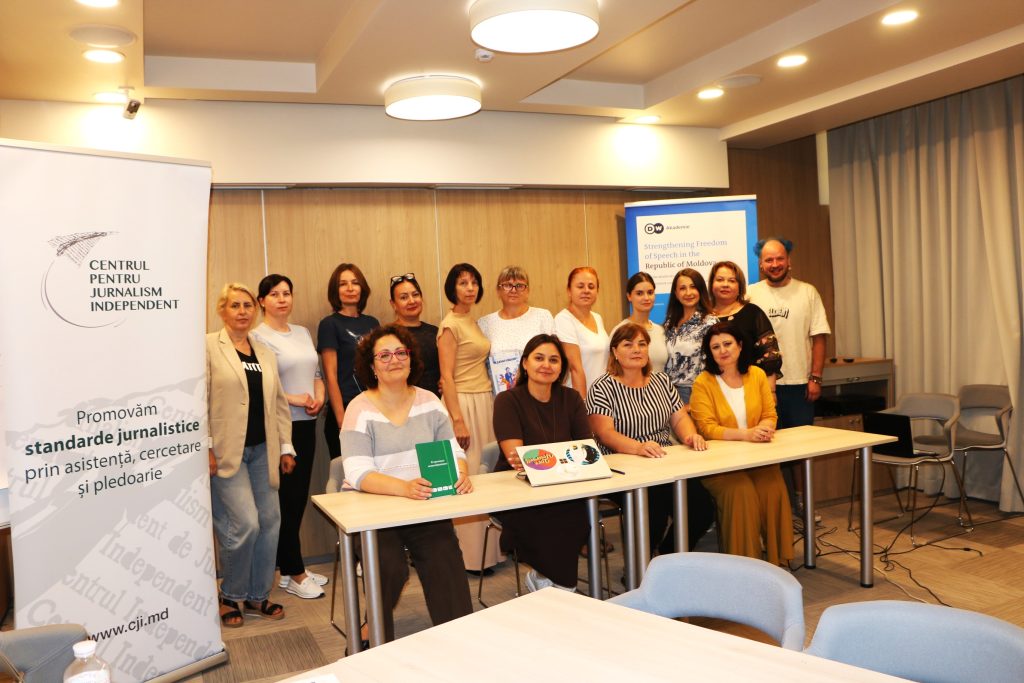
In the 2026-2027 academic year, the Programme on the integration of media education content into the Russian lessons in 8th-class will be implemented in 10 educational institutions teaching in the languages of national minorities in the Republic of Moldova. The initiative has been approved by the Ministry of Education and Research of the Republic of Moldova and is being carried out by the Independent Journalism Center (IJC), in partnership with DW Akademie.
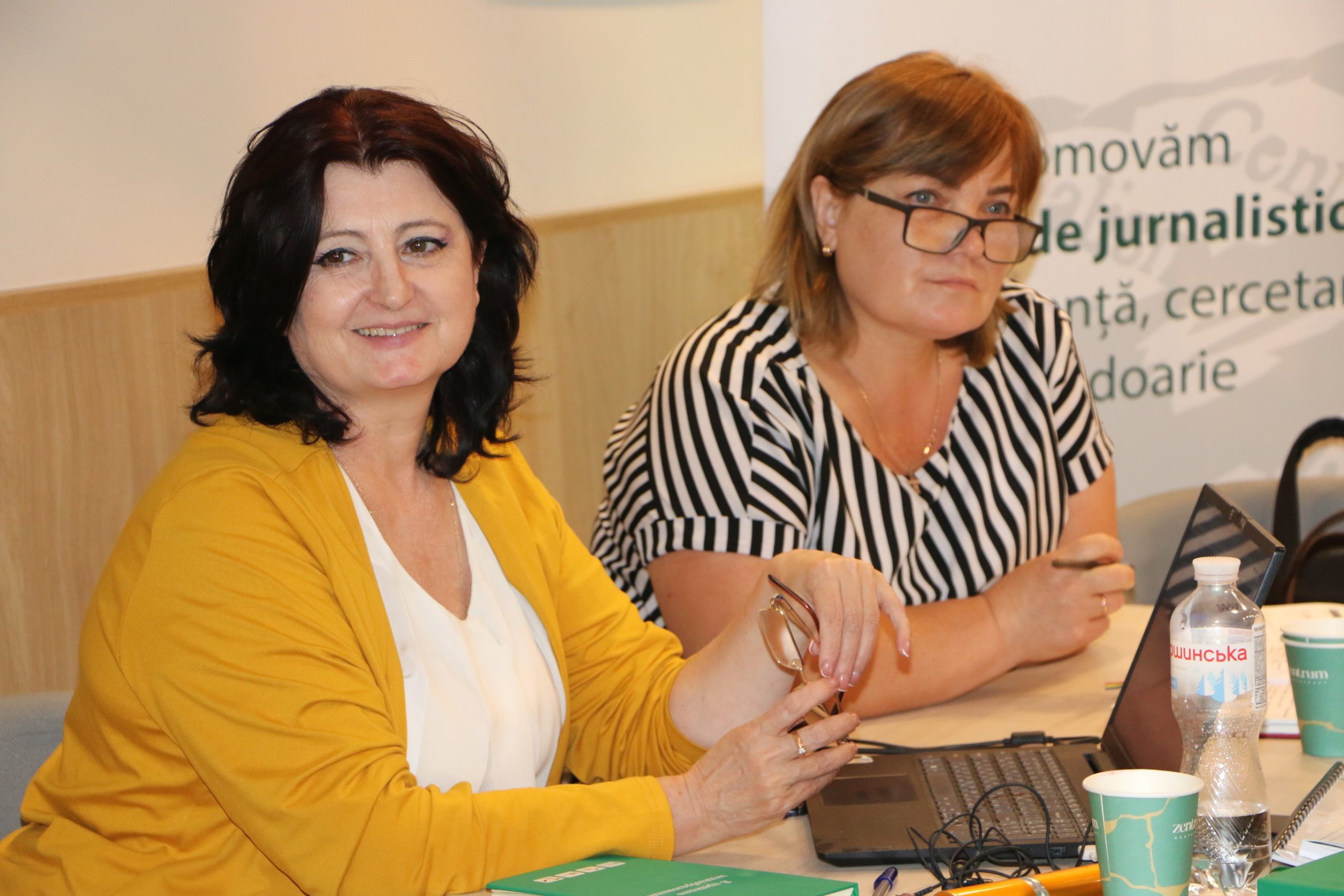
The 16 teachers from 10 educational institutions, who are taking part in the programme’s implementation during the 2026-2027 academic year, have developed their critical thinking skills and learnt how to integrate media education concepts into the Russian lessons in 8th-class during a training session held from 17 to 19 August 2026 in Chișinău.
Mariana Tabuncic, programme manager at the IJC, spoke about the experience gained over the last three years of implementing an integrated approach to media education in schools, first in Romanian lessons and subsequently in English. “We now aim to extend this experience to schools where teaching is conducted in the languages of national minorities. By integrating media literacy concepts into Russian Language and Literature lessons, we hope to provide you with practical tools and offer your pupils opportunities to critically analyze information and better understand media messages. We hope that your experience will also confirm the importance of an integrated approach to media education,” said Mariana Tabuncic.
DW Akademie’s project manager in the Republic of Moldova, Cristina Leva, highlighted the importance of launching the pilot programme in schools where teaching is conducted in the languages of national minorities. “This initiative allows us to extend the experience gained over the last three years to the Russian-speaking community, where this approach is particularly needed. At the same time, it is an opportune moment to gain direct experience of working with you, the teachers who will be applying the new approach in the classroom. This will help us to engage in a more informed dialogue with curriculum experts and representatives of the Ministry of Education and Research, to contribute more effectively to the ongoing curriculum review process,” said Cristina Leva.
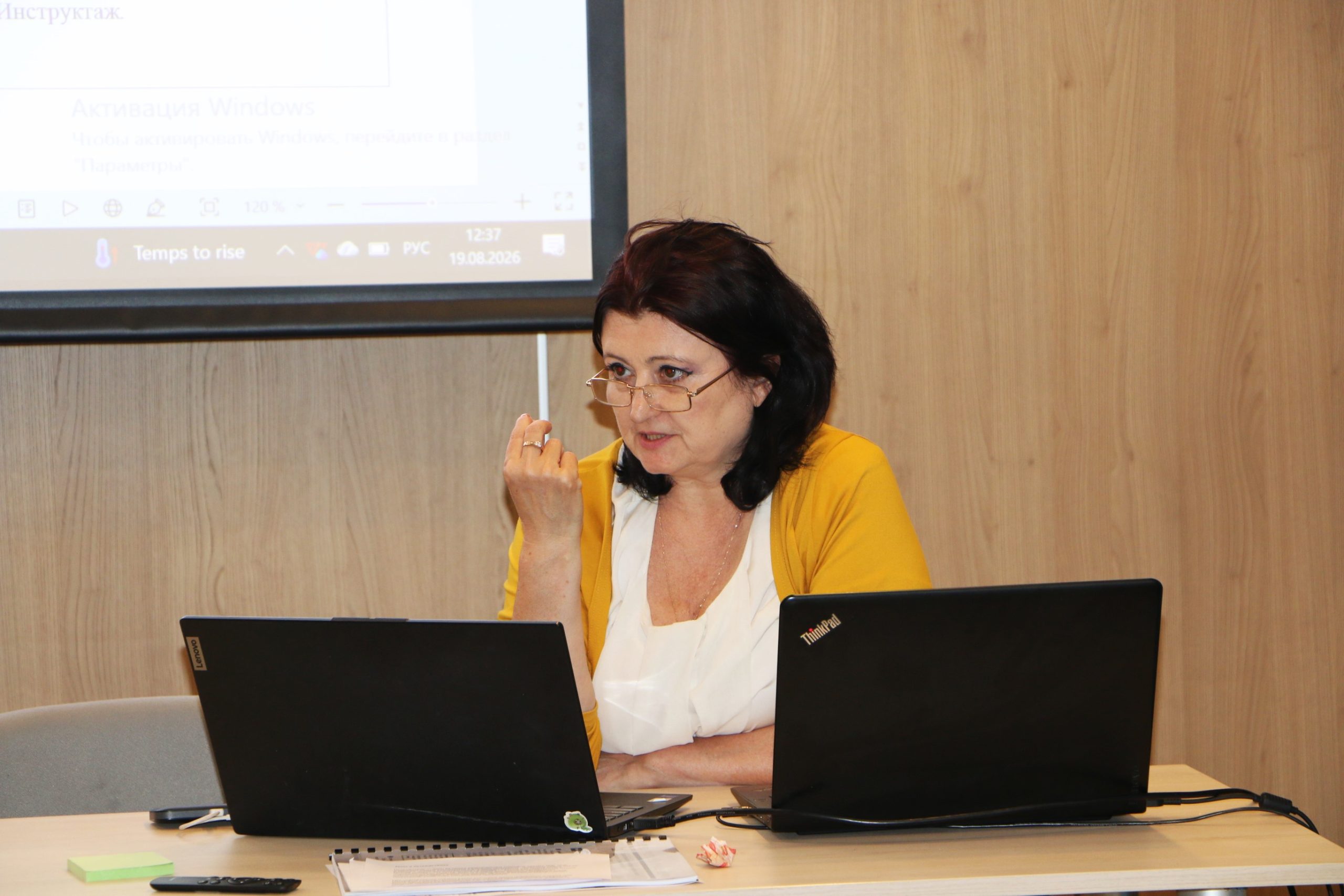
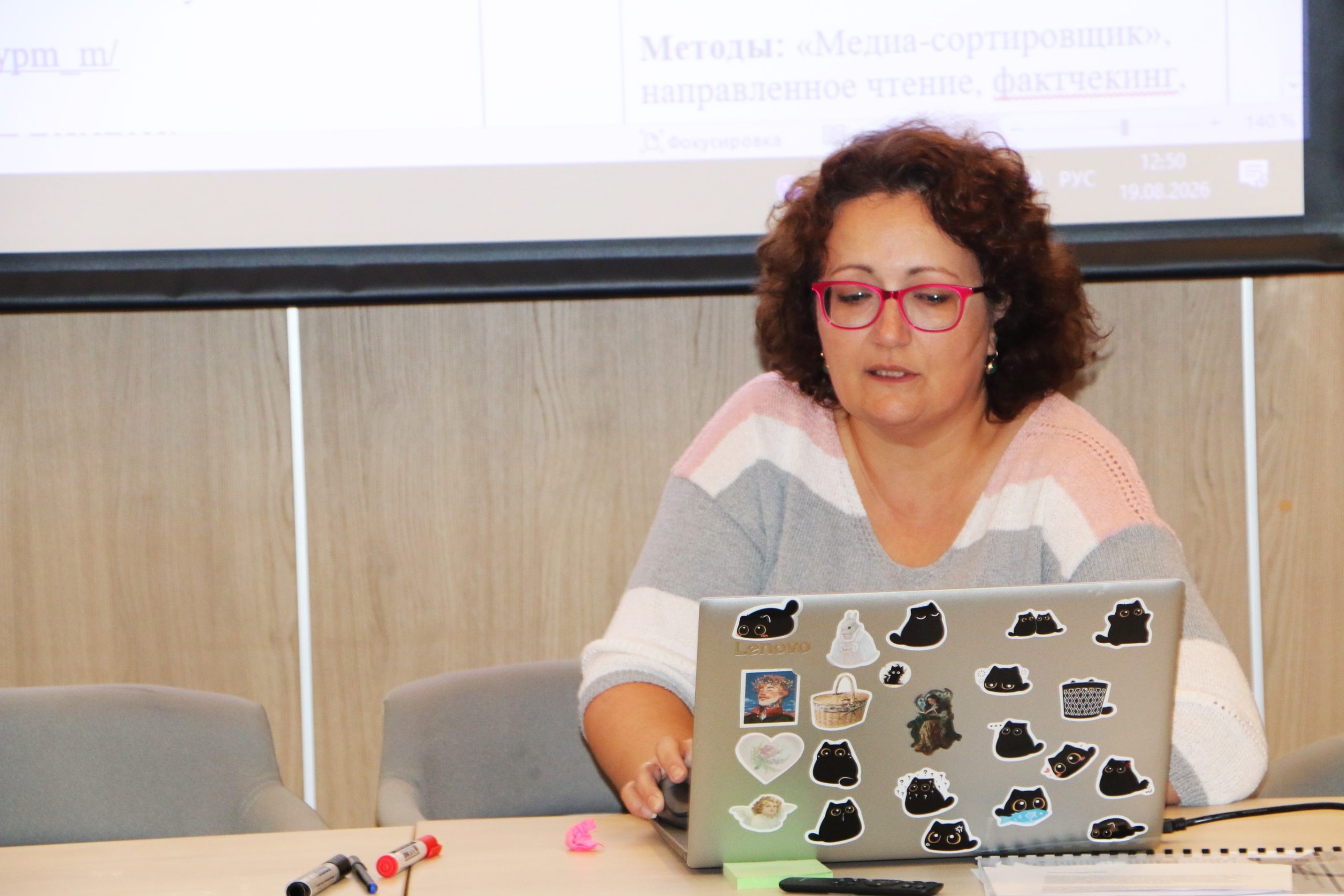
Over the course of three days, guided by trainer Natalia Griu and the manager of the Media Education project in Lithuania, Arminas Varanauskas, the teachers were introduced to the integration methodology, learnt about international experiences of integrating media education into language teaching, and analyzed the prospects for incorporating media education within the existing curriculum framework.
They also explored the content of the Russian Language and Literature textbook and identified the best opportunities and ways to integrate media education concepts.
“Media education means having access to information, knowing how to analyze it critically, evaluating sources and creating media content in various formats. It is important that these skills are developed on an ongoing basis, not only in Media Education lessons but also within core subjects. Russian Language and Literature lessons offer opportunities to discuss information, sources, messages and how these influence our daily lives. At the same time, media education contributes to the development of pupils’ social skills – it teaches them to communicate and interact in real life. It also helps them to become more responsible online – from what they post and share to how they react to content created by others,” said Natalia Griu.
“International experience shows that media literacy can be effectively integrated into various school subjects without putting pressure on the curriculum. On the contrary, when media literacy concepts are linked to the content pupils are already studying, they become more relevant and easier to apply. Subjects in the Language and Communication area provide a special framework for developing critical thinking – pupils work with texts and messages and analyze their various perspectives. The pilot initiative is an opportunity to test this approach in schools where teaching is conducted in the languages of national minorities and to see what works best in the context of the Republic of Moldova,” said Arminas Varanauskas.


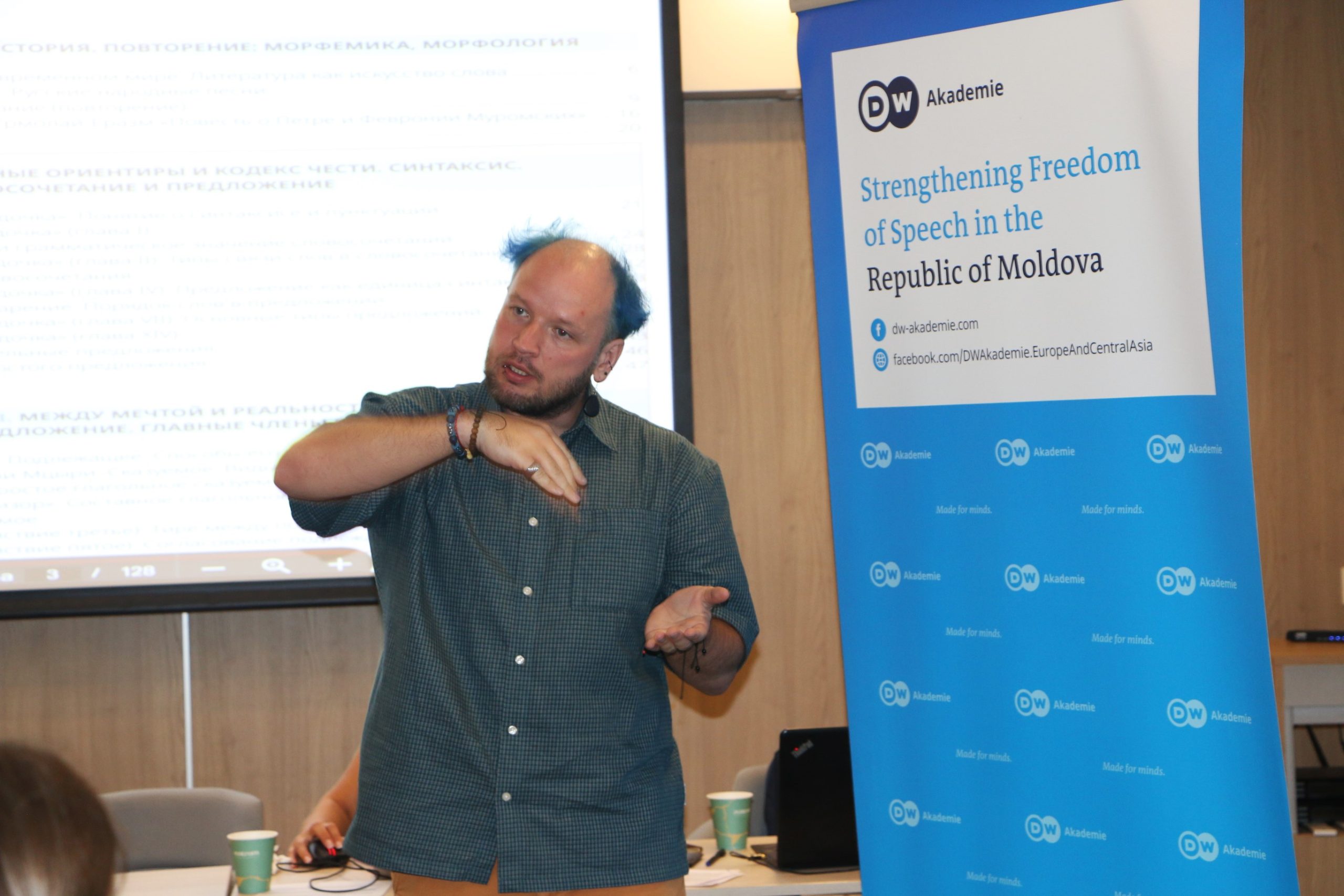


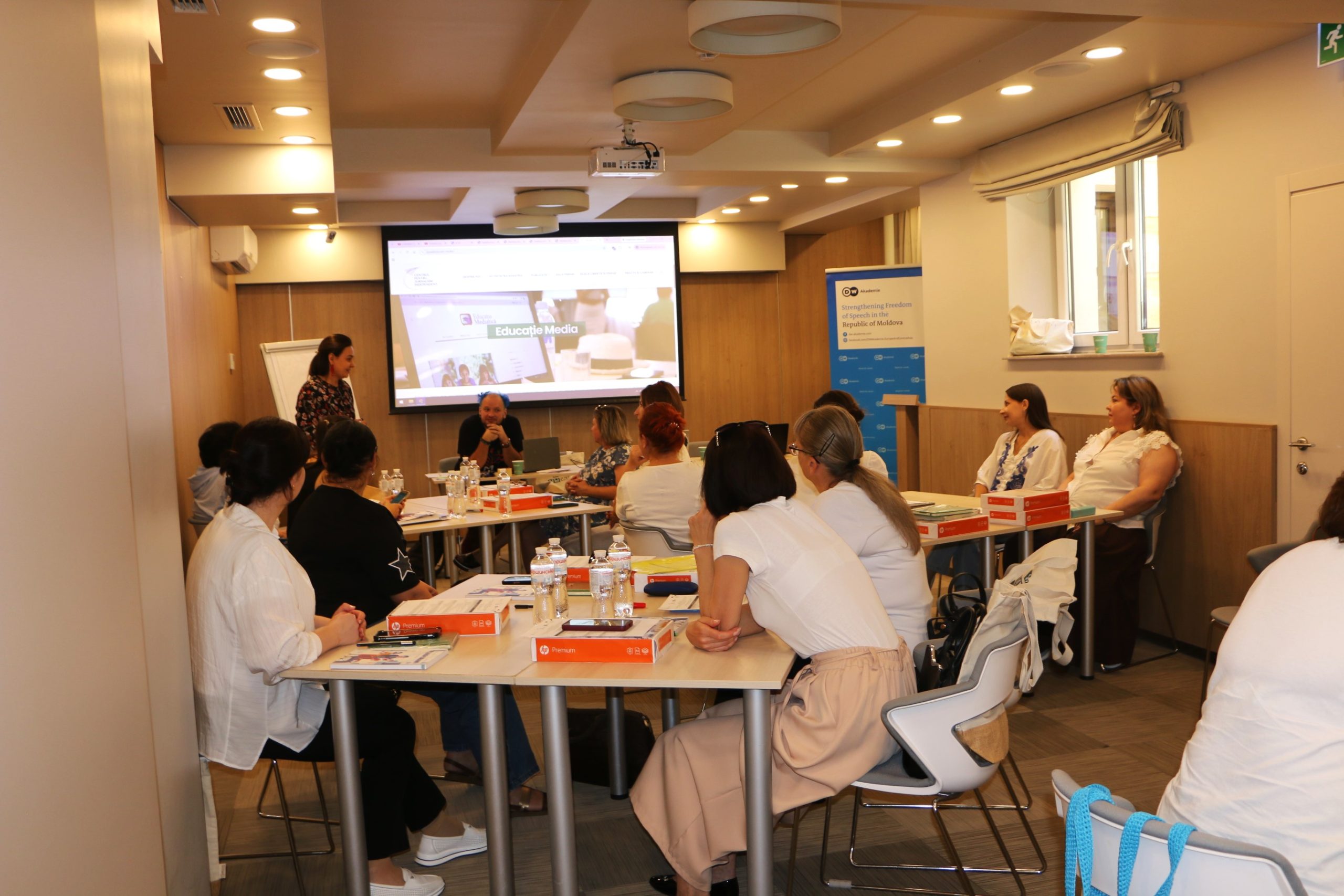
The participants analyzed the basic concepts of media literacy, learnt how to create various media products and how to use existing ones. They discussed the difference between facts and opinions and examined various media topics that can be integrated into Russian Language and Literature lessons. They were introduced to the ‘Media Education’ digital platform, as well as other tools developed by the IJC in this field. Furthermore, as part of the training, the participants worked on developing modules and content units, which will be used in the first semester of the 2026-2027 academic year.
The teachers appreciated the combination of theoretical content with practical activities and believe that integrating media education into Russian Language and Literature lessons in 8th-class will help to develop critical thinking among pupils. In the teachers’ opinion, “the training demonstrated that media education can naturally become an integral part of Russian Language and Literature lessons, contributing not only to the study of the subject but also to the development of pupils’ critical thinking, their ability to analyze information and to engage responsibly with the media”.
Ludmila Bucșan, teacher of Russian Language and Literature, ‘I.S. Neciui-Levițchi’ Theoretical High School, Chisinau:
The training programme proved to be very interesting, up-to-date and useful. The knowledge gained and the practical tools can be organically integrated into Russian lessons in 8th-class, making them more modern, interactive and engaging for pupils. We were introduced to various ways of developing pupils’ media literacy: working with information and primary sources, distinguishing between facts and opinions, analysing media headlines and texts, verifying the accuracy of information, and creating our own media products.
Inna Podolean, teacher of Russian Language and Literature, ‘Dimitrie Cantemir’ Theoretical High School, Rascani district:
This training programme is of great practical value to teachers, providing a clear lesson structure and modern tools for working with pupils. Integrating this knowledge into teaching practice will help develop critical thinking and media literacy, whilst opening up new horizons of knowledge for pupils. The initiative will bring a fresh perspective and greater diversity to the teaching of Russian Language and Literature.
Elena Susan, teacher of Russian Language and Literature, ‘Dmitri Caracioban’ Theoretical High School, Comrat:
This initiative represents an important step towards a modern school, where the teaching of language and literature goes beyond the confines of the textbook and the traditional lesson. The media is not merely a source of information. It is a space where opinions, values, communication skills and attitudes towards the surrounding world are shaped. A teacher’s mission is not only to teach pupils to read and analyse a text, but also to help them understand, critically evaluate, create and use media content correctly. We hope that this project will not be an end in itself, but a new stage in the development of contemporary language and literature education, in which the Russian lessons remain relevant and in tune with pupils’ needs.
Olga Pusca, teacher of Russian Language and Literature, ‘Nikolai Gogol’ Theoretical Secondary School, Balti:
The greatest benefit of the course lies in its 100 per cent practical focus. I have seen how the analysis of media texts can be organically integrated into the structure of any lesson, without overloading the curriculum, but making learning more in-depth and modern. Thanks to the professionalism of the experts, Natalia Griu and Arminas Varanauskas, their careful guidance and open dialogue, we have managed to transform complex concepts into methodologies that are easy to understand and applicable in the classroom. We have come to realize that modern education must move beyond the mere transfer of knowledge to develop key life skills.




The IJC runs the programme in partnership with DW Akademie and with the approval of the Ministry of Education and Research of the Republic of Moldova.
The project „For freedom and democracy – strong voice in fragile contexts” is implemented by the IJC in partnership with the Deutsche Welle Akademie and with the support of the Federal Ministry for Economic Cooperation and Development (BMZ), Germany. The initiative is supported by the Ministry of Education and Research of the Republic of Moldova and is included in the new Memorandum of Understanding signed between the Ministry and the IJC on 13 March 2026.

