


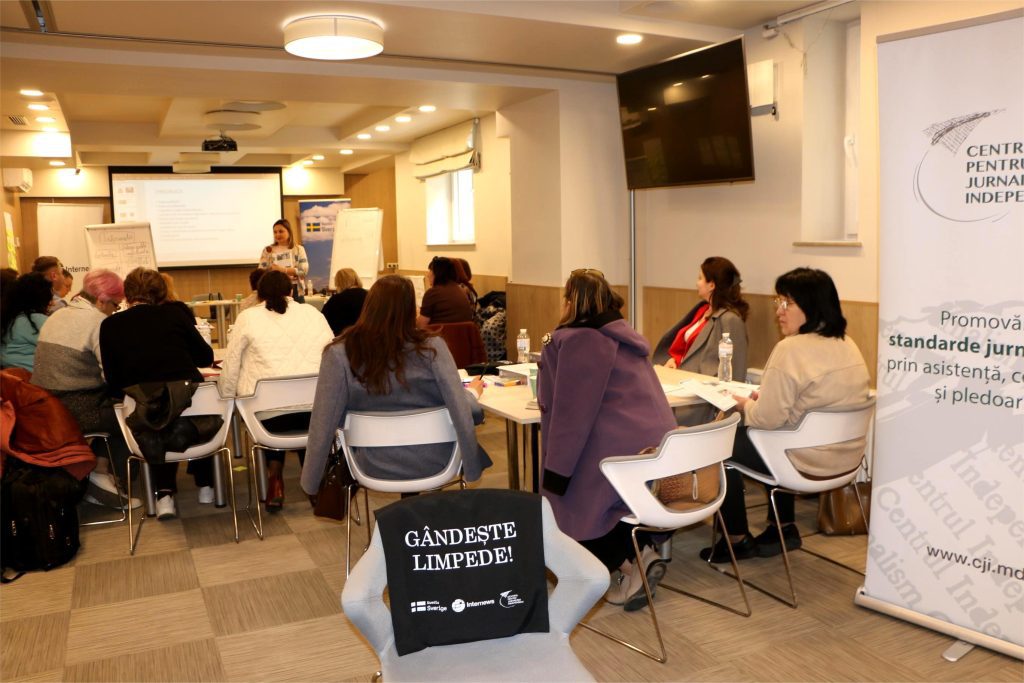
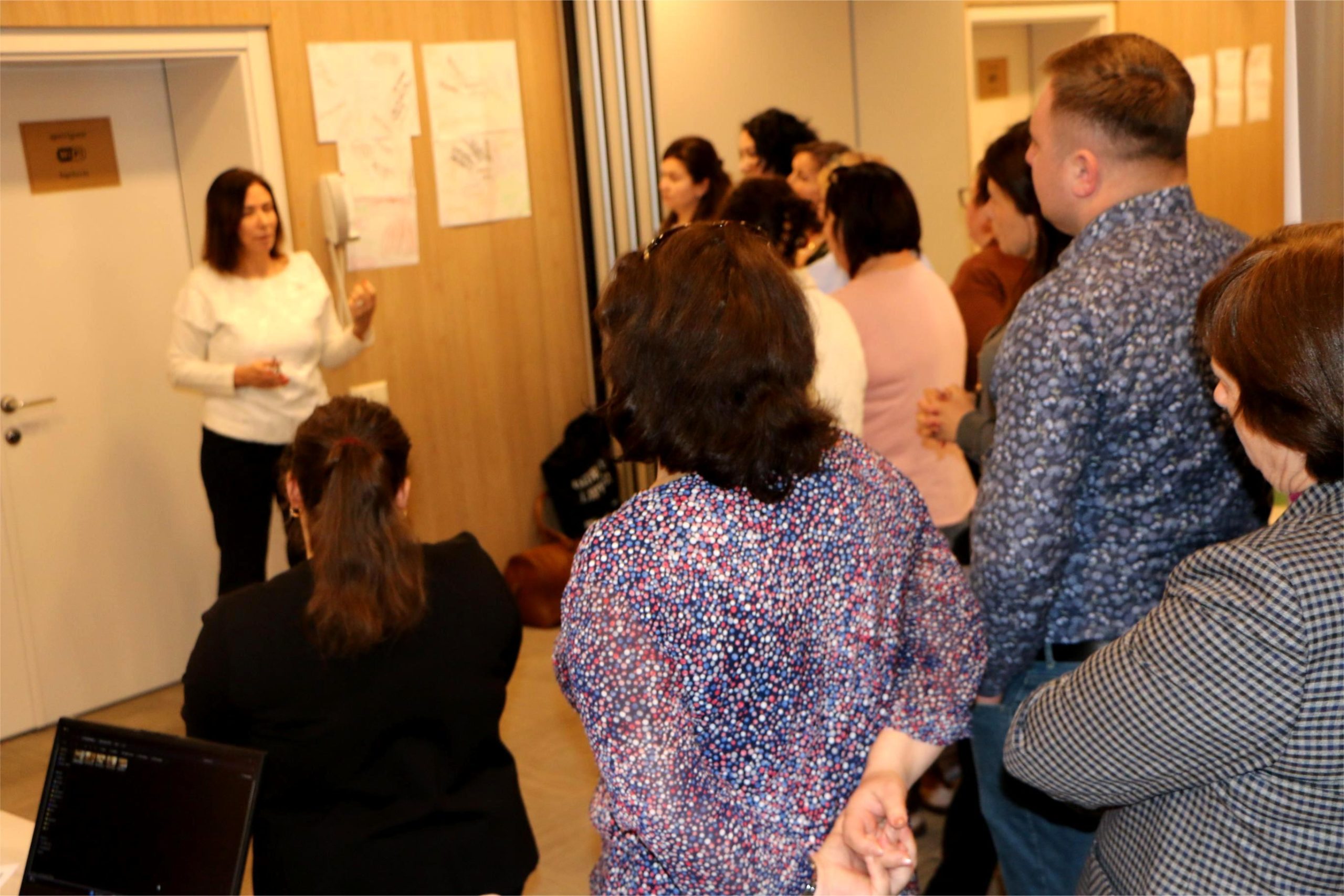
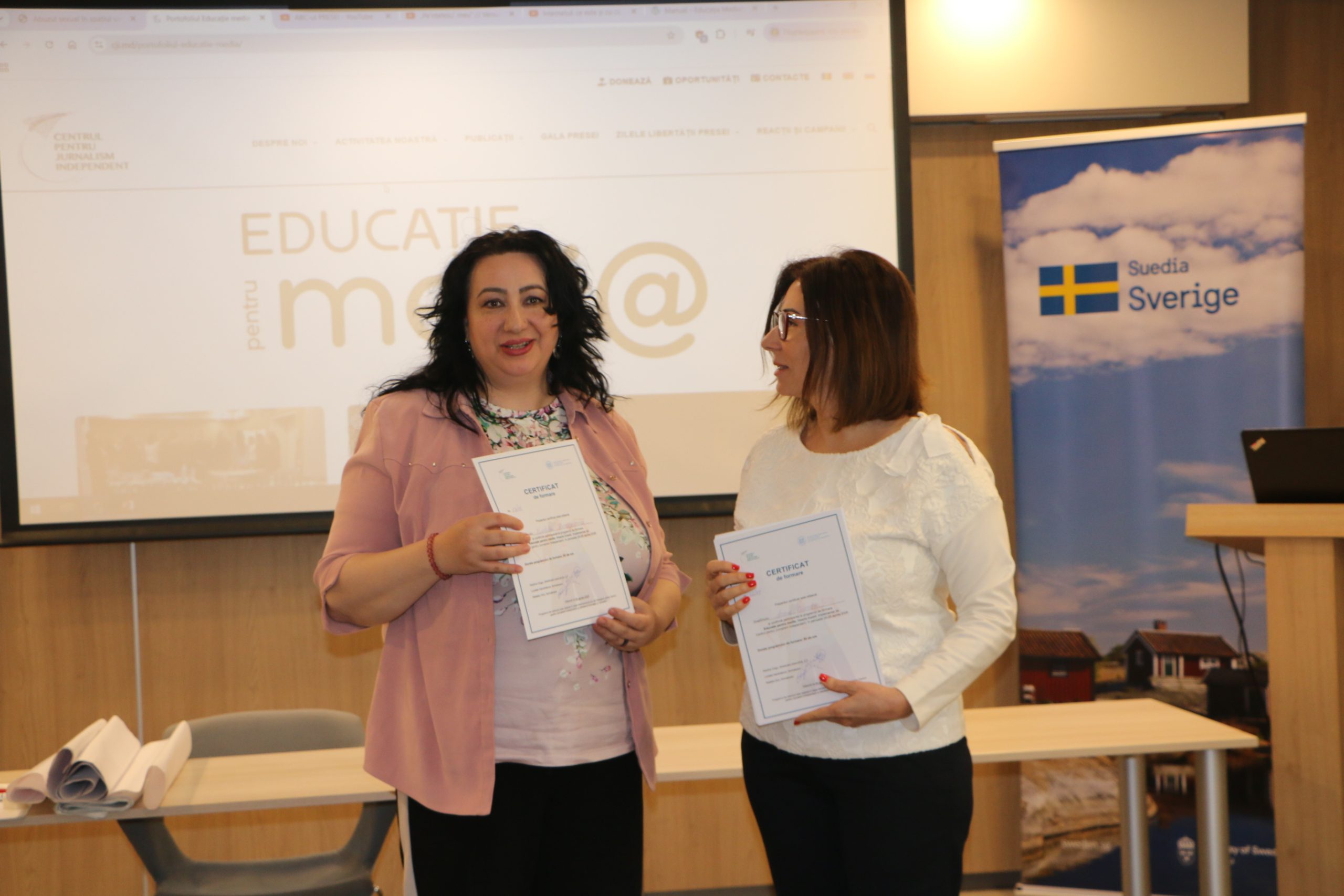
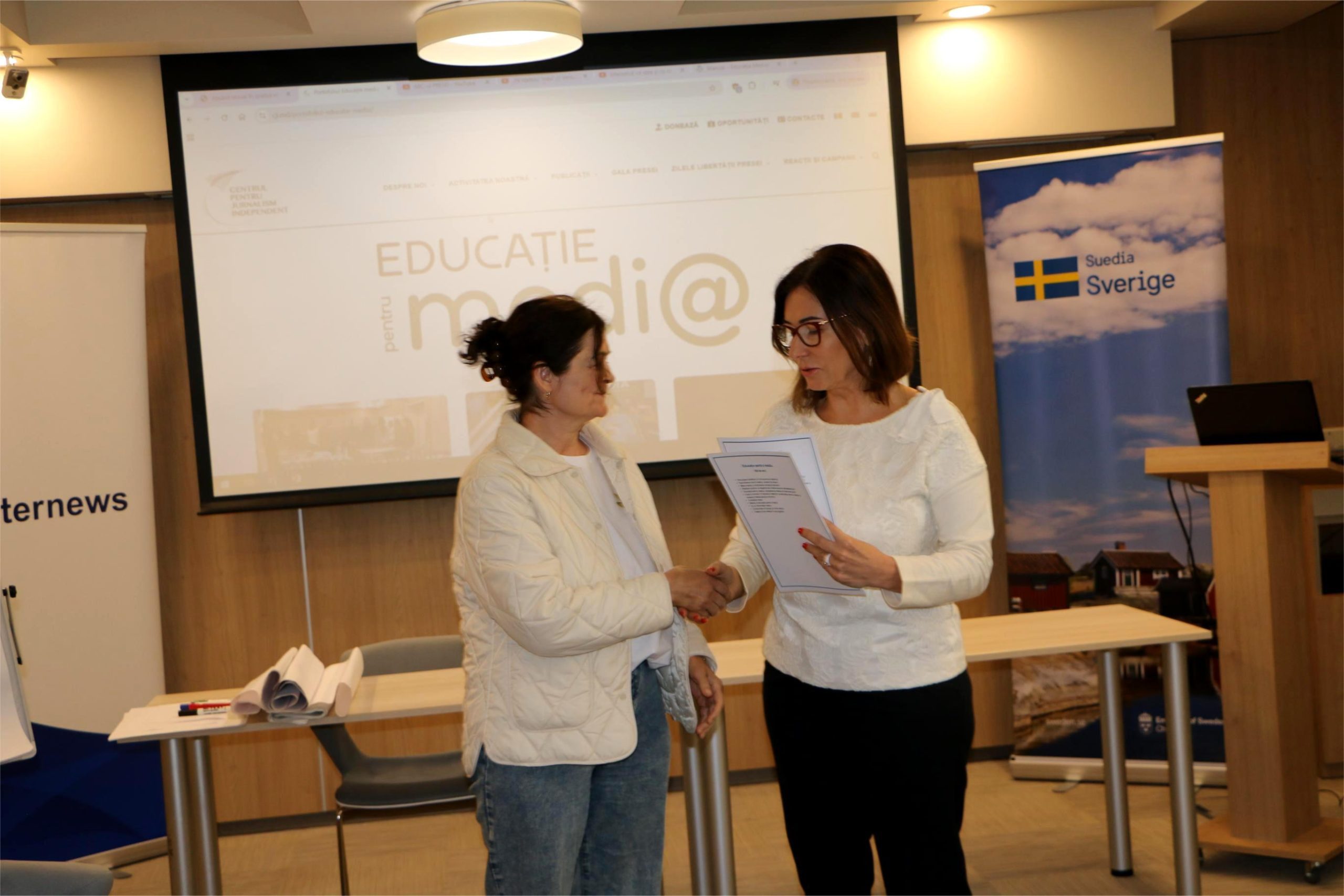
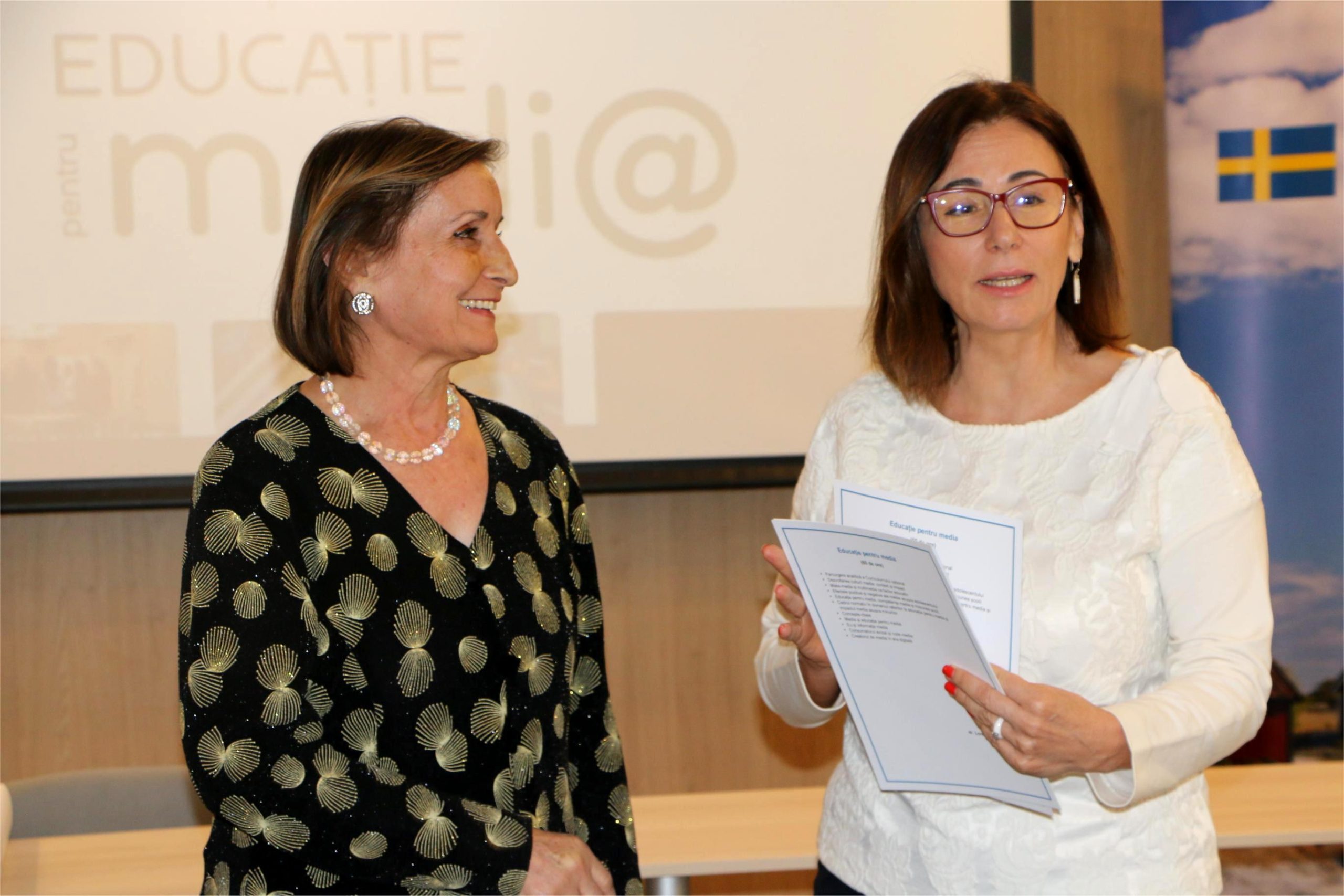
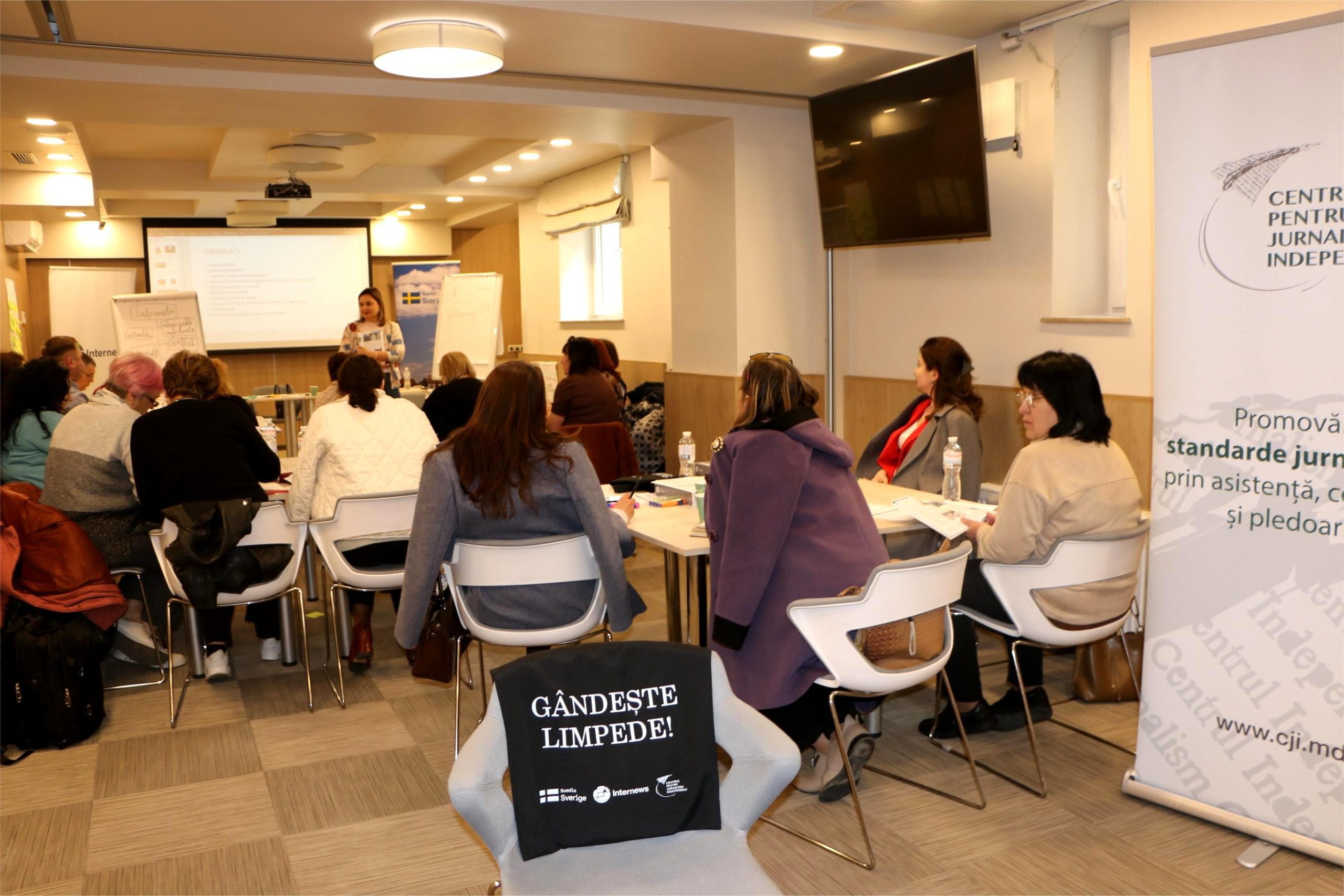
Twenty high school teachers learned how to teach Media Education course during a new training session organized by the Independent Journalism Center (IJC) from April 24-26, 2026, in Chișinău.
“For nearly a decade, the IJC’s efforts have been focused on developing teachers’ media literacy skills. Through our training programs, we aim to provide you not only with theoretical knowledge but also with practical skills to help you analyze, verify, and correctly interpret media content. We hope that you will pass on what you learn in this training to your students, thereby contributing to the creation of a society that is better informed and more vigilant against misinformation,” said Mariana Tabuncic, program manager at the IJC.
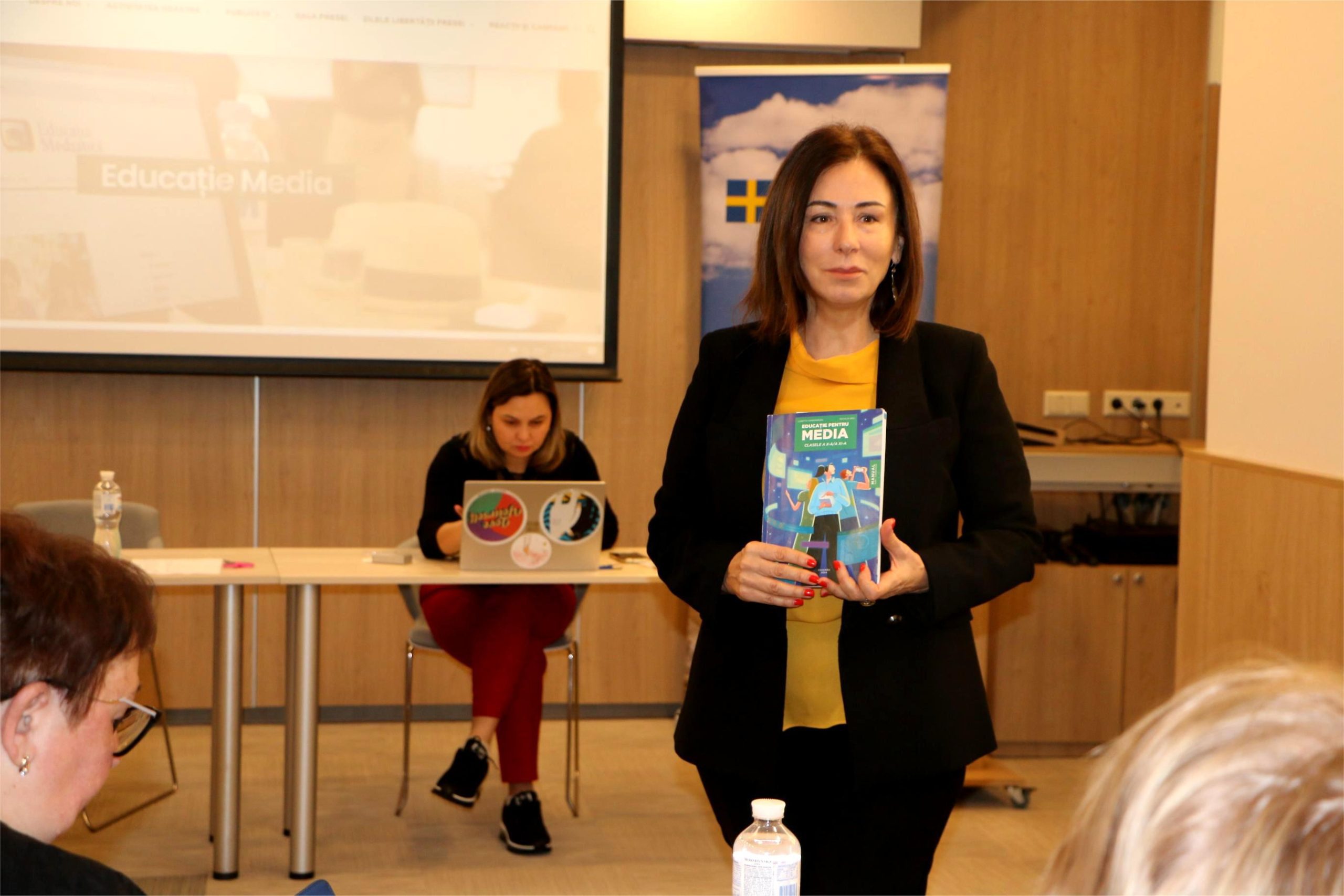
The course trainers were Loretta Handrabura and Natalia Grîu, the authors of the curriculum and the updated Media Education textbook for 10th and 11th grades. During the training, the digital version of the Media Education textbooks was presented, as well as the Media Education Portfolio.
The training program offered teachers the opportunity to strengthen their media literacy skills by using the updated high school textbook content, with an emphasis on innovative teaching methods and the integration of media resources into the educational process. The practical activities focused on developing critical thinking, analyzing the impact of media on young people, and understanding the diversity of informational content. At the same time, discussions addressed current topics such as disinformation, propaganda, manipulation, deepfakes, the role of influencers, online violence, ethical behavior in the digital environment, and the risks associated with the virtual space, highlighting how these can affect the ability to make informed decisions.
“The new challenges of the contemporary world require new skills, and a society with material well-being and a balance of moral values is maintained, in part, through proper information hygiene. Media literacy is no longer limited to a single field but extends to all spheres of life, becoming an essential meta-skill, not an elitist discipline. The benefit is, first and foremost, yours, as you are not only consumers but also creators of media, with an increasing potential to influence and shape opinions. At the same time, you play an important role in helping students, as well as parents, navigate this sea of information, so they can properly understand the content they encounter. Thus, the impact will not be limited to students alone, but will extend to families as well, contributing to the creation of a more aware and responsible society,” said Loretta Handrabura.
“Media literacy is no longer about a distant future, but about what we are experiencing here and now. Students are already connected to a continuous flow of information, and their reality is being shaped in real time through what they see, read, and share. That is why our role is to help them understand this reality and analyze it critically. We cannot postpone the development of these skills, because they are needed today. Connecting students to today’s reality means preparing them to distinguish between information and manipulation, to become active and responsible participants in the information space, not just passive spectators,” noted Natalia Grîu.
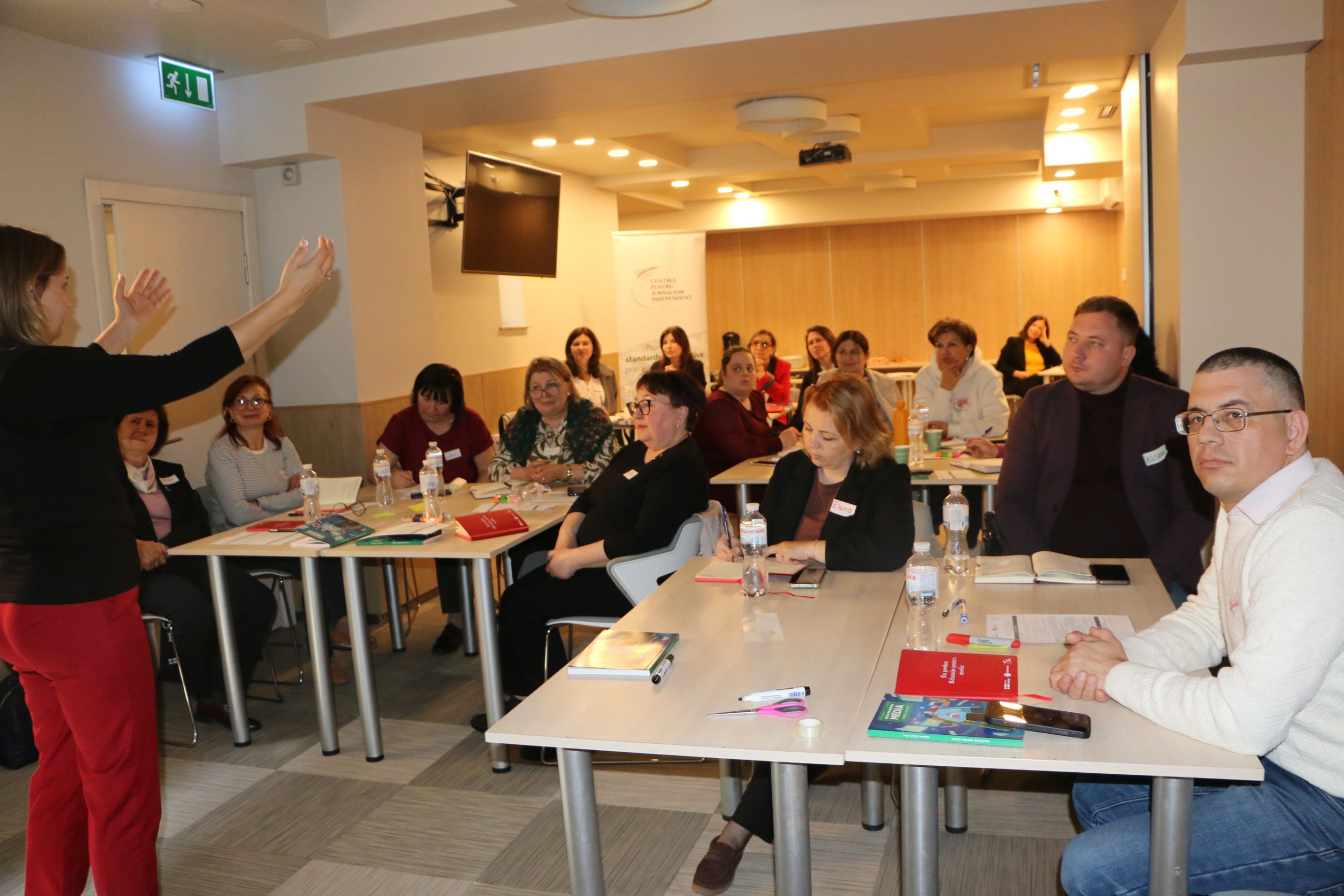
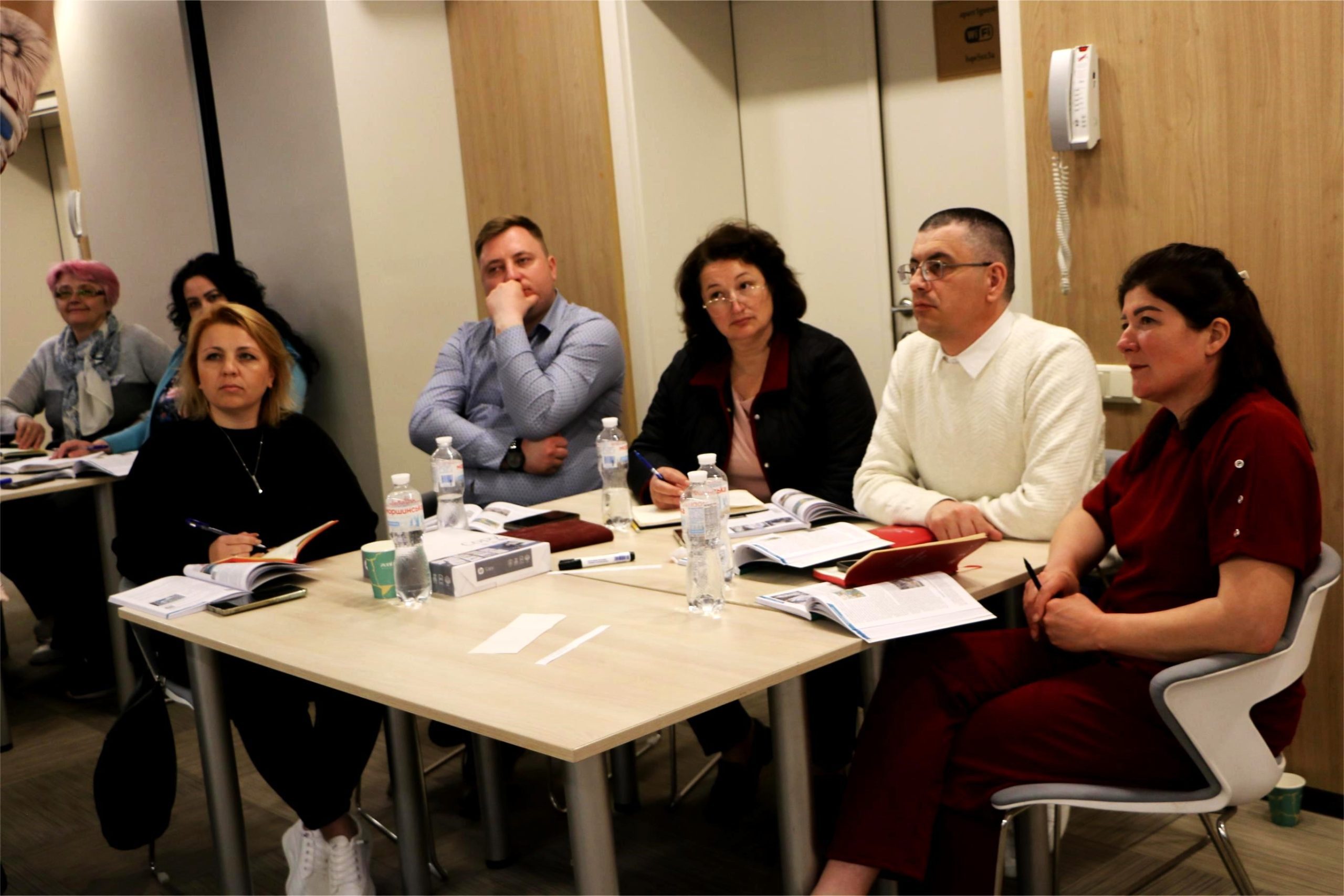
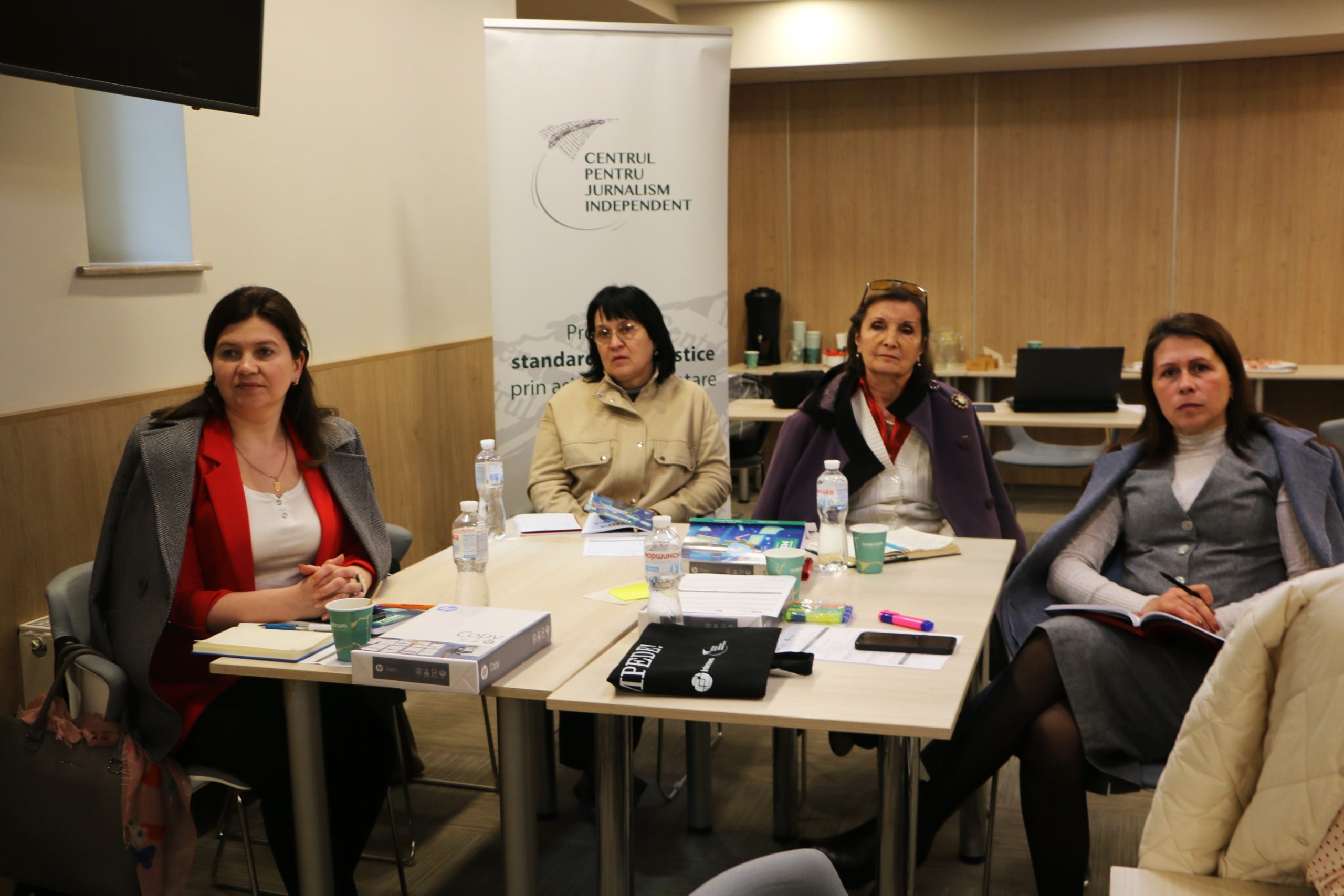
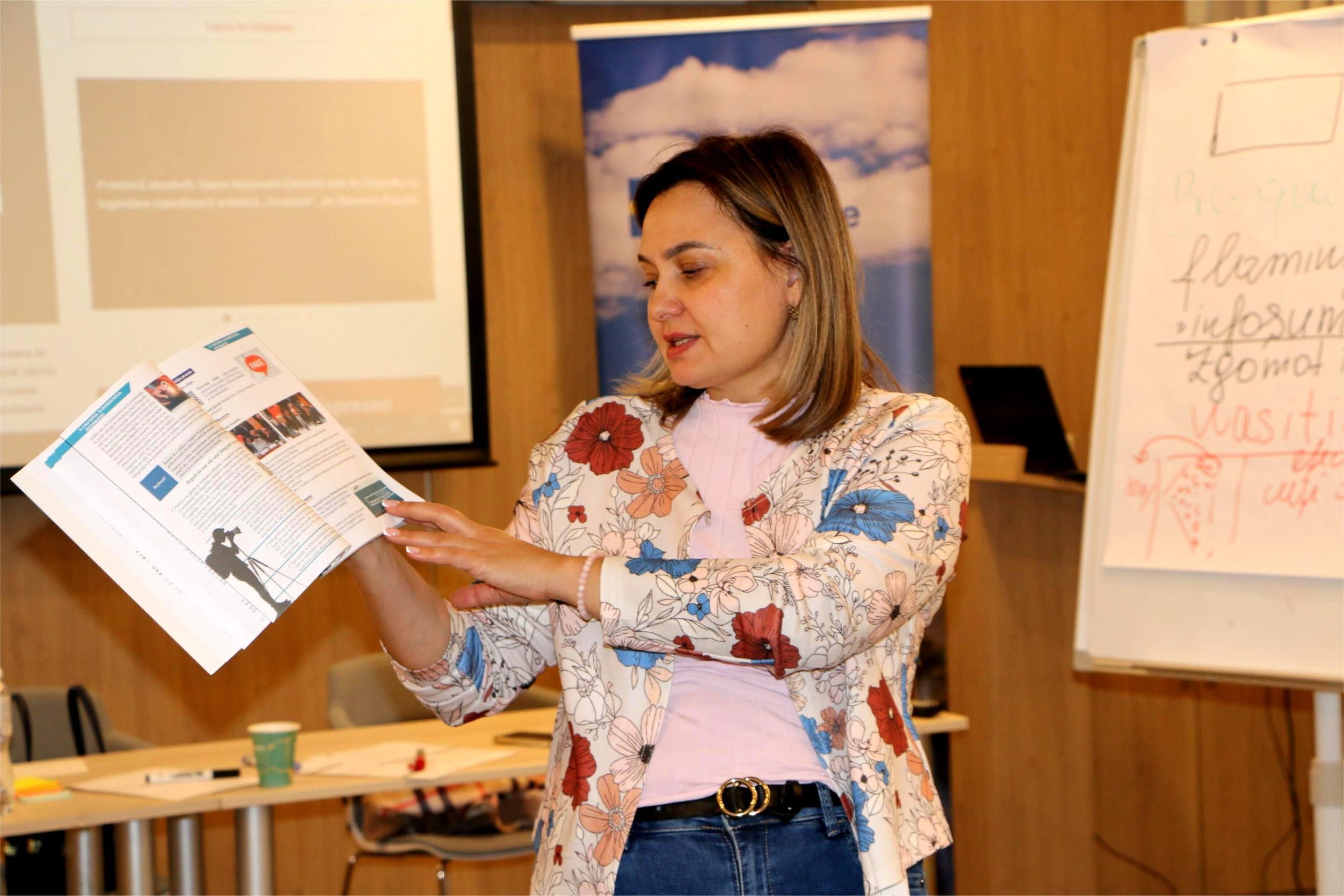
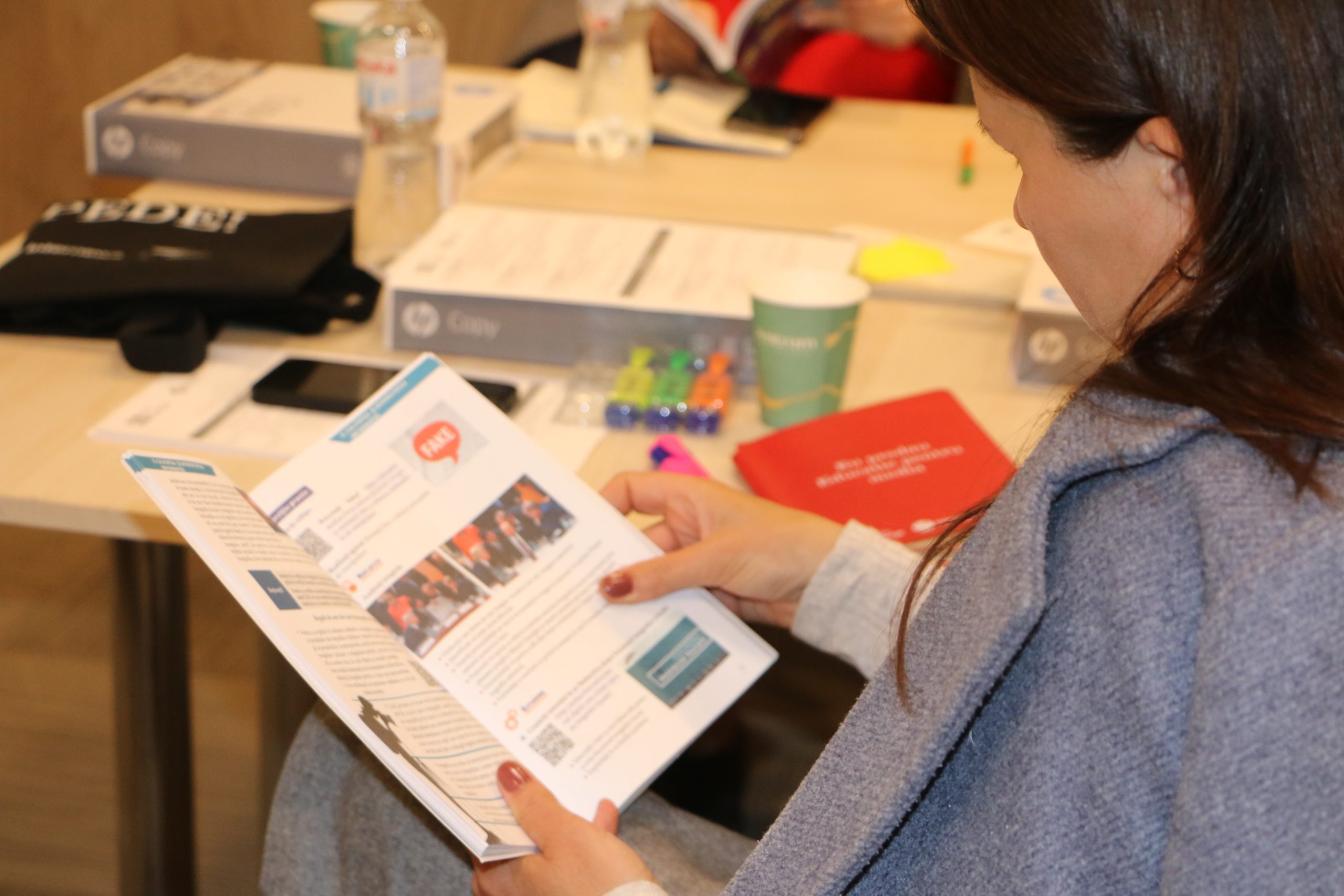
In addition to theoretical and practical sessions, participants explored a range of useful tools and resources for teaching media education, provided by the IJC to support the implementation of the optional Media Education course in schools.
The teachers participating in the training appreciated the importance of media education and noted that they discovered relevant information and practical tools that they intend to utilize in their teaching practice.
Violeta Donighevici, teacher at Vocational School No. 2, Chișinău:
During the training, we made the most of the three days to develop essential skills in the field of media education. These will help us to instruct and guide our direct beneficiaries, our students, with greater clarity. Both students and teachers of this decade need an open mind. In the age of information overload, where misinformation spreads with a single click, a mind capable of analyzing information from various perspectives becomes an essential tool. It can discern the truth, make relevant connections, and navigate the complexity of information with clarity. In this context, training is valuable for teachers at all levels of schooling and in all subjects.
Raisa Sîrghii, teacher at Recea Theoretical High School, Recea village, Rîșcani district
After this media education training program, I return to school better prepared. I have managed to develop my media literacy skills in terms of how I can help high school students interact with information in the digital space and how to guide them in the critical analysis of media content. I am convinced that this program helps adapt the educational process to the demands of today’s information society. I have a special mention about the textbooks, both the printed and digital versions – they are very useful.
Dumitru Grușca, teacher at “M.Eminescu” Theoretical High School, Scumpia village, Fălești district
Participating in this training has given me the tools I need to navigate and guide students through an increasingly complex information landscape. In a context where we are increasingly exposed to misinformation, this training helps us develop critical thinking, promotes digital safety and ethics, offers solutions to combat fake news, and encourages the conscious consumption of information. We are confident that studying Media Education, our students will be better equipped to address the challenges of the information landscape.
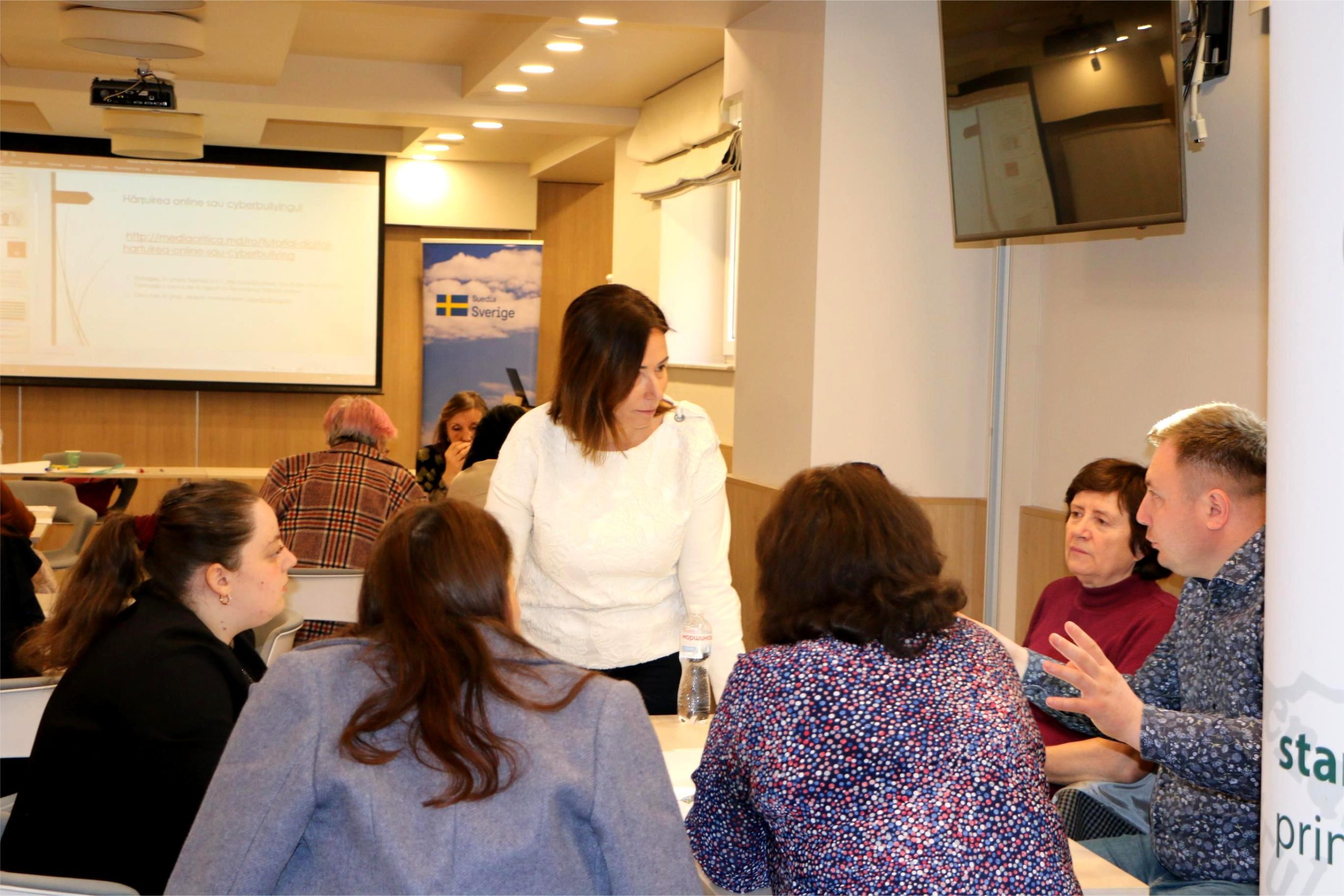
To date, the IJC has trained 286 elementary school teachers, 278 middle school teachers, and 381 high school teachers. The elective course Media Education has been taught in schools across the Republic of Moldova since 2017, having been included in the framework curriculum of the Ministry of Education and Research of the Republic of Moldova for all three levels of education – elementary, middle, and high school. The IJC developed the curriculum and textbooks for Media Education, which are provided free of charge to educational institutions.
This activity is part of the project supported by Sweden “Media Literacy Advancement and Support to Moldovan Media” and implemented by Internews, which aims to contribute towards the growth of a diverse, independent and financially viable media landscape in Moldova, and to empower Moldovan youth to navigate their complex information environment.

