


Media education in English classes: an experience that helps students think critically
What do English Language and Media Education have in common? How can these subjects be interconnected for the benefit of students? This is what Irina Mutruc, an English teacher at the Republican Theoretical High School “Ion Creangă” in Bălți, set out to explore. She is a participant in the Program on Integrating media education content into Romanian Language (6th-grade) and English Language (10th-grade) classes, implemented by the Independent Journalism Center (IJC) in partnership with DW Akademie and supported by the Ministry of Education and Research.
With experience in various media education activities, Irina Mutruc is convinced that today, media skills are essential for every student. “Media education is one of the most important aspects of modern education and should be compulsory. That’s why I was very happy to introduce it in English classes. According to the foreign language curriculum, teachers must integrate media products into teaching-learning-assessment processes to help students communicate with native speakers. In addition, this subject allows us to address various topics connected to real-life contexts, and we all know that young people rely primarily on the online world for information-an environment full of misinformation,” the teacher explains.
The lessons were a real challenge for the 10th-grade students, who were encouraged to be creative and produce different types of media content in English. Under the teacher’s guidance, they performed very well, although the task was not easy at first. “They were curious and attentive in the beginning, but once they had to apply their knowledge and create their own content, some became stressed and overwhelmed. I made an effort to support them, helping them overcome obstacles and encouraging them to move forward step by step. Later, I was glad to see them getting to know each other better, helping one another, working in groups, and presenting increasingly better-quality products on time. I admired each student’s progress, and I am truly proud of them. They themselves admitted that it was challenging, but interesting and very useful-they learned how to distinguish between facts and opinions, how to consume and analyze information,” says Irina Mutruc.

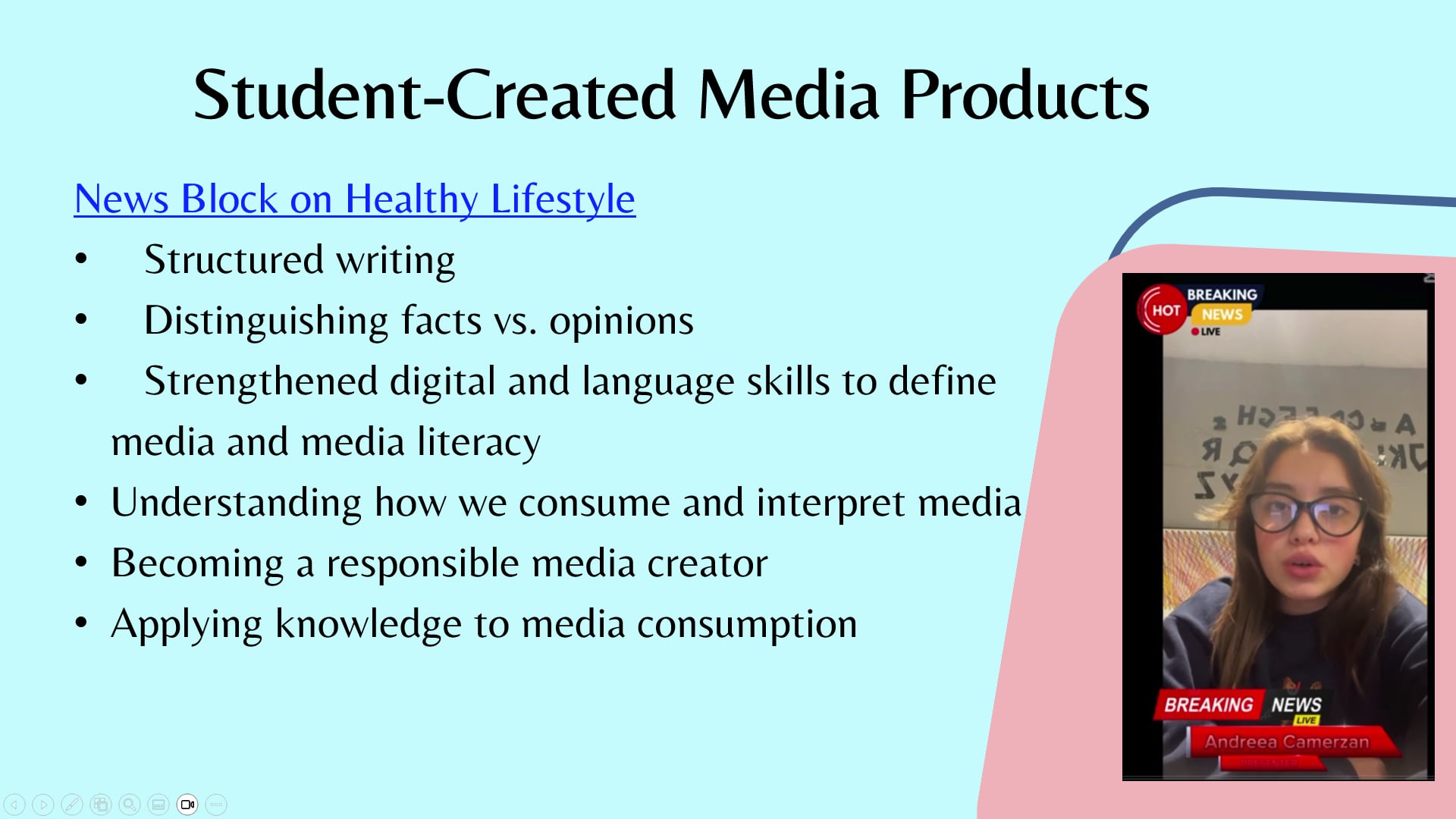
She adds that such initiatives are extremely necessary and that she will continue integrating media education, whether in English classes, in class management sessions as a homeroom teacher, or within the optional Media Education course. “We often face situations where students consult unreliable sources or bring false, unverified information to class. We need to explain and develop certain media skills. Thanks to the project, this becomes easier because everything is planned, integrated into the content, and structured in advance. We can therefore develop several competencies in parallel. It’s true that not every teacher can do this, teachers also need training and updated information. This project helped me revisit certain concepts, discover new online phenomena I didn’t know about, and learn methods to approach and explain them correctly. I gained new knowledge, refreshed old one where needed, collected more resources, and learned new techniques that will help me going forward,” the teacher concludes.

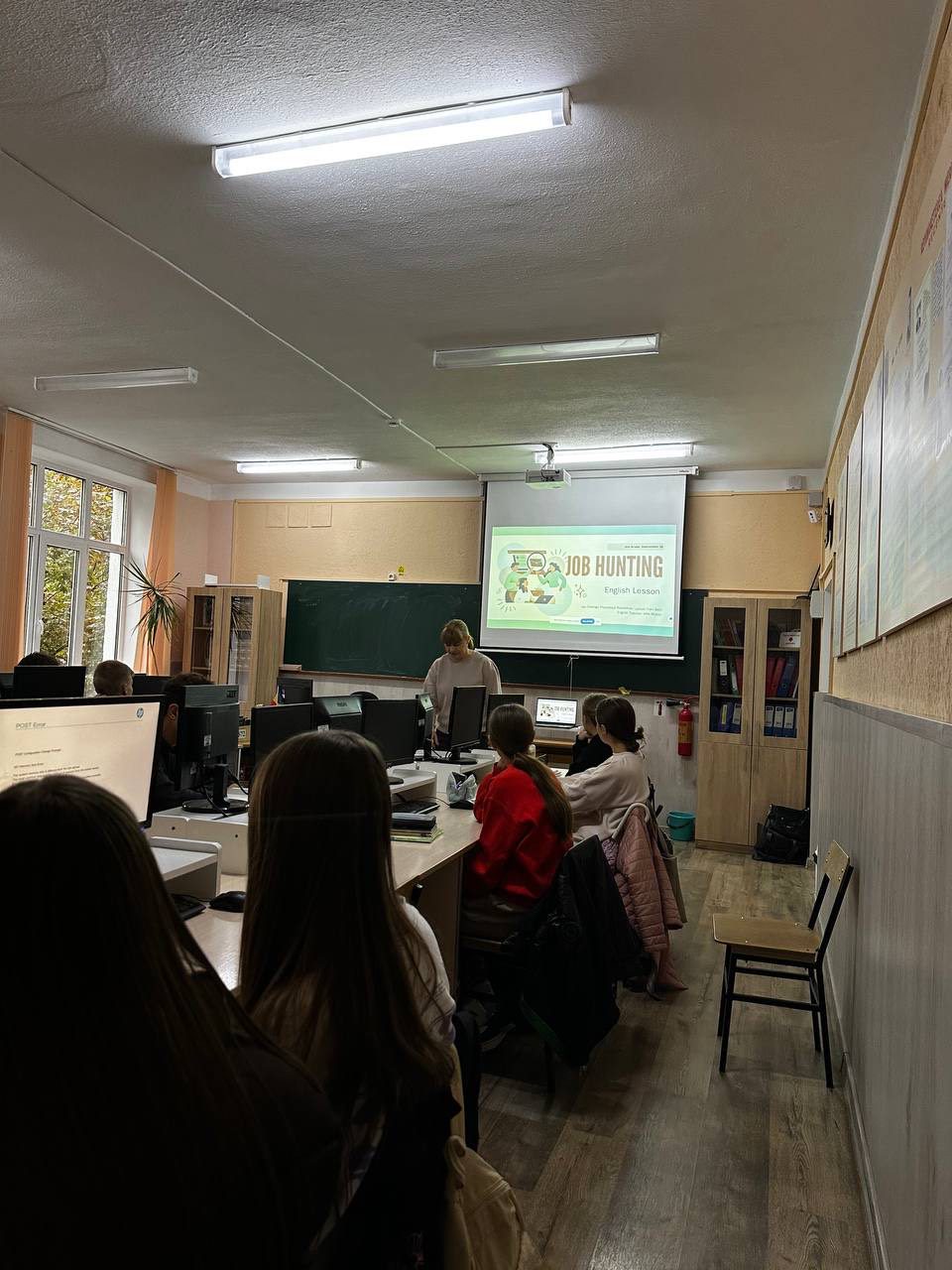
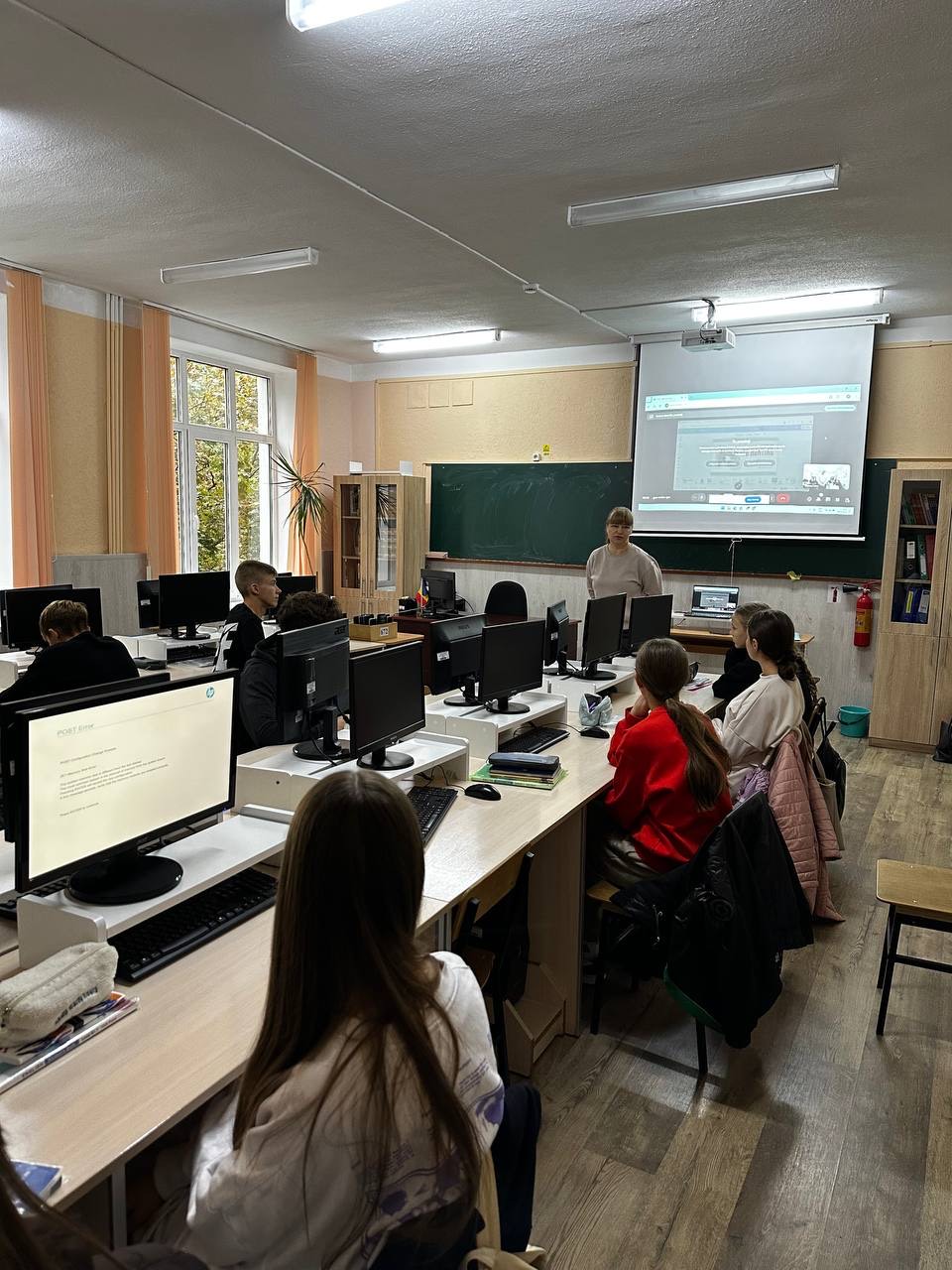
During the first semester of the 2025–2026 school year, twenty female teachers and one male teacher from ten educational institutions across the Republic of Moldova implemented the Program on Integrating media education content into Romanian Language (6th grade) and English Language (10th grade) classes. Carried out by the IJC in partnership with DW Akademie and supported by the Ministry of Education and Research, the program helped shape a generation of pupils who are more aware, more informed, and better equipped to navigate today’s information environment.
The project „Strengthening of Media and Information Literacy (MIL) in the Republic of Moldova: Piloting the integrative approach in formal education” is implemented by the IJC in partnership with Deutsche Welle Akademie and with the support of the Federal Ministry for Economic Cooperation and Development (BMZ), Germany.
