


Disinformation in Videos, Echoed in Comments: YouTube’s View of the First Three Weeks of the Campaign
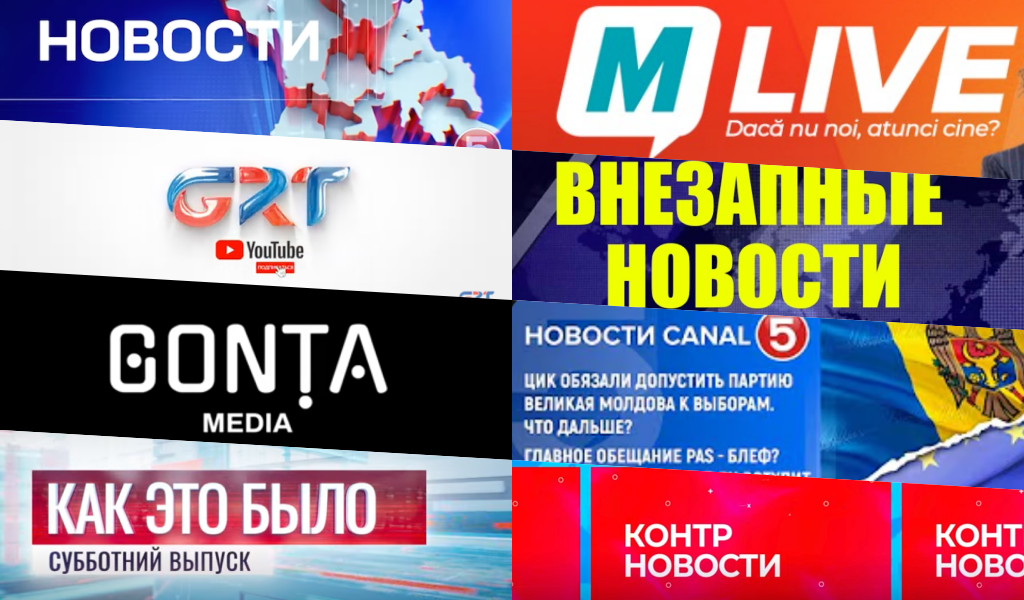
An analysis of disinformation on YouTube during the first three weeks of the election campaign reveals an information ecosystem heavily controlled by manipulation and dominated by a few key messages. A monitoring of 15 accounts between August 29 and September 18, 2025, saw the dynamics of the most popular messages, the ways they were disseminated, and the channels through which they spread, both in video content and in comment sections.
- According to the data, the dominant narratives circulating during the three weeks of the campaign claimed that political repression was underway in the country, that Maia Sandu lacked legitimacy as president, and that the opposition was being persecuted.
- Maia Sandu and the government are the primary targets, often linked to narratives of illegitimacy, opposition persecution, and external control.
- User comments serve as a powerful multiplier of disinformation, amplifying and reframing the messages first introduced in the videos.
- Another trend is the dissemination of coordinated narrative attacks across multiple channels within short timeframes, pointing to coordinated action rather than organic dissemination.
WHAT WE MONITORED
For this election campaign, we tracked how the most visible disinformation narratives emerged and disseminated on YouTube, using an AI-assisted platform. The platform scans open channels and maps narratives, analyzing both the sources of dissemination and the activity in comment sections. Monitoring focused on a predefined list of 15 channels and 27 narratives covering domestic and foreign topics, in both Romanian and Russian. The analysis was conducted across two distinct periods: August 14-28 (pre-election) and August 29 – September 18 (official campaign).


Predefined disinformation narratives and their dissemination dynamics
MOST POPULAR NARRATIVES
Between August 29 and September 18, the 15 monitored channels uploaded 867 videos, nearly half of which (382 clips, or 44%) featured one or more narratives. The data indicate that YouTube’s information space during this period was dominated by several key messages:
- political repression is taking place in the country (19% of cases);
- Maia Sandu is not a legitimate president (14%);
- the opposition is being persecuted (12%);
- the EU is destroying the economy (8%);
- censorship persists in the country (7%).
In a less prominent but still noticeable register, secondary narratives also circulated, each accounting for roughly 6% of the total messages analyzed. These included claims of vote-rigging in the diaspora, depictions of the government as a fascist regime, assertions that the European Union is undermining traditional values, accusations of election fraud, and the narrative that NATO is dragging the Republic of Moldova into war.
The dissemination of messages during the three weeks of the campaign was uneven, with noticeable spikes on certain days that corresponded to key events on the public agenda.
These included the official start of the campaign (August 29); Romanian Language Day (August 31); a statement by Labor and Social Protection Minister Alexei Buzu using the word “bîdle” (lemming), considered offensive; comments by the head of the General Police Inspectorate, Viorel Cernauteanu, regarding Evghenia Gutul and Ilan Sor (September 7); the approval of Vladimir Plahotniuc’s extradition from Greece and the launch of NATO’s “Eastern Sentry” mission (September 13); and searches related to illegal party financing, the suspension of Plahotniuc’s extradition, and the announcement of the withdrawal of Romanian citizenship for Victoria Furtuna (September 18).

Dynamics of narrative dissemination: August 29 – September 18
Across all narratives related to the domestic agenda, Maia Sandu was the primary target, regardless of whether the topic was economic, social, electoral, or geopolitical. Her name appeared in over 1,200 mentions, far outpacing any other political or public figure. The second most frequently referenced individual was George Soros (166 mentions), underscoring his continued role as a conspiratorial symbol of foreign influence, often invoked to lend credibility to anti-Western or anti-government narratives.
 Thematic analysis reveals an unusual surge, over three times higher than in the pre-election period, in narratives about censorship in the country, the EU undermining family values, and Maia Sandu’s illegitimacy. This may suggest attempts to artificially amplify or sustain the appearance of widespread public interest in these topics.
Among all the material analyzed, 54 videos were found to contain at least two narratives with strong manipulative potential within the same product. By combining multiple narratives simultaneously, these videos create the impression of a coherent story rather than isolated statements. The most common pairing involved claims that the opposition is being persecuted and that political repression is taking place in the country (296 cases identified).
At the same time, 11 coordinated narrative attacks were documented – episodes in which the same disinformation theme appeared simultaneously or nearly simultaneously (at least ten distinct mentions) across three or more channels within a 45-minute window. Such patterns point to concerted action rather than organic dissemination. In other words, these were synchronized amplification campaigns, with multiple channels disseminating the same message in a short time to create an artificial sense of scale and credibility.
MAIN SOURCES OF NARRATIVE DISSEMINATION
The channels generating the most disinformation, across both videos and comments, include TV6 Moldova, Mlive (Natalia Morari), Внезапные Новости, Primul în Moldova, Canal 5 Moldova, and Gheorghe Gonta’s channel.

Distribution of narratives on monitored channels
Three of these sources originated from former television stations whose licenses had previously been suspended amid suspicions of links to Ilan Sor and concerns over threats to the country’s information security. Despite this, their editorial teams continued operating on social media, reaching audiences in the tens and hundreds of thousands. These three sources most frequently promoted narratives about political repression in the country, the persecution of the opposition, and the Maia Sandu’s illegitimacy as president.

The YouTube channel of TV6 Moldova, with over 64,000 subscribers, stands out as one of the main vectors for disseminating disinformation narratives during the period analyzed. The channel publishes several dozen videos daily, including news bulletins and clips (branded with the Canal 5 logo), analytical talk-show programs, and videos by vlogger Dumitru Buimistru. In total, 1,381 instances of manipulative messaging were identified across both the content and the comments. Of these, 361 appeared in the content of 120 distributed videos, while user interactions played an amplifying role: 827 comments echoed and expanded the same themes in over 1,000 cases.
Primul în Moldova and Canal 5, which have nearly similar audiences, publish about half as much content. However, the same hybrid dissemination mechanism persists: the source (television/channel) provides the narrative framework, while the audience reinforces and amplifies it through interactions.

Screen capture: Youtube/TV6 Moldova

Screen capture: Youtube/Primul în Moldova
Natalia Morari’s YouTube channel (MLive), with nearly 70,000 subscribers, broadcasts original programs, news, talk-show programs, interviews, and reports produced by a small team. During the monitoring period, 90 cases of narrative dissemination were identified across 12 videos, with over 1,100 additional cases in the comments. These narratives most frequently focused on political repression and the illegitimacy of President Maia Sandu, and claims that the EU is destroying our economy. The same themes were also prevalent on the channel of her colleague, Gheorghe Gonța. Notably, MLive aired two of the most “prolific” videos in terms of disinformation among the 382 videos identified during the monitoring. One published on August 31, featured multiple news items, while the other, from September 10, was an interview with Veaceslav Platon. Both videos repeated numerous messages converging on the same accusations: government illegitimacy, electoral fraud, persecution, and external control.
The YouTube channel Внезапные Новости, ranking third in terms of identified disinformation narratives, is anonymous, was created in July 2024, and has just over 25,000 subscribers. It posts a daily 10–20 minutes video with titles and content in Russian, while covers and audio are generated using artificial intelligence (AI). Among its predominant narratives, similar to the other channels, the most frequently propagated is the claim that a fascist regime is in power.

Screen capture: Youtube/Внезапные Новости
On the YouTube channel of the regional public broadcaster Gagauziya Radio Televizionu (GRT), 45 cases of disinformation narratives were identified across 18 videos distributed during the three weeks of the election campaign.
These primarily consisted of news bulletins and clips that GRT also broadcasts on TV, most frequently addressing political repression, opposition persecution, and ongoing censorship in the country.
The YouTube channel with the largest audience among the 15 monitored belongs to the public broadcaster in the Transnistrian region. Первый Приднестровский has 163,000 subscribers. The most prominent narratives on this channel focus on political repression, election fraud, and the EU as a driver of economic decline (24 mentions across 16 videos).
COMMENTS – A TOOL FOR AMPLIFYING DISINFORMATION
The 867 videos published across the 15 monitored channels during the observation period generated over 12,500 comments, with nearly 30% disseminating disinformation narratives. The data highlight a clear pattern: on YouTube, disinformation launched by various sources is massively amplified by user comments, which act as a multiplier. For instance, the claim that political repression is occurring in the country appears in 233 videos but is echoed in 858 comments, which is nearly four times more. The narrative that Maia Sandu is not a legitimate president is mentioned in 80 videos but appears almost ten times more frequently in comments (760). For the idea of a persecuted opposition, the ratio is about two-to-one: 215 mentions in videos versus 469 in comments. Similar trends are observed for other domestic disinformation topics, where the volume of harmful comments exceeds the number of toxic videos by two to three times.

Video-comment ratio in the propagation of narratives
The profile of about 1,700 users who posted harmful comments indicates, in some cases, coordinated activity and deliberate message sharing. Among them, 151 users were particularly active during the three-week monitoring period, each posting at least five comments across different videos, totaling 1,528 actions. Additionally, 125 users commented on at least three different channels, suggesting a strategy of disseminating messages across multiple discussion spaces. Besides, 115 comments were copy-pasted, indicating the use of amplification tactics or possible coordination. It should be noted that 16 of the most active users were engaged for only one or two days, which may point to a one-off mobilization with specific objectives.
Essentially, the comments serve to reinforce and reactivate already “established” narratives, portraying the EU and Western powers as undermining Moldova’s traditional values and economy through the imposition of advisors, diversion of funds, national debt, and promotion of liberal social agendas, such as LGBTQ+ rights, which are framed as eroding national identity. Maia Sandu is depicted as a Western-controlled puppet, while pro-Western authorities are cast as illegitimate, accused of closing media outlets, repressing the opposition, purchasing weapons, violating the Constitution and legal norms, and steering Moldova toward NATO and the EU for personal gain or even toward war with Russia. Some comments contain homophobic content and conspiracy-theory rhetoric, invoking external enemies, control by “Satanists” and homosexuals, and the idea that the country must be rescued from the clutches of the Devil.
PRE-ELECTION PERIOD
Data collected during the two weeks preceding the official election campaign (August 14-28) show a more intense dissemination of disinformation narratives compared to the campaign period itself, with a particularly sharp increase in the days leading up to Independence Day. The dominant messages remained largely the same: political repression in the country (22%), Maia Sandu is not a legitimate president (14%), the opposition is being persecuted (13%), censorship in the country (7%), and vote-rugging in the diaspora (6%). However, these narratives were primarily amplified by MLive and Canal 5 Moldova, while TV6 Moldova played a smaller role.

Distribution of narratives on monitored channels
Twenty-five coordinated narrative attacks were identified, each appearing more than ten times on at least three different channels within short intervals (less than 45 minutes), suggesting concerted action. Beyond cross-channel distribution, commenter behavior was also significant: 136 active users posted at least five comments each, totaling 1,241 actions, and 74 of them were active simultaneously on at least three channels. Additionally, 121 comments were copied verbatim, indicating the continued use of standard techniques to amplify messages, as observed during the campaign period.
The monitoring was made due using the disint.ai platform of the Society 22 organization, by accessing YouTube’s public data: channels, videos, comments. The processing, analysis, and interpretation of this data were carried out entirely by disint.ai and the Independent Journalism Center and do not reflect YouTube’s position.
The monitoring was part of the project “Resilient press, informed voters: protecting elections in Moldova against disinformation” financially supported by the Embassy of the Netherlands in Moldova. The opinions expressed in the analysis belong to the authors and do not necessarily reflect the donor’s point of view.
