


From war scares to colonization myths. Disinformation scenarios flood TikTok during three weeks of election campaign

In September, TikTok was full of manipulative messages and fake news about Moldova’s political and social climate. The content came from anonymous channels as well as bloggers known for their pro-Kremlin views, and was amplified through a web of high-audience accounts and pages.
- The dominant narratives focused on Moldova’s involvement in the war, the so-called “colonization” of the country through the European integration, and speculation about energy prices. All these messages aimed to cause panic, undermine support for pro-European authorities, and sway voters during the election campaign.
- The general strategy seeks to discredit Moldova’s European path and consolidate the country’s reliance on Russia, by presenting Brussels as an exploiter, the West as a threat, and Moscow as the only safe alternative.
- Aside from the ten TikTok accounts run by politicians involved in the election campaign, the 38 monitored accounts belonging to media outlets, influencers, and anonymous pages had over 62.7 million views between August 29 and September 21.
WHICH CHANNELS WERE MONITORED
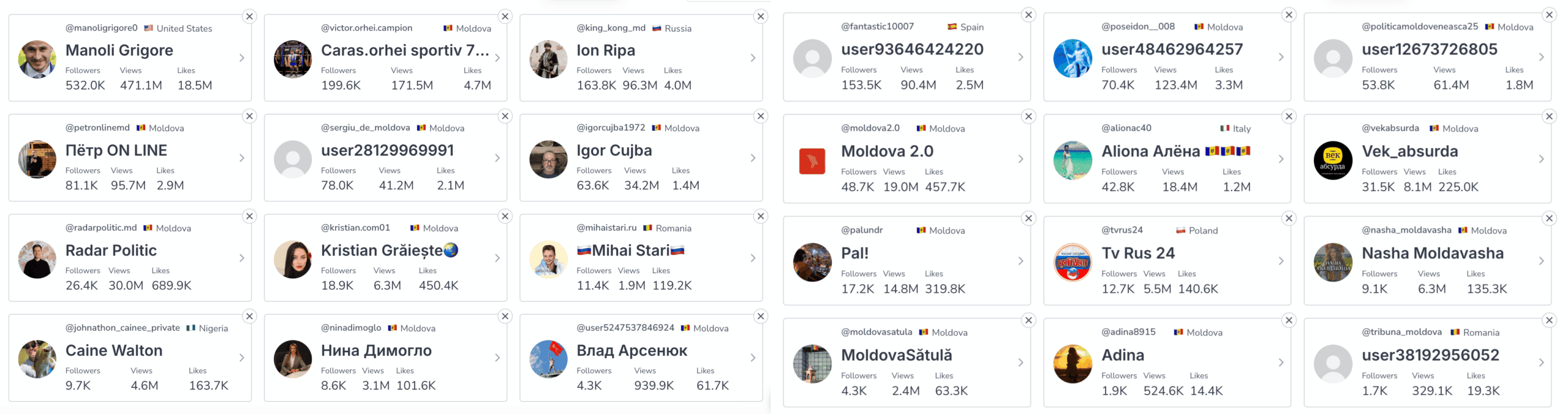
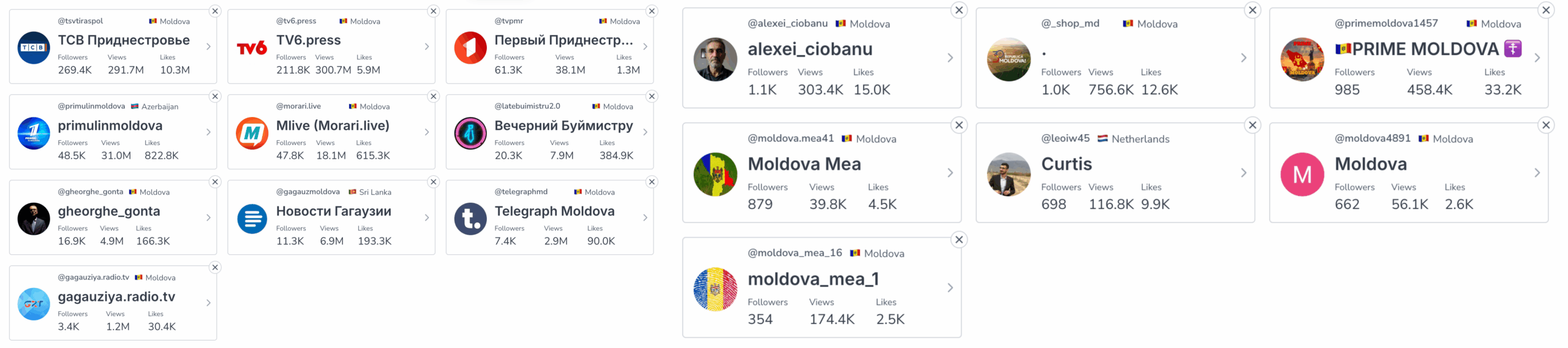
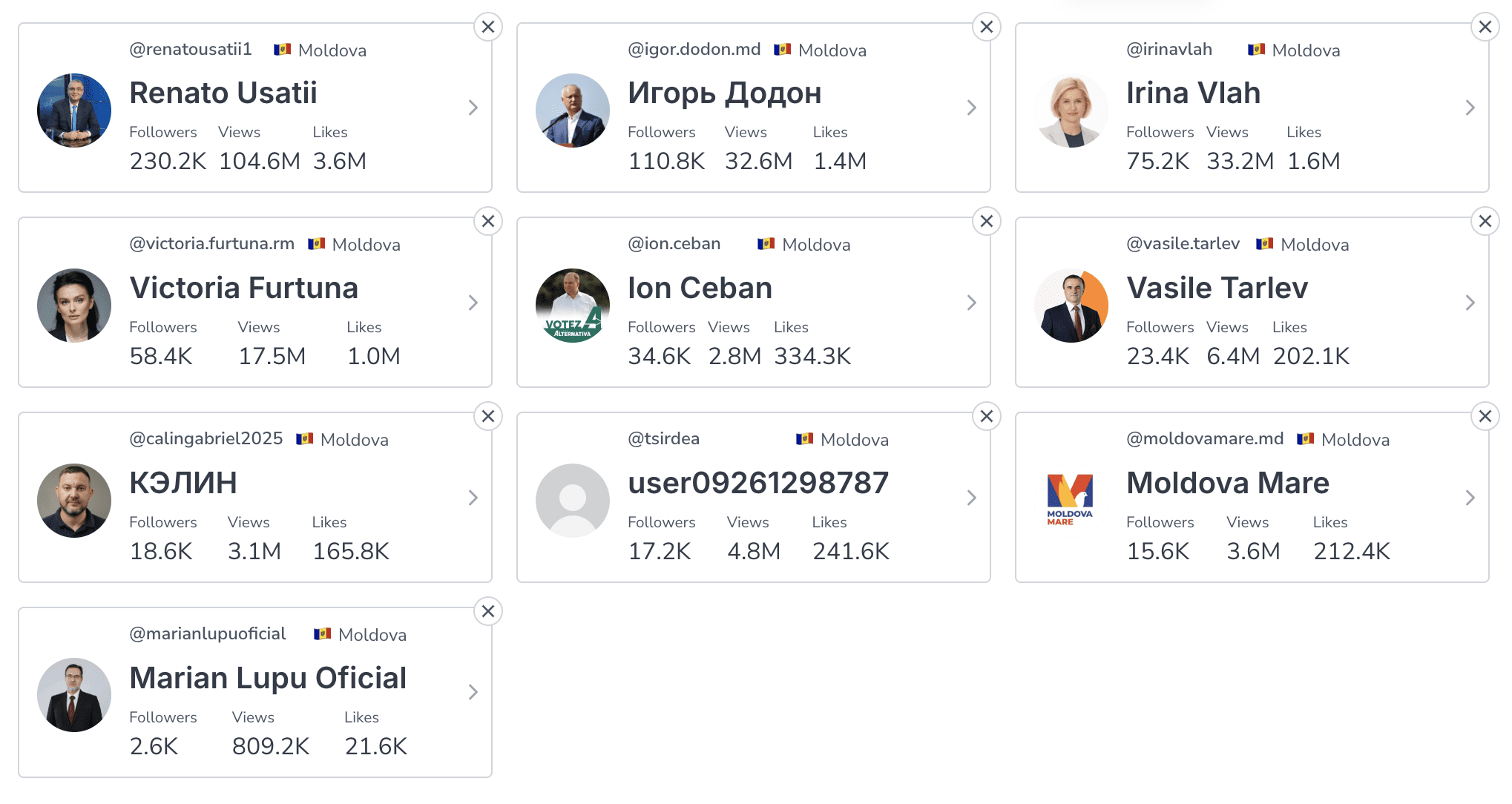
Analysis of the most prominent narratives disseminated through the monitored channels:
- Moldova’s involvement in the war
In September, the narrative portraying Moldova as involved in the war was heavily promoted on TikTok, peaking with the publication of a fake story originating directly from the Kremlin.
Over time, this topic has been exploited by various fake news sites and bloggers, many of whom are linked to Ilan Shor. Certain politicians have also indirectly reinforced these narratives through statements emphasizing the “need to keep neutrality and peace,” thereby amplifying the propaganda.
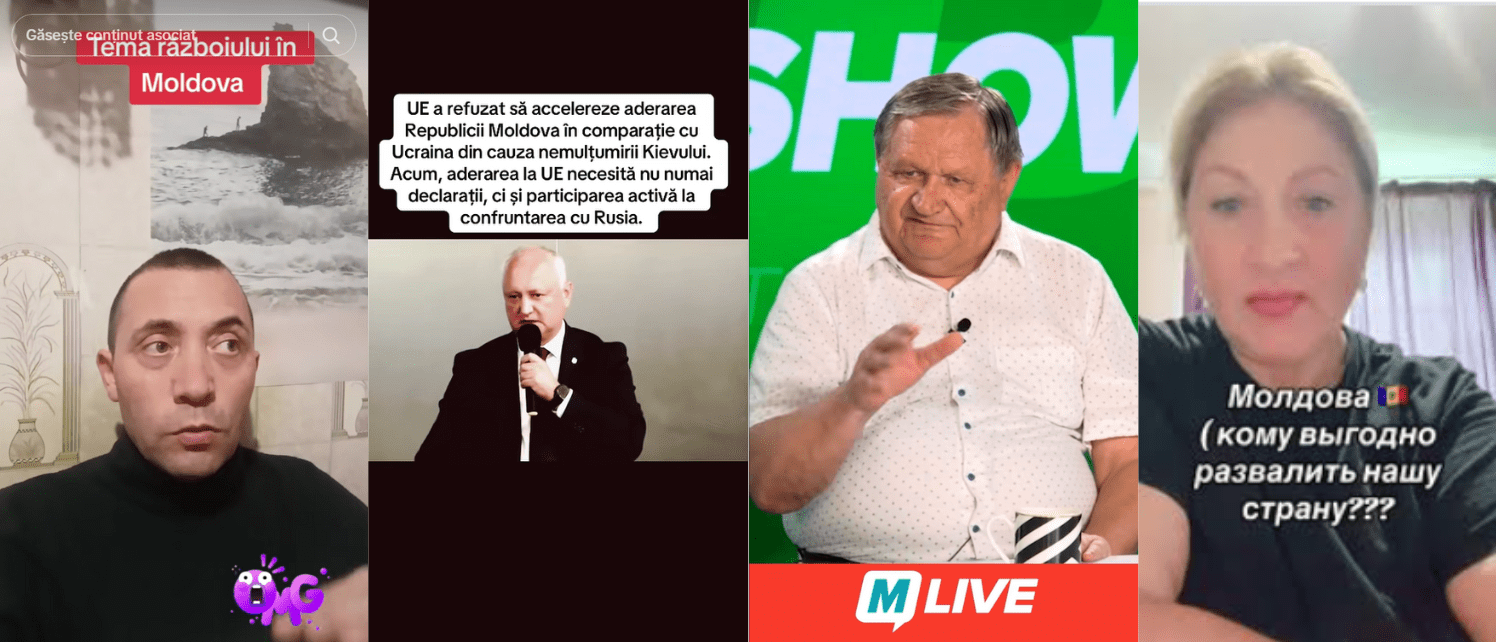
Starting on September 22, Ion Ripa known online under the King Kong pseudonym published several videos claiming that the Republic of Moldova could become involved in a military conflict in the Transnistrian region. He alleged that Romania is prepared to attack Tiraspol and said that Bucharest and Chisinau have conducted joint military exercises to this end. A day later, in another video that has generated over 65,000 views, Ripa returned to this topic, asserting that the Ukrainian parliament had approved a law allowing the deployment of troops on the territory of other states, implying that the Ukrainian army could intervene in Transnistria.
Another source of propaganda is Kristina Grăiește, a blogger known for disseminating fake news and pro-Kremlin narratives. She claimed that Ukraine was planning an attack on the Transnistrian region in the spring of 2026, citing a text that, according to her, had been published by a Ukrainian news portal. In the same video, the blogger accused Moldova, France, and the UK of “sabotaging peace” and asserted that “all the treaties signed in Paris, the secret talks with British MI6, and the joint strategic exercises are direct threats to Moldova’s peace.” She further stated that Maia Sandu and Volodymyr Zelenskiy are acting on orders from France and the United Kingdom.
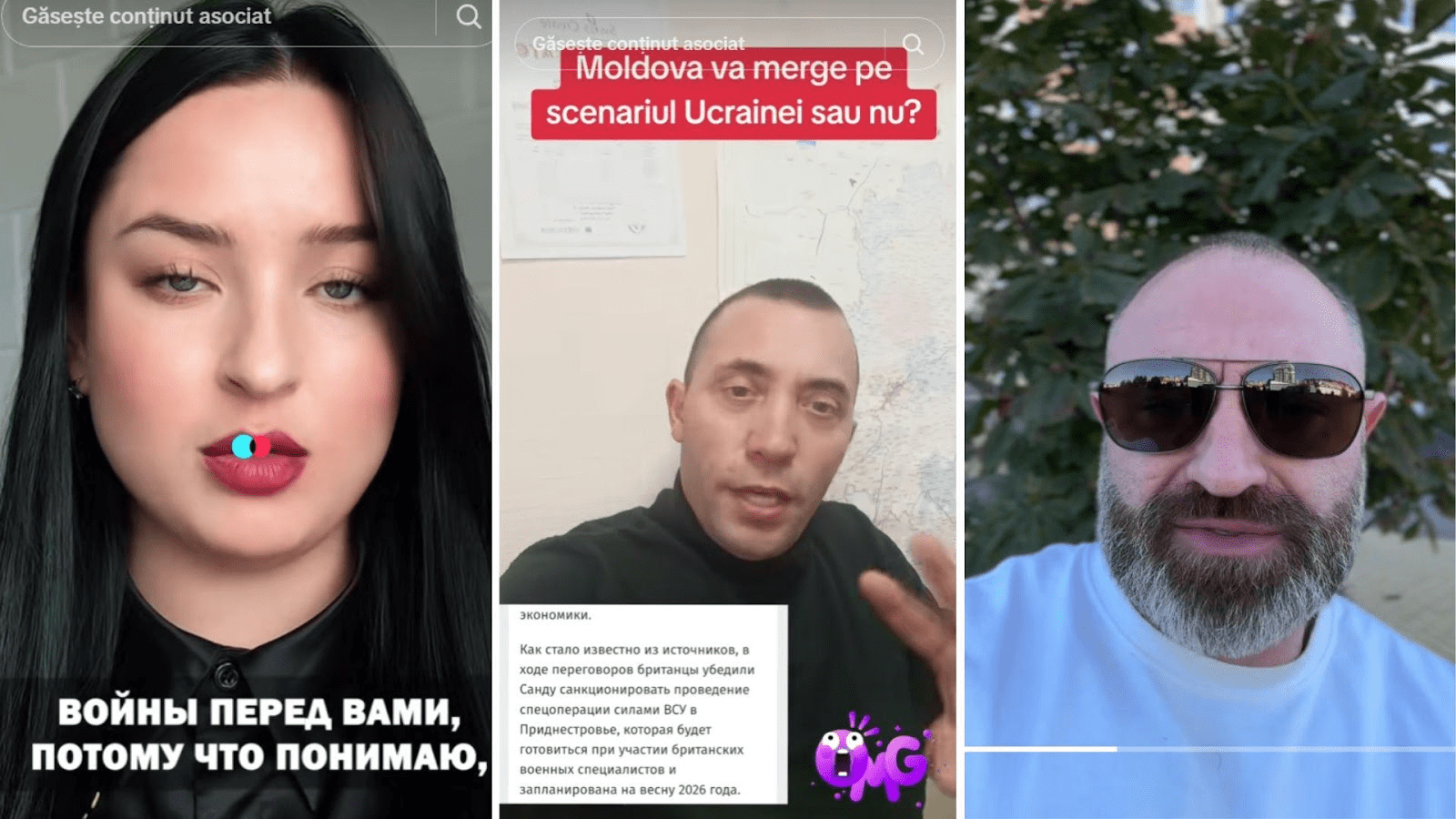
Blogger Сергей Молдова also invokes the same alleged article. While he acknowledges that he “does not know how accurate the information is,” he goes into details about an apocalyptic scenario, amplifying the perception of imminent danger. The video aims to cause panic and propagate the “myth of war” by presenting rumors and insinuations as credible possibilities.
A few days after the first publication, Sergiu revisited the topic, attempting once again to insert this narrative into public space. He stated that “someone wants to revive this conflict,” asserting that the increasingly frequent circulation of information on the subject is deliberate. He further asserted that the conflict is being orchestrated by “someone higher than PAS,” alluding to Western states.
Another narrative concerning Moldova’s involvement in the war focuses on its relationship with the European Union, suggesting that accession would entail offering assistance to Ukraine. In a speech by Igor Dodon, shared by the anonymous channel @alexei_ciobanu, it was asserted that the EU would not accept Moldova without contributing to the war effort, and that hosting refugees and Maia Sandu’s anti-Russian statements would no longer suffice; the new requirement would be to actively fight alongside Ukraine. The source also claimed that Georgia’s path to EU membership has been blocked because the country refused to participate in the conflict.
Supporting the narrative that blames Europe for dragging Moldova into the war is a clip from a show published on @morari.live, where the guest explains that the war is an election scare tactic, while European leaders are the ones openly discussing sending troops to Ukraine. Similar publications frequently question the need for extensive military equipment. In a video published by the anonymous channel @fantastic10007, the source raises the same question and makes an urgent appeal to the Moldovan public to resist “evil,” describing political forces as a “Satan in a skirt” who wants to destroy Moldova.
2. European Integration and the “colonization” of Moldova
Another line of propaganda on TikTok seeks to undermine Moldova’s European path, using manipulative techniques that range from denigrating the EU’s image to promoting the false narrative that Brussels is indifferent to the country’s integration. A common tactic involves quoting European press articles out of context or fabricating them entirely. For instance, in early September, several bloggers claimed to cite an Euronews article but instead reproduced fake content to mislead viewers.
Blogger Влад Арсенюк used the title and cover of an authentic article but added fake text stating that the EU intends to use Moldova in a military conflict and does not plan to admit it into the bloc. He also cited an article from Telepolis, a German publication known for its pro-Moscow views.
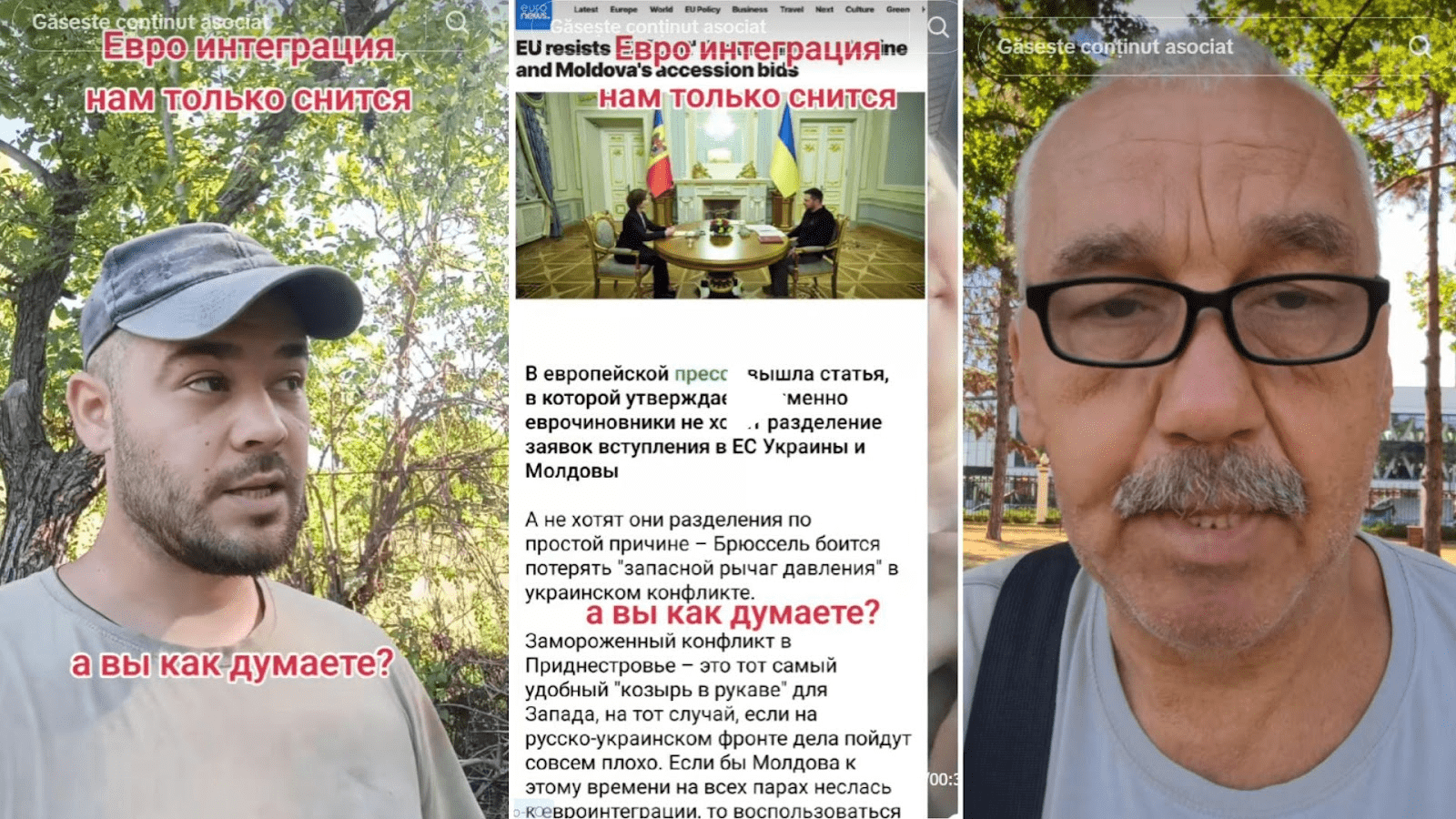
The account Пётр ON LINE characterized EU accession as a “scam,” a “European carrot” designed to control the country. He stated that, if Moldova became a member state, the West would lose a “lever of pressure” (in original text, рычаг давления) over Chisinau. To reinforce his message, he also stoked fears of war, asserting that external partners intend to “throw Moldova into the fire of military action.”
The Vek Absurda page, which restarted its activity before the elections, published a video that denigrated European Union leaders based on their appearance. The video was followed by commentary from a self-proclaimed political analyst, who advanced conspiracy theories suggesting that secret structures influence the leadership of the European Union.
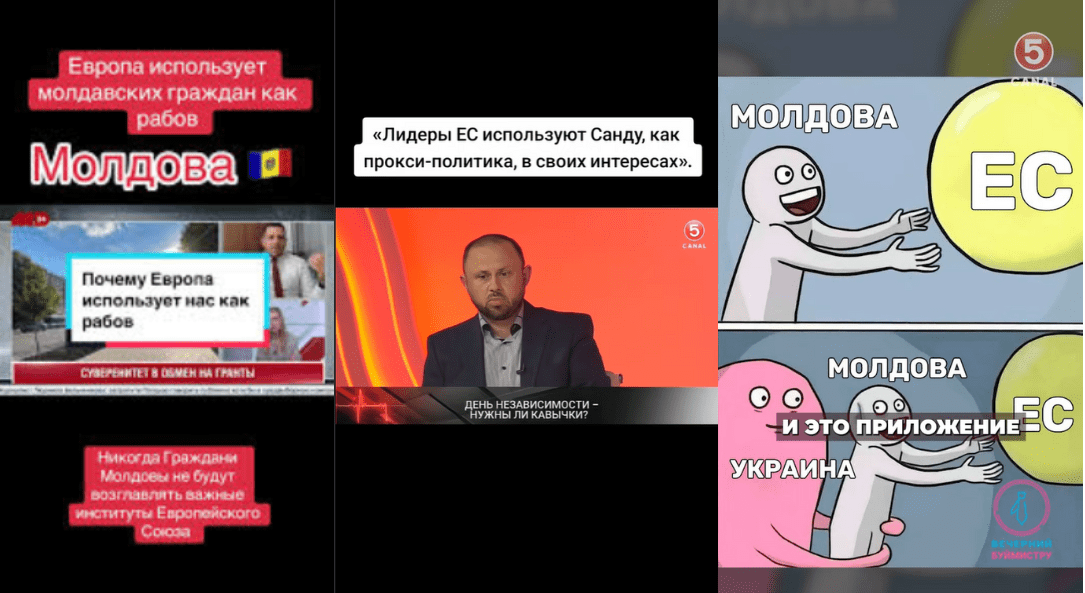
A popular narrative is that the European Union is exploiting Moldova and that the country risks becoming an EU “colony.” In an interview, a political analyst stated that Europe is using Moldovan citizens as cheap labor and treating Moldova as a colony, forcing it to make concessions in return for loans and financial aid. He further asserted that Moldova is sacrificing its sovereignty and is being forced to give strategic assets, including the port of Giurgiulesti and the railway, to repay its debts.
Another political analyst claimed in a show published by @TV6 that European leaders are exploiting Maia Sandu for their own internal PR. He added that the ceremonial welcomes afforded to Maia Sandu in European capitals are intended to convey to European citizens that their governments are effectively moving Moldova out of Russia’s sphere of influence, particularly after the “loss” of Ukraine and Georgia.
According to recurring narrative, Moldova’s EU accession process is wholly dependent on Ukraine’s progress, implying that the Brussels’ engagement with Moldova exists solely as part of a combined consideration with Ukraine. Vlogger Dumitru Buimistru, in a video shared on @latebuimistru2.0, frames the link between Moldova and Ukraine as disadvantageous, citing resistance to Ukraine’s accession among some EU members. He further criticizes the association of Moldova with Ukraine, a country that has historical and political tensions with its neighbors.
3. Europe is in crisis
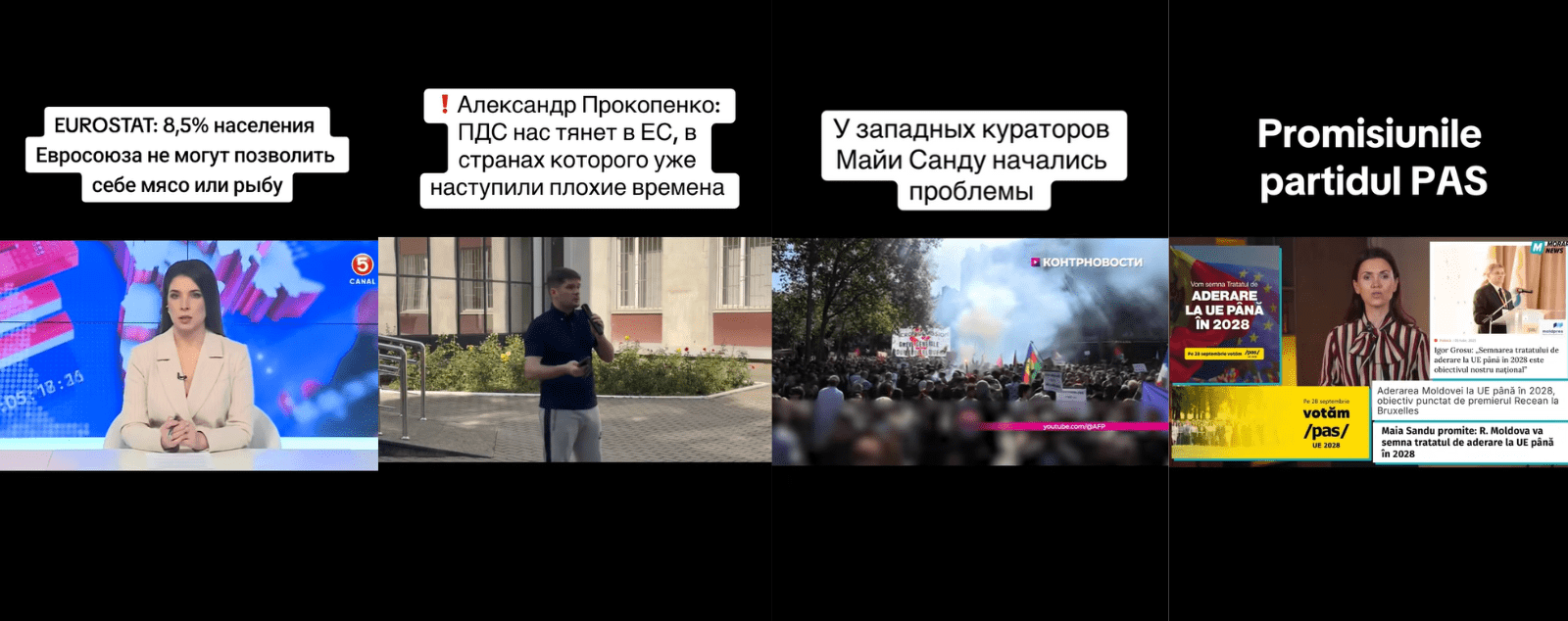
In an effort to cast doubt on Moldova’s European path, the monitored TikTok accounts disseminated news and commentaries depicting Europe as in crisis and its living conditions as below expectations. According to a news item published by @TV6 used Eurostat data to suggest that living conditions in Europe are challenging. Specific references are made to Bulgaria, Slovakia, and Romania. Romania is specifically highlighted as having a particularly high proportion of the population affected by these issues.
France and Germany are also frequently cited by commentators, who use these countries as examples of crisis and instability in Europe. A citizen attending a public event cited France’s economic challenges, asserting that “bad times” have already arrived in the country. He also noted that both France and Germany require pension reforms, which he cites as evidence of the vulnerable situation in these countries. According to a news item published by @primulinmoldova, the ruling party depended entirely on external partners over its four-year term, though PAS’s Western supporters are currently facing domestic issues that could affect Moldova. The item presents images of major protests in France and highlights that the French president, depicted as “Sandu’s ally,” now has an approval rating under 20% because of economic issues.
In a video, Natalia Morari condemned the European political elite, claiming that their conduct, mindset, and rhetoric reflect Maia Sandu’s style marked by “zero competence, zero common sense, ambition, arrogance, hypocrisy, slogans upon slogans, and a large dose of cynicism and lies.” She also warned that Moldova risks remaining isolated, with a “destroyed economy” and “zero prospects for revival” due to unfulfilled promises and lack of real support. According to her, the rise of far-right parties in the EU could impede its expansion, effectively burying the “Moldovan pseudo-dream of European handouts.”
4. Western diaspora’s role
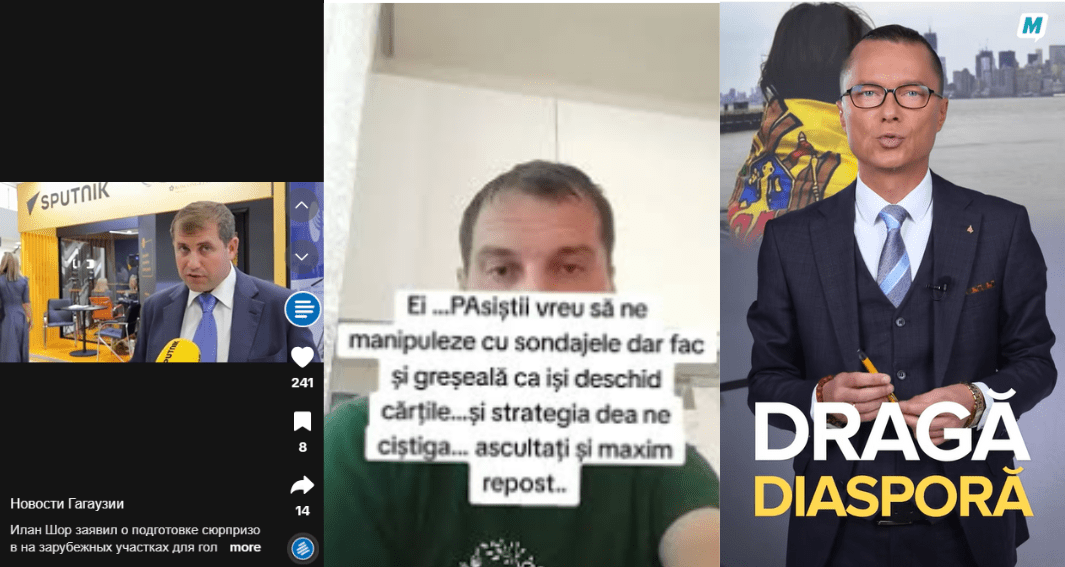
The narrative of election fraud persisted throughout the campaign, with particular emphasis on alleged fraud at polling stations in EU member states. In a speech published by @gagauzmoldova, Ilan Shor stated that he is preparing surprises for polling stations abroad, where he claims careful monitoring is required. It is essential for us to accurately anticipate events at polling stations in the West, as we expect fraud to occur there, similar to what was observed during the referendum. We must strictly oversee the operations of these polling stations. We are preparing surprises, control, monitoring, and much more for the authorities,” he said.
This narrative also appeared on anonymous channels. In one video published by @fantastic10007, a citizen highlighted the need to mobilize observers at polling stations, especially in Italy and Romania, asserting that hundreds of thousands of votes could be influenced.
In an editorial that had over 370,000 views, Gheorghe Gonta suggested that the current government does not want the diaspora to return home, as this could create challenges for the national system. According to him, the government wants the diaspora to stay abroad to send remittances while returning solely to participate in elections. He asked: “Do you, our compatriots abroad, realize how courteously they address you during election meetings? Do you note the grand festivals held for you in August? Do you truly believe these are meant to lure you back home? Their organization is strictly election-driven, with no other intent.”
5. Igor Dodon and the “Georgian plan”
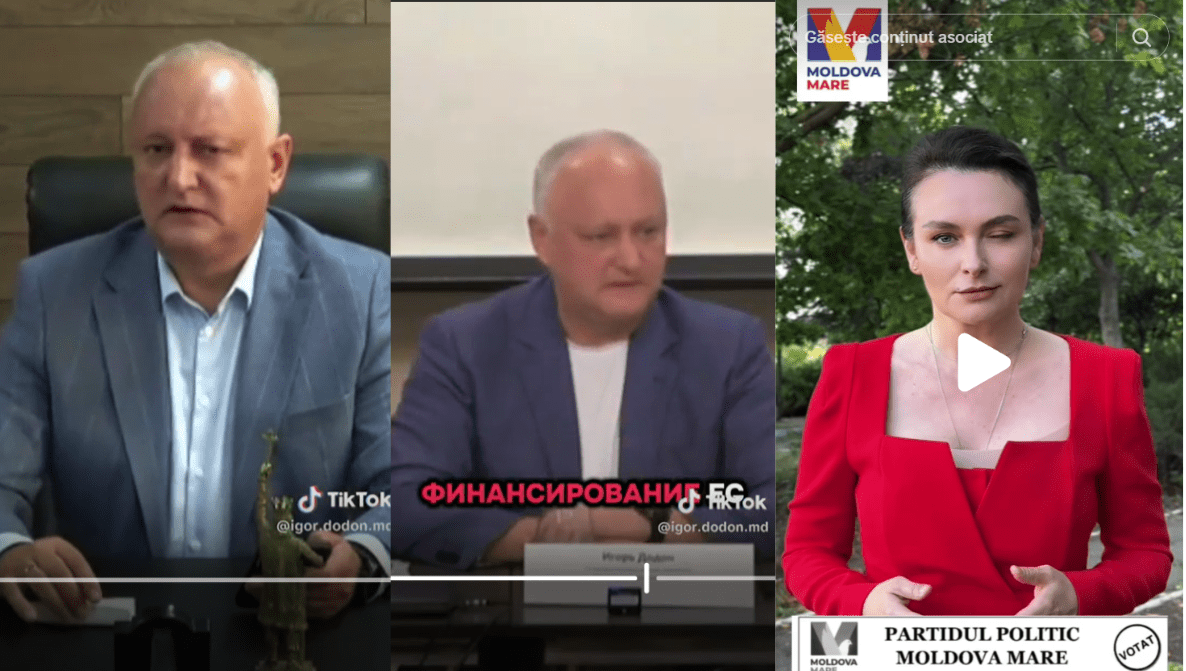
Some politicians subtly highlight the stagnation of Moldova’s European path. For instance, Igor Dodon compared Chisinau to Georgia, presenting Tbilisi’s political developments as a successful model.
According to the socialist leader, Maia Sandu and former Georgian president Mikheil Saakashvili both “hid behind the European flag” to establish authoritarian regimes, allegedly with the support of “curators in Brussels.” Six days later, in another video, Dodon stated that once Georgia’s EU integration was halted, Georgian politicians succeeded in attracting major investments from China, which, according to him, continue to increase. The relevance of this message is underscored by the recent submission to the Chisinau Parliament of a draft “foreign agents” law. A similar initiative previously obstructed Georgia’s European integration. In this way, Igor Dodon contributes to legitimizing the idea that Moldova’s European integration will remain blocked.
Victoria Furtuna, closely associated with fugitive oligarch Ilan Shor, echoed this discourse, proclaiming her intent to “destroy foreign NGOs” and even categorizing the LGBTQI+ community as one of them.
6. Energy resources
A central theme in the campaign centered on energy prices, which were used to stir memories of cheaper Russian gas.
In early 2025, after Ukraine refused to sign a new transit agreement, Gazprom halted deliveries to Transnistria, despite being contractually obliged to continue and having alternative routes available, such as TurkStream. Transnistria was plunged into an energy crisis, at times able to provide electricity for only a few hours a day. Chisinau, by contrast, avoided disruptions but was forced to buy more expensive electricity from the European market, backed by EU financial support. Transnistria rejected European aid and instead began receiving gas through a Hungarian intermediary, with payments processed via a company in Dubai.
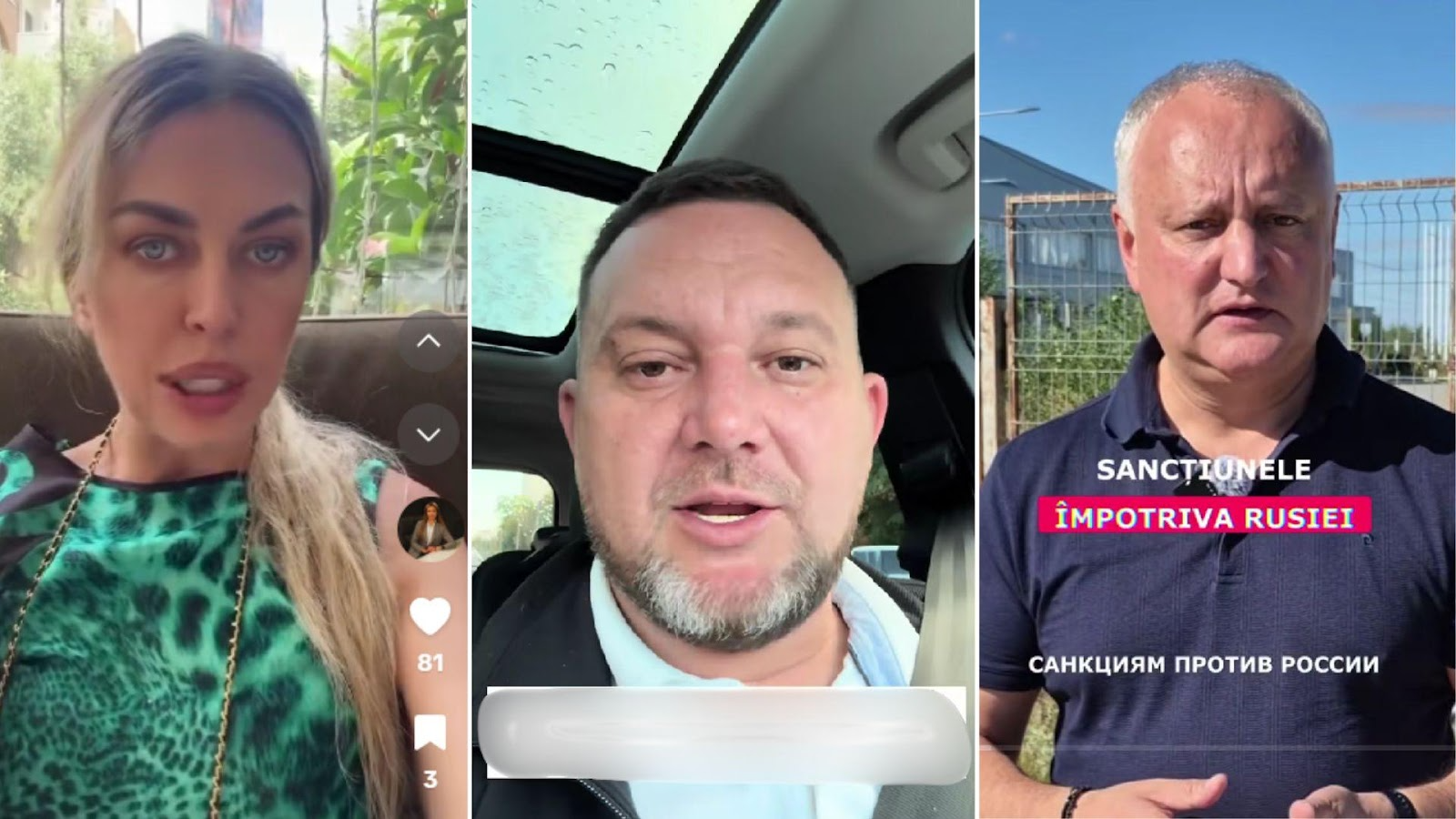
A few months later, during the election campaign, Igor Dodon offered a different explanation for rising electricity prices, alleging they were driven by Maia Sandu’s decision to join “all sanctions against Russia.”
Taking up the same line, Kristina Graiește stated that the gas price hike is due to “Chisinau’s irresponsible and cynical policy.” She suggested that Prime Minister Dorin Recean should seek a better deal in Moscow. She also insinuated that the energy crisis has been “turned into a business” at the expense of ordinary citizens.
Contributing to the same narrative, Nina Dimoglo asserted that Moldova would, in fact, purchase all of its gas from Russia. This idea was often promoted by several Chisinau politicians, such as Igor Dodon, Irina Vlah, Ion Ceban, Alexandr Stoianoglo, and Marian Lupu. Responding to these claims, Sergiu Tofilat, a politician and energy specialist, emphasized that the assertion is false, explaining that only a small number of EU member states continue to purchase Russian gas, and then only in much smaller amounts.
Dimoglo further asserted that Moldova would reject direct Russian gas deliveries (false information). In fact, the Kremlin used gas as an instrument of energy blackmail, cutting deliveries in 2021 and 2022 and rerouting them exclusively to Transnistria.
Gabriel Calin reinforces this narrative, asserting that once in Parliament, he would support an energy law designed to secure the lowest energy prices, irrespective of the supplier. By doing so, he implicitly advocates for Moldova’s return to Russia’s sphere of influence. Similarly, candidate Vasile Tarlev, linked to Russia, focuses on electricity prices, pledging to reduce gas costs to MDL 5 – 7 within a month if elected.
The monitoring was carried out within the project “Resilient Media, Informed Voters: Safeguarding Moldova’s Elections from Disinformation”, funded by the Embassy of the Kingdom of the Netherlands in Moldova. The views expressed are those of the authors and do not necessarily reflect the position of the donor.
Access to the TikTok monitoring tool was provided as part of the project “ProElect – Promote accountability in Electoral processes in EaP through increased participation and capacity of civic actors” implemented by the Center for Research and Advocacy in European Affairs with the financial support of the European Union and Equal Rights & Independent Media (ERIM).
