


The IJC has trained journalists and media content creators to reflect on diversity and minority rights in a responsible manner
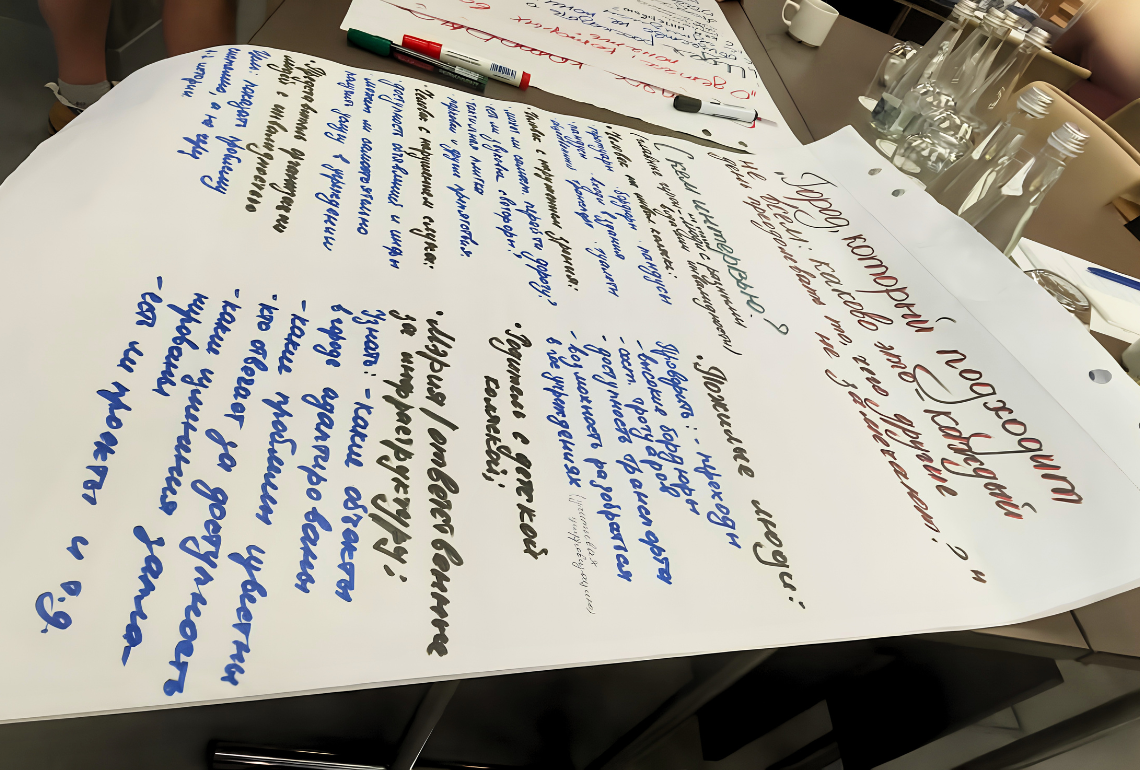
What is the role of the press in addressing issues relating to a person’s identity, ethnicity or religion? How can social issues and the life stories of representatives of different ethnic and linguistic groups be covered professionally? How do we convey messages of public interest relating to human rights to the public in a clear and convincing manner? These and other editorial issues and ethical dilemmas were discussed during the training programme ‘Responsible Journalism and Human Rights: Objective Reporting of Events, with a Focus on Minority Rights in the Media’, organised by the Independent Journalism Center (IJC).
The event took place on 17–18 September in Chișinău and brought together 22 representatives of the national and regional media, including journalists and media content creators from both banks of the Dniester, as well as from the Autonomous Territorial Unit of Gagauzia (ATU Gagauzia).
The training began with an introductory session covering the key concepts of discrimination, international human rights standards and the role of the media in promoting inclusion. Participants also discussed stereotypes and prejudices, as well as the importance of using appropriate language when reporting on issues affecting vulnerable groups.
“The use of inclusive language plays a particularly important role in addressing issues relating to vulnerable groups. Human rights-based terminology serves inclusion and unity in society, emphasises the importance of equality and helps to promote it. This is particularly important, as groups such as ethnic, religious and linguistic minorities continue to face prejudice in society, which underpins discriminatory practices,” explained Iulia Votslava, a specialist at the UN Office for Human Rights in Moldova.
In turn, Ana Gherciu, a trainer on the programme, discussed the role of journalists in reflecting diversity and promoting inclusion. The expert presented examples from the media and social media, including press articles and video interviews, and asked participants to analyse how these had been produced and presented to the public.
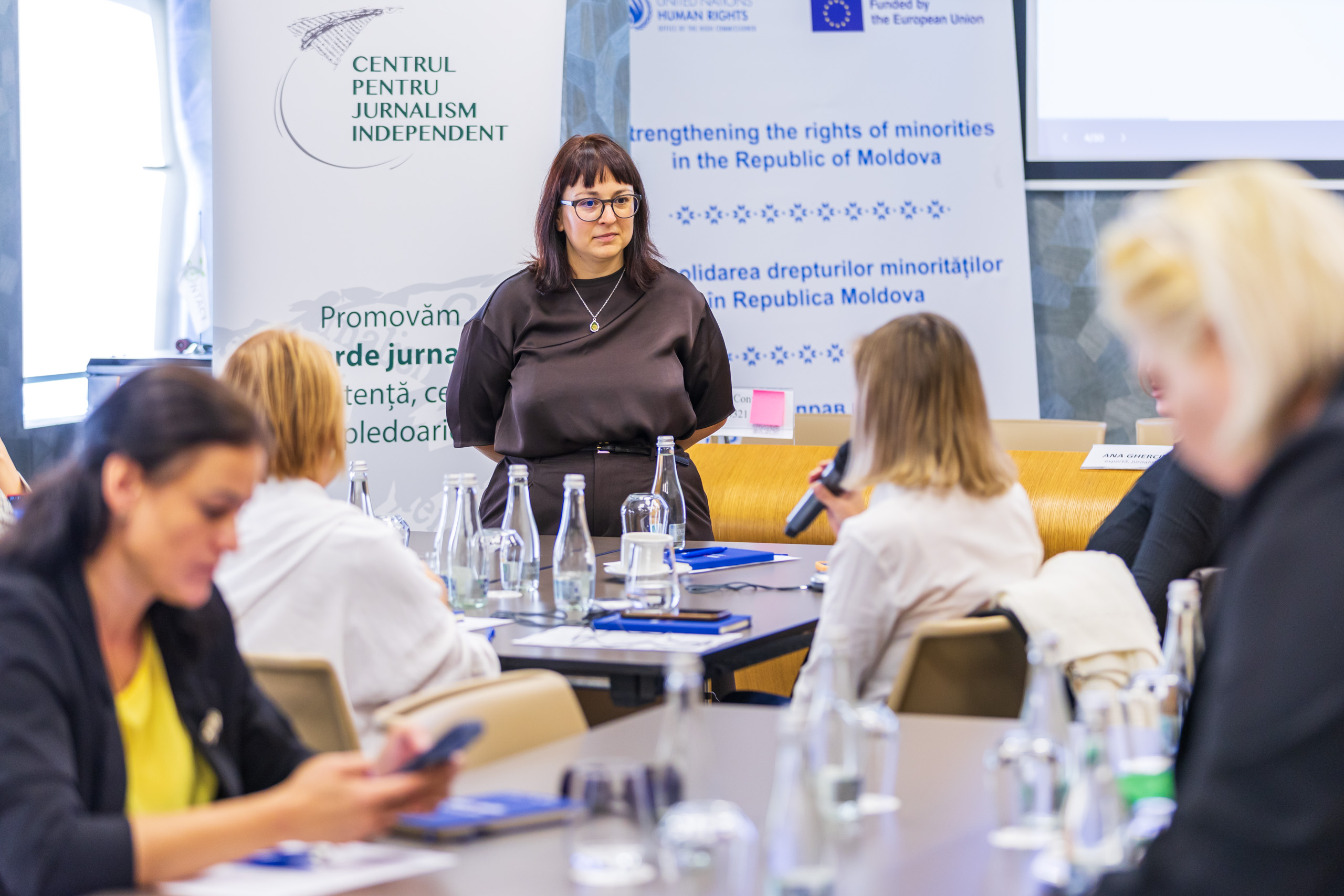
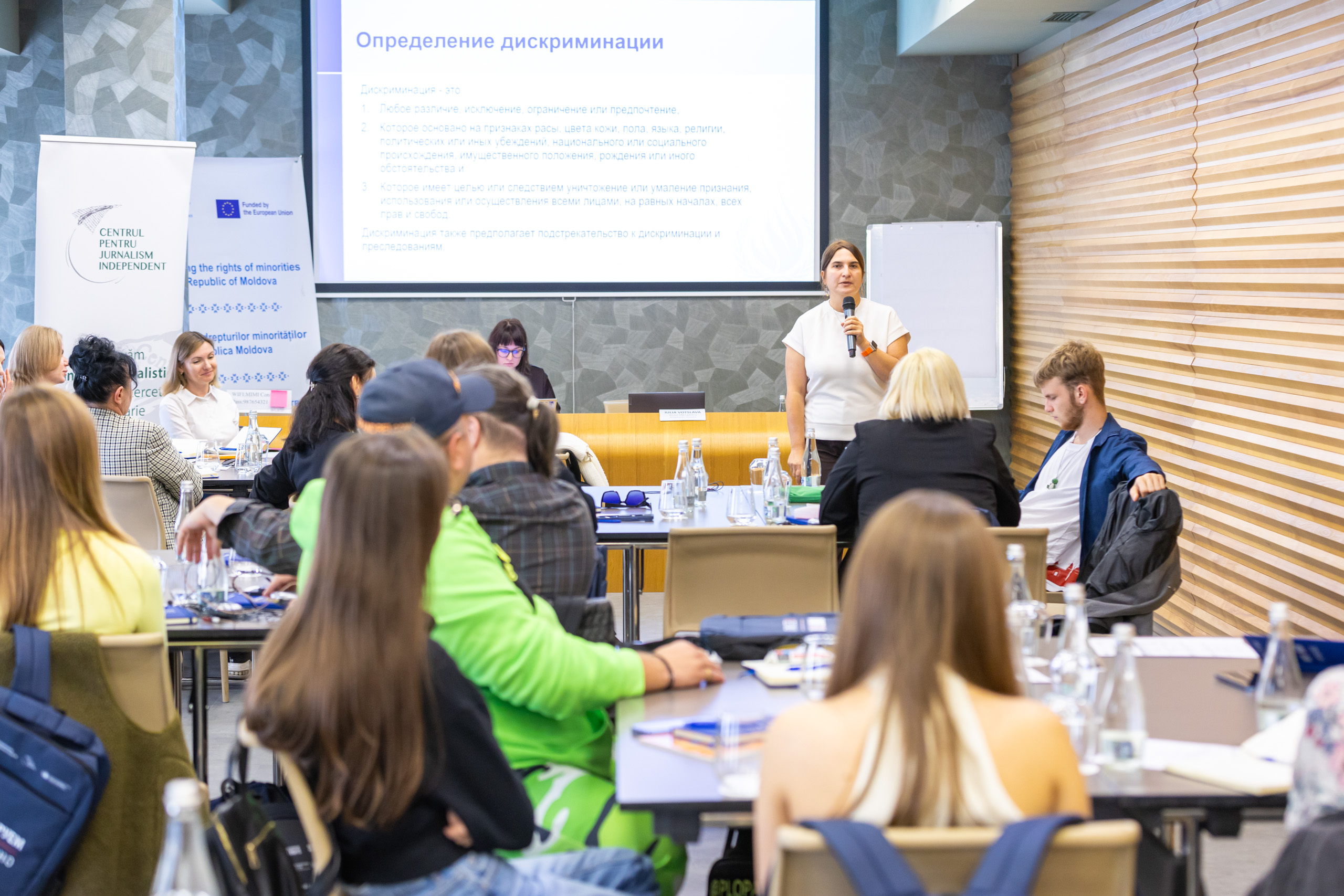
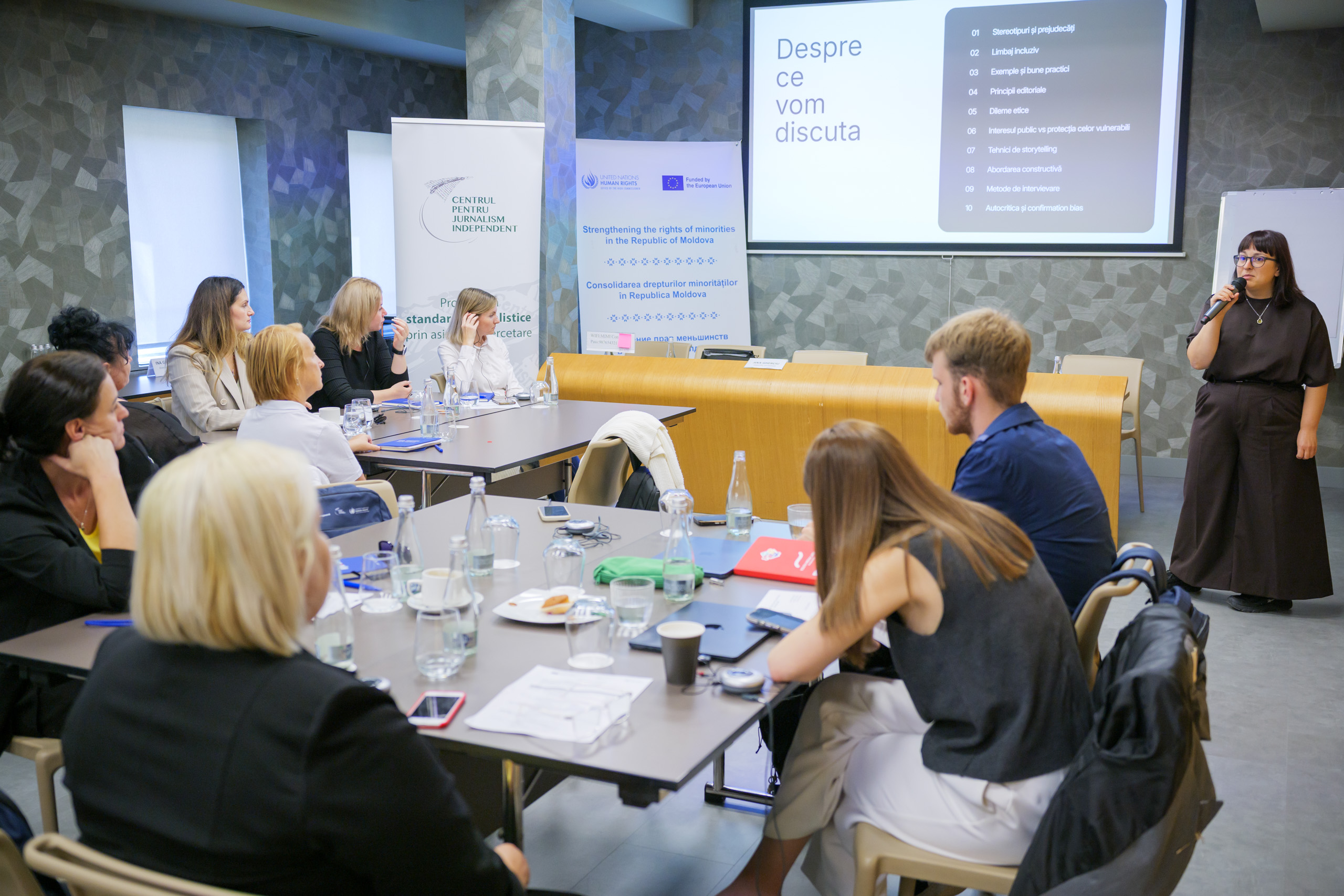
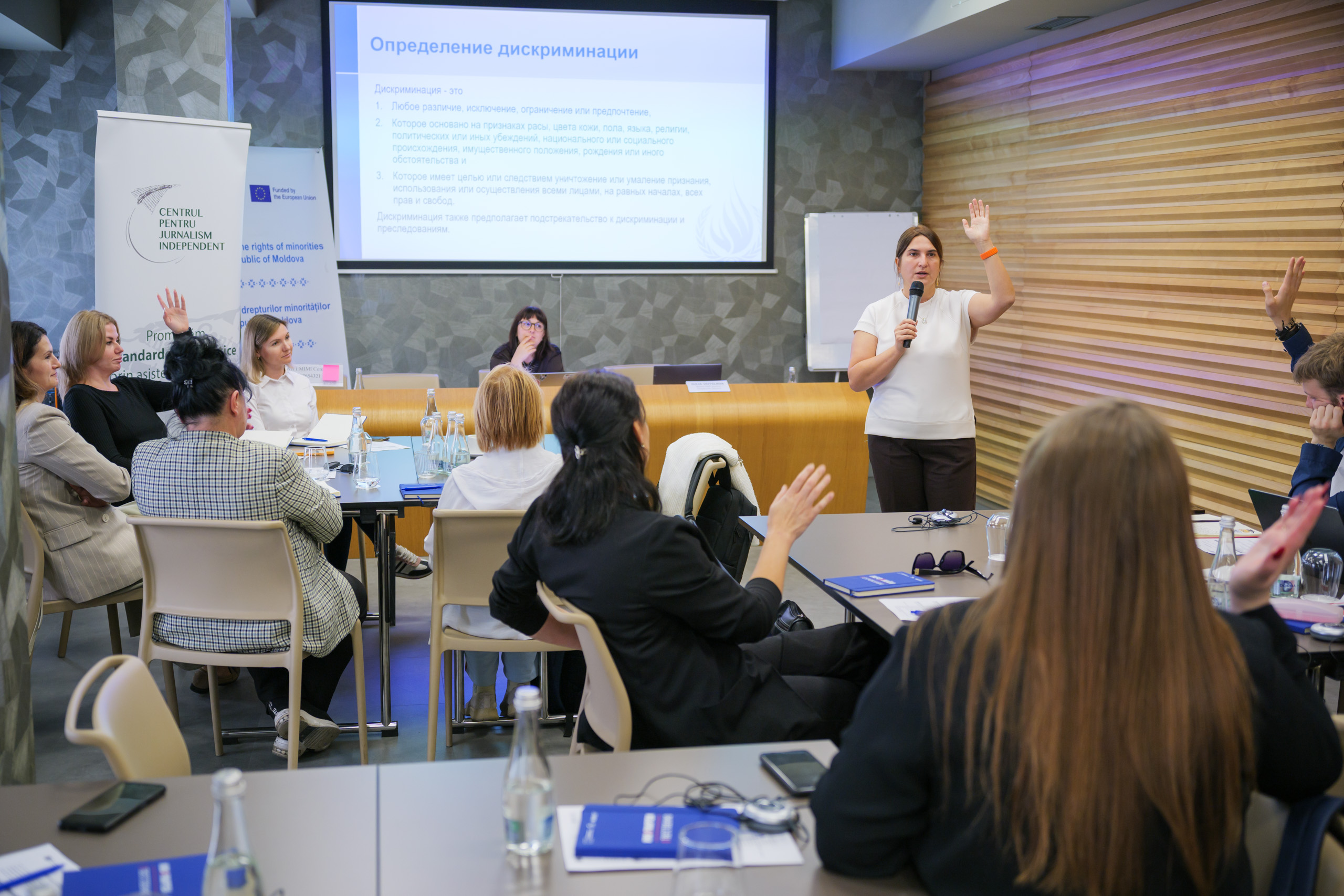
Under the trainer’s guidance, on the first day of the training, participants were involved in identifying issues relevant to the programme’s theme and encouraged to form mixed teams with colleagues from different regions of the country. Together, they developed ideas for journalistic pieces aimed at contributing to the defence of human rights, the respect for the rights of minorities and other vulnerable groups, as well as their fair and objective portrayal in the media.
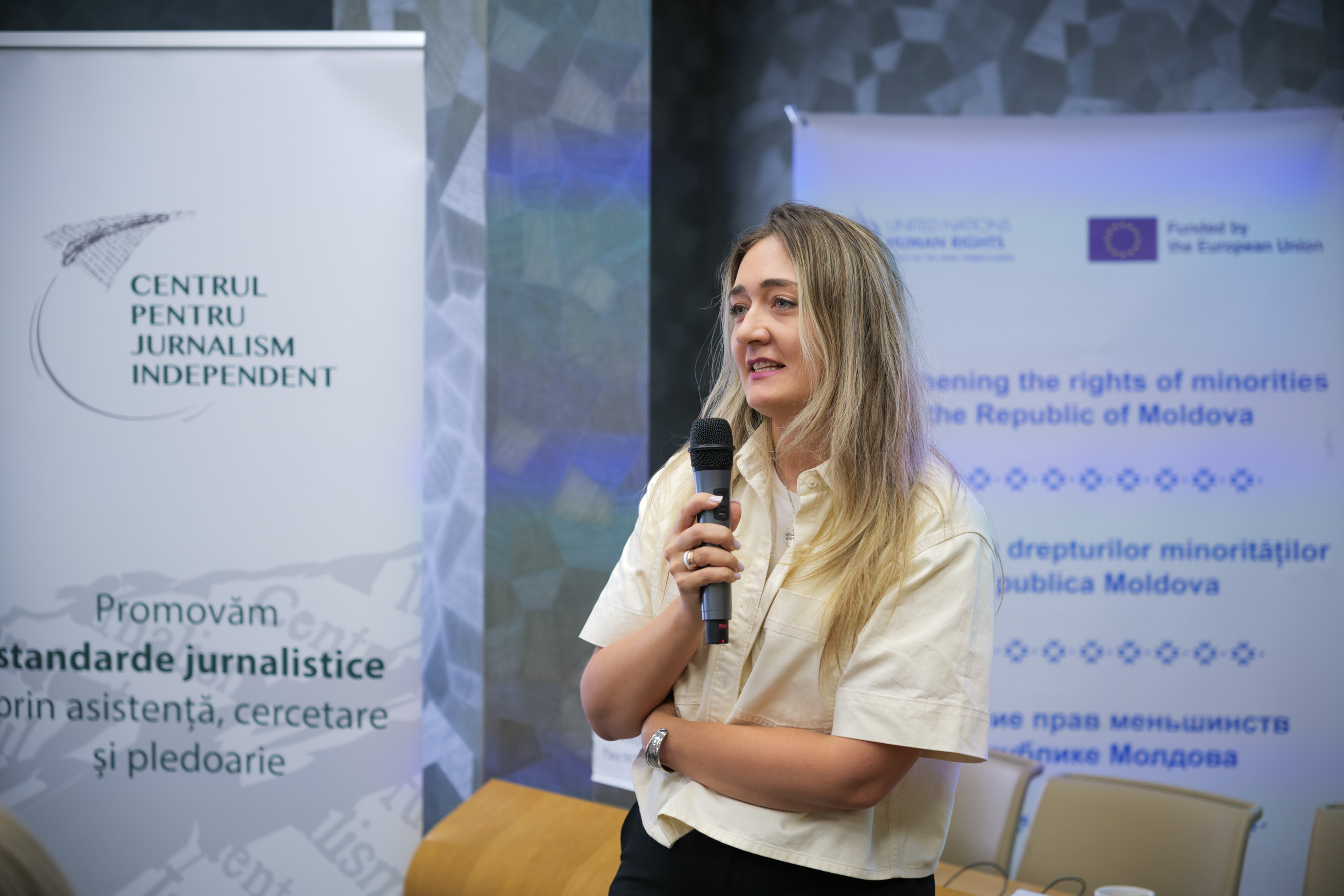
“Through this programme, we aim to strengthen journalists’ ability to report on human rights issues in a responsible, balanced and well-researched manner, with a focus on minorities and other vulnerable groups. We hope that participants will complete this training course with ideas for features that bring to the attention of the public the life stories and experiences of people who deserve to be known and understood,” said Ina Grejdeanu, Director of Strategic Development at the IJC.
On the second day, the journalists worked in teams, selecting topics they considered relevant to the public. The ideas were presented during an open session, with each group receiving recommendations from the trainer on how to improve them. Among the recommendations were the need to provide context, explain the causes of the problem, reflect the positions of the various stakeholders involved, and highlight the nuances that help the public better understand the topic.
“We must help the public understand the issue by showing just how complex it is. Furthermore, when we approach the topic through the lens of constructive journalism, we must not forget about solutions. We can and must present solutions based on what works well elsewhere and propose models that can be replicated in other regions. Similarly, we should also highlight those aspects that do not work quite as well,” added Ana Gherciu.
Journalists were urged to avoid presenting reality in black-and-white terms, as well as to avoid stereotypes, whether positive or negative. At the same time, the trainer drew attention to the risk of portraying members of vulnerable groups strictly in terms of their status as ‘victims’ or, conversely, as ‘heroes’.
“Think about the purpose of these materials and your motivation. Who do you want to tell the story of? Why? Don’t forget that we want to showcase various minorities, but at the same time, the protagonists of the story must not be reduced to their minority identity. A single person does not represent the entire group, and the social, historical and institutional factors underpinning a situation are extremely important,” the expert told the participants.
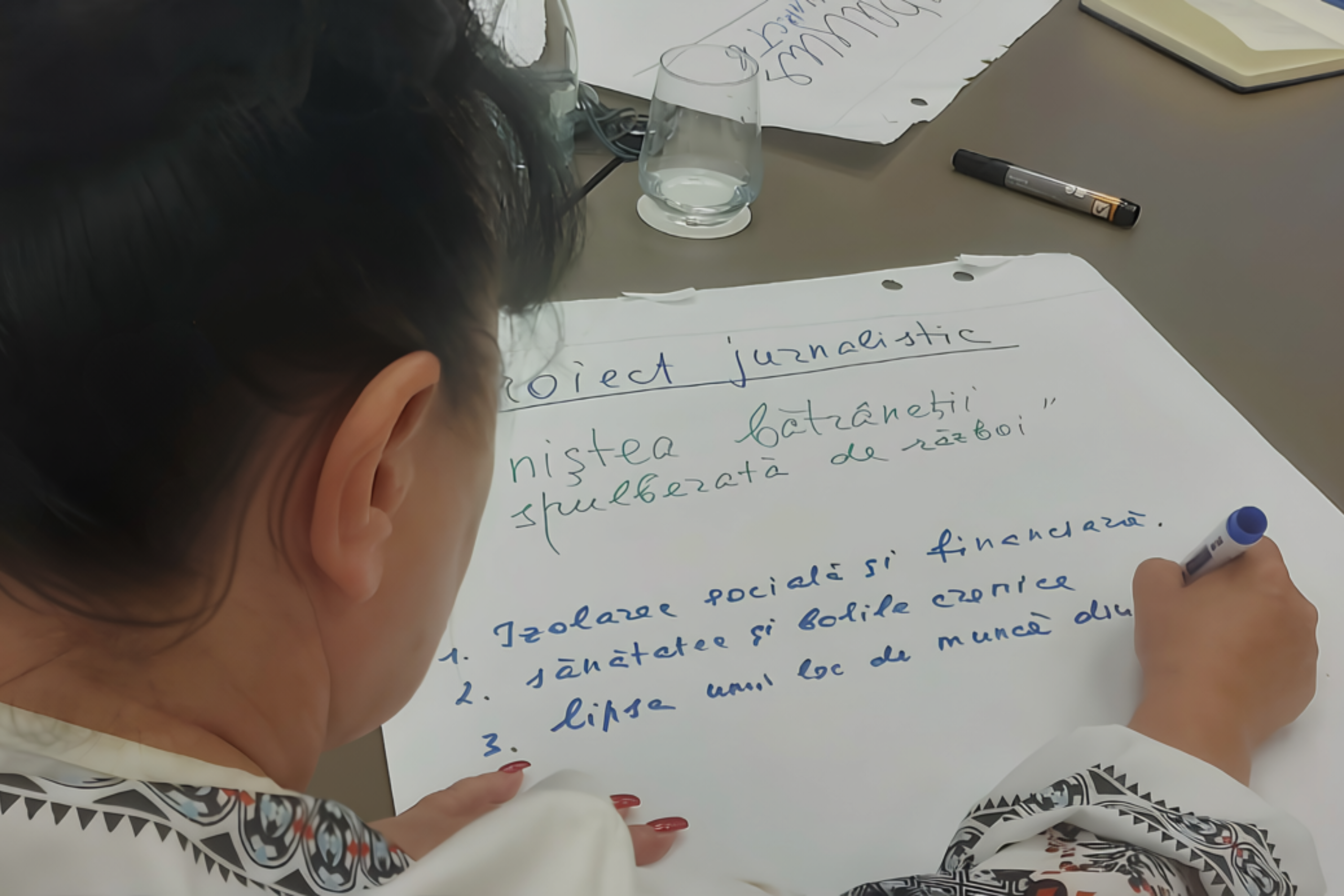
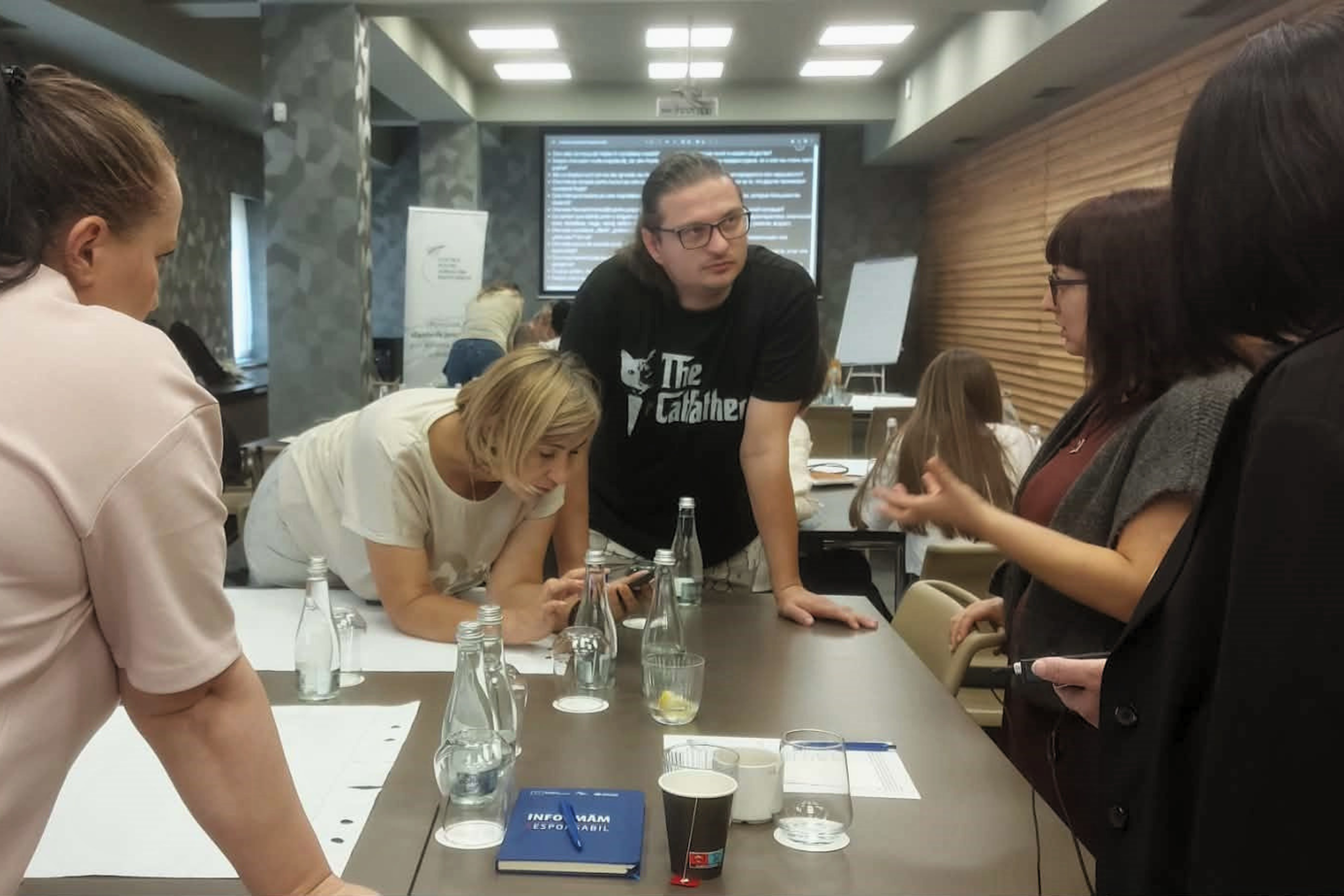
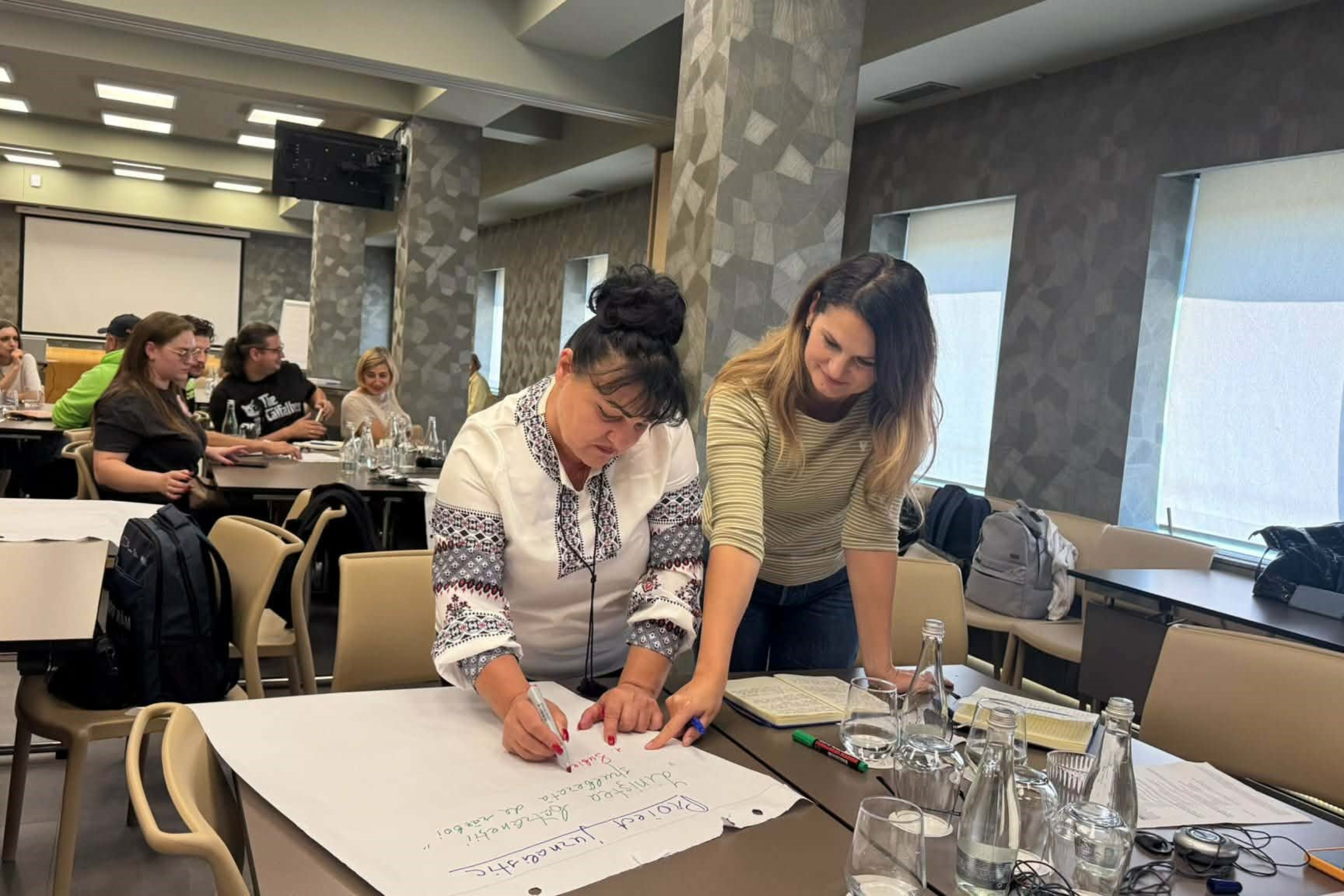
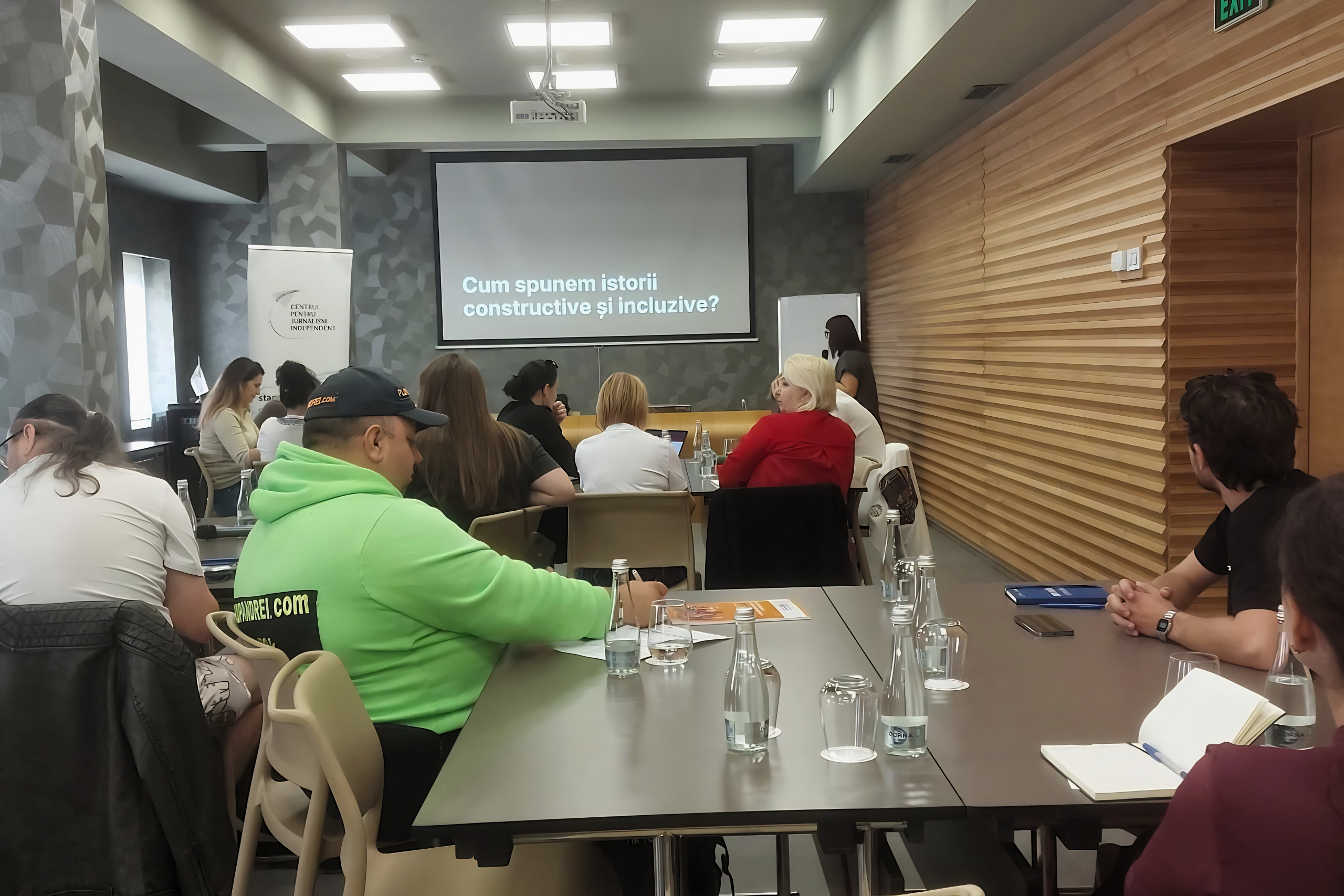
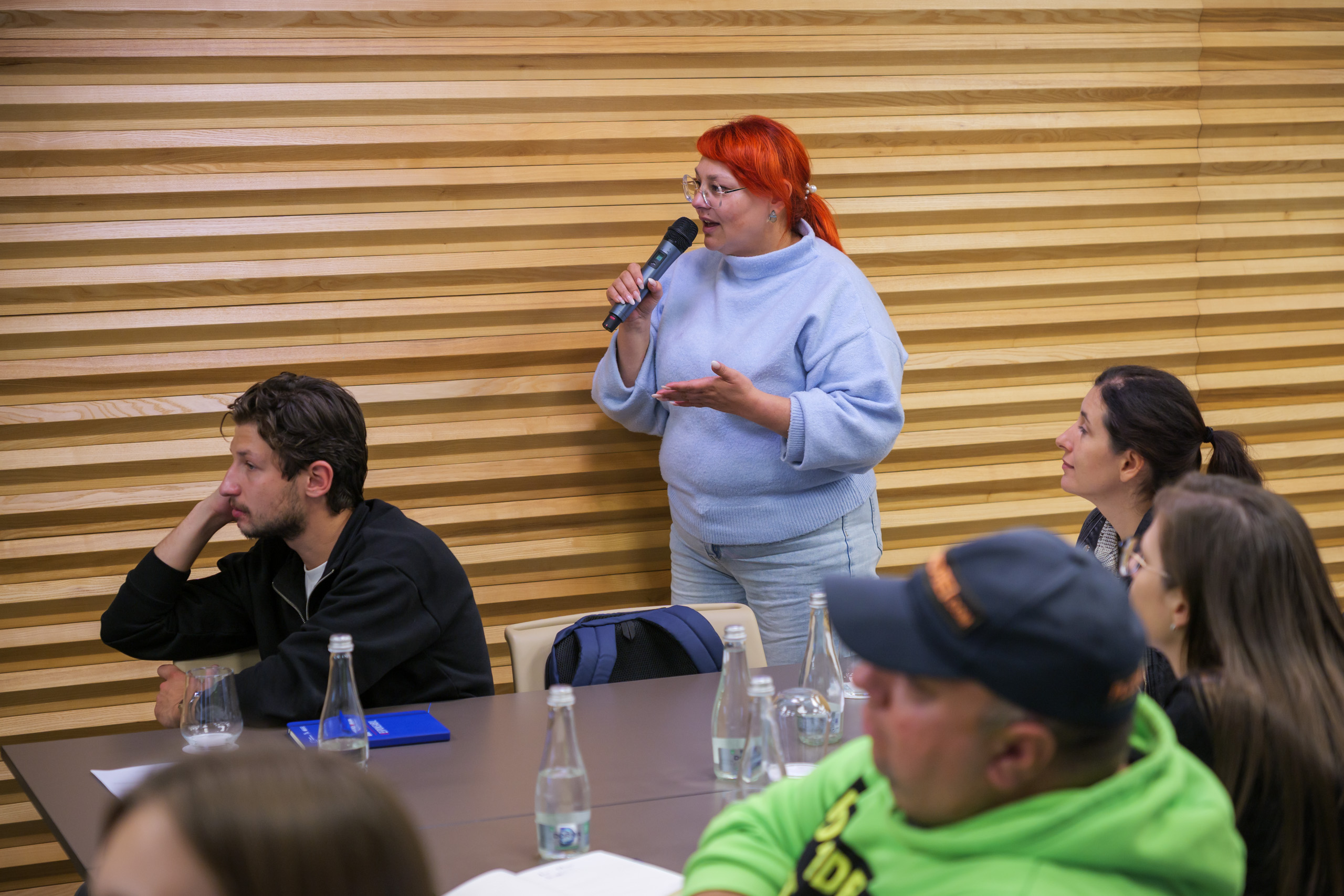
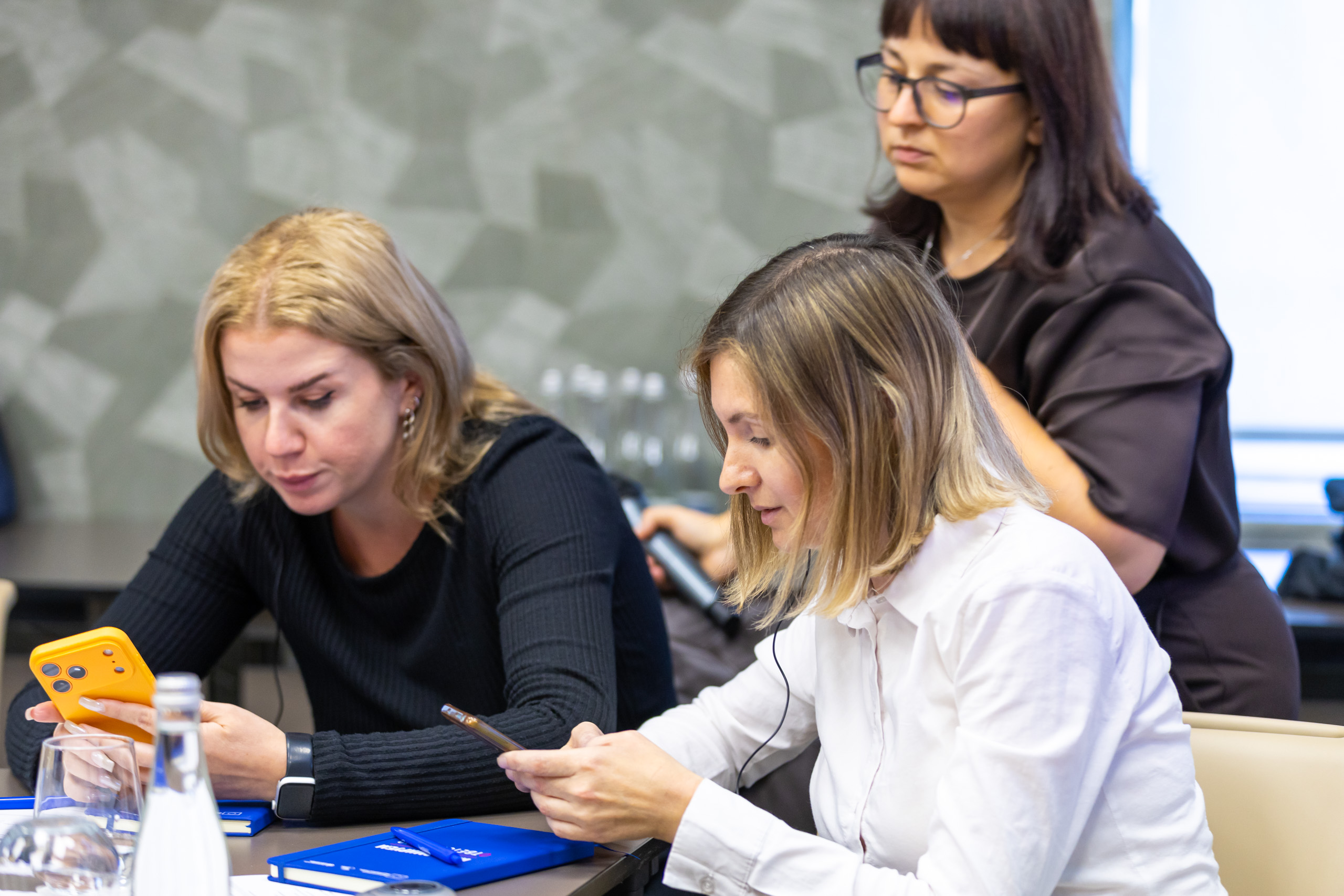
At the end of the two days, the journalists and media content creators shared their experiences and outlined plans for the journalistic pieces they intend to research and produce over the coming months.
Ecaterina Ciuru, media content creator, Bălți:
“I’m leaving this training inspired and really looking forward to applying everything I’ve learnt to my future journalistic work. It was a very useful experience, with an open atmosphere where everyone could openly express their opinions. I’d like to say that everything organised for us was excellent.”
Andrei Litvinenko, journalist, Vtranse.life portal, Bender:
“This isn’t the first time I’ve taken part in training courses, nor is the topic new to me. However, unlike other programmes of this kind, here we had more interaction: we got to know one another, discussed things and exchanged experiences. We presented the topic we’d like to cover, and it was wonderful to receive feedback from colleagues and the trainers to refine the idea for our journalistic project.”
Inna Gurgurova, journalist and editor-in-chief at BAS TV, Basarabeasca:
“Although I’ve taken part in several training sessions, including on this topic, I’ve learnt a lot of new things. I look forward to working as part of a team with colleagues from other publications, and we will strive to make our articles better and more professional.”
Gabriela Suleac, reporter, TVR Moldova:
“The experience gained during this training will be useful to me when covering topics relating to ethnic and religious minorities, amongst others. I have realised how important it is to take a balanced approach to the subject, to consider all points of view and to avoid resorting to stereotypes, so that the report is understood correctly and does not provoke reactions that could have negative consequences for vulnerable groups.”
Andrei Plop, journalist, Rubyskynews.com:
“Racism, fascism, racial discrimination, hate speech and fake news haven’t gone anywhere. These are topical issues that must be addressed constantly in the media. I am glad that the event I attended brought us together – journalists, bloggers and media content creators – in our desire to play our part in preventing such phenomena.”
Svetlana Șvedova, journalist, TUK.md:
“I liked the fact that, right from the start of the training, it was explained who is considered to belong to a minority, in accordance with international standards. People are unaware of the problems these groups face. Similarly, we journalists do not always tackle such topics for fear of being misunderstood or of failing to present the subject matter accurately. I will confidently apply the knowledge I have gained when preparing future journalistic pieces.”
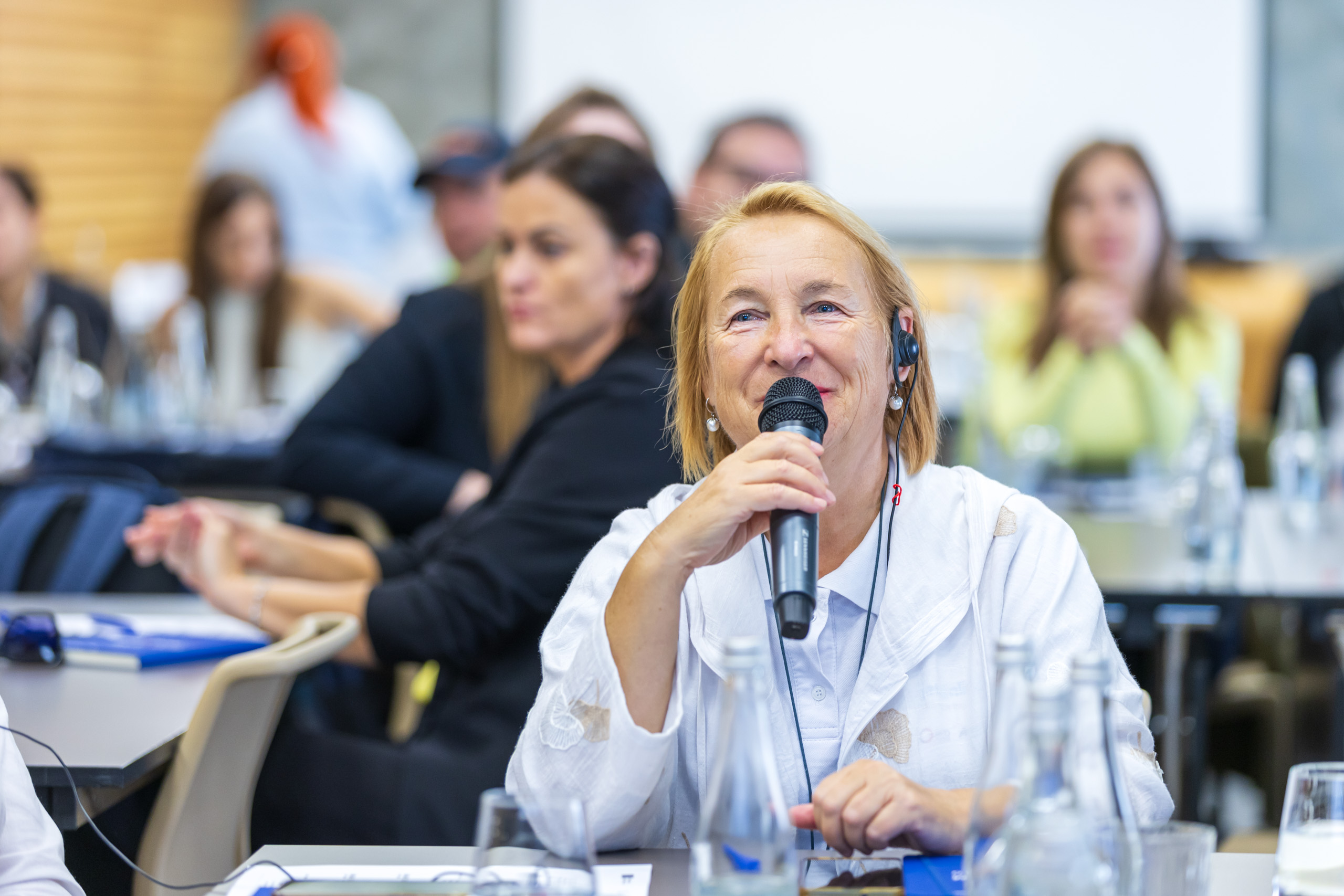
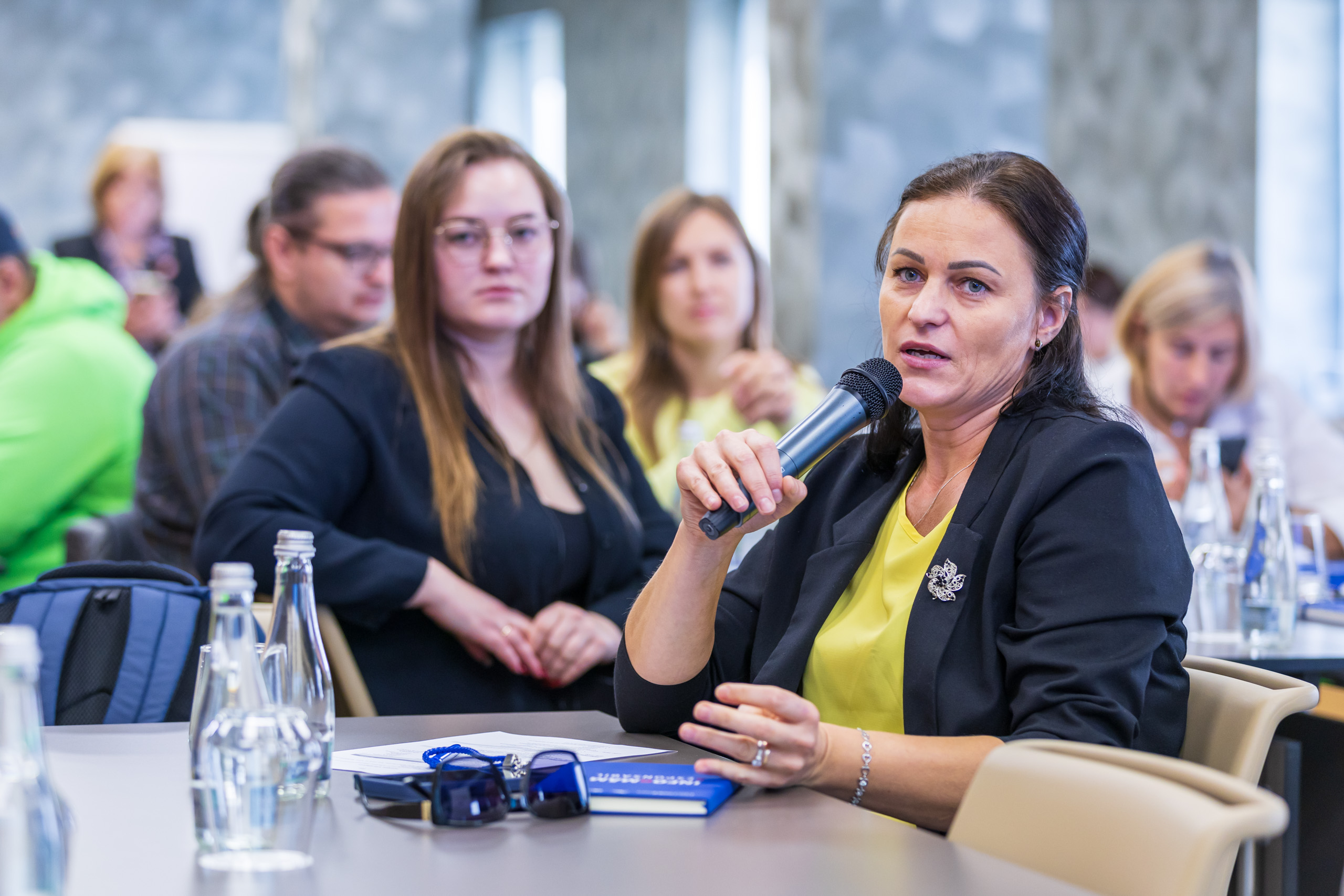
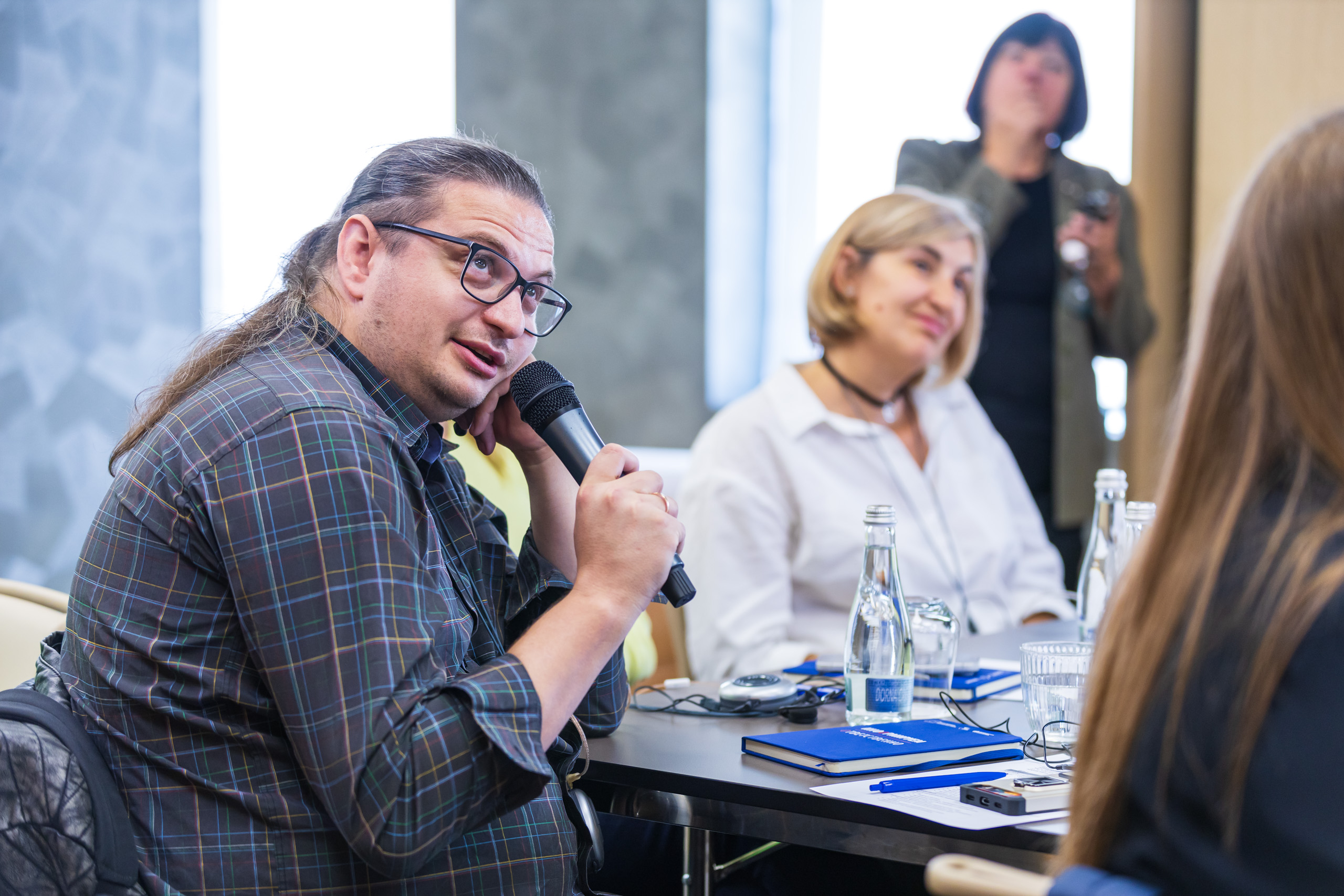
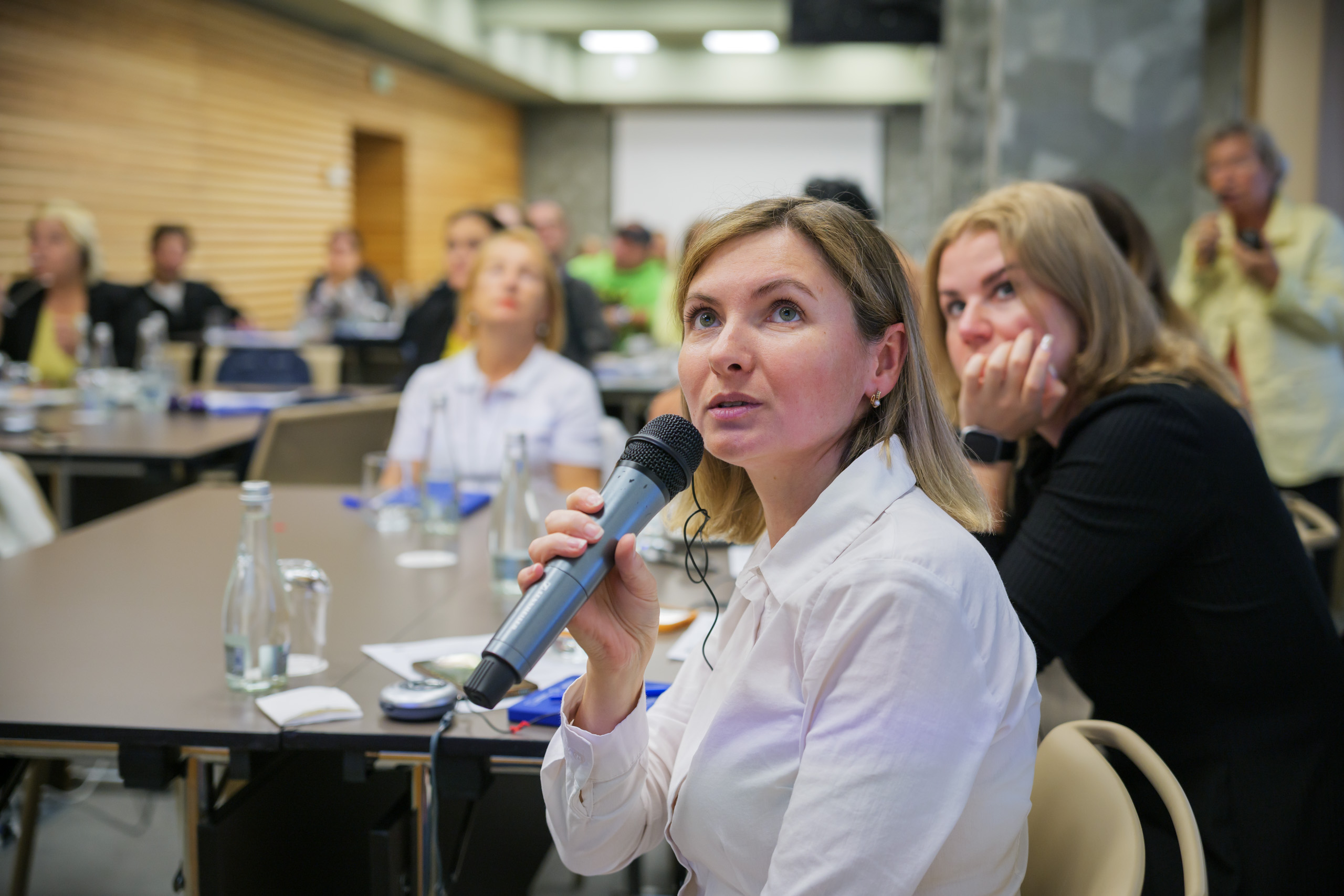
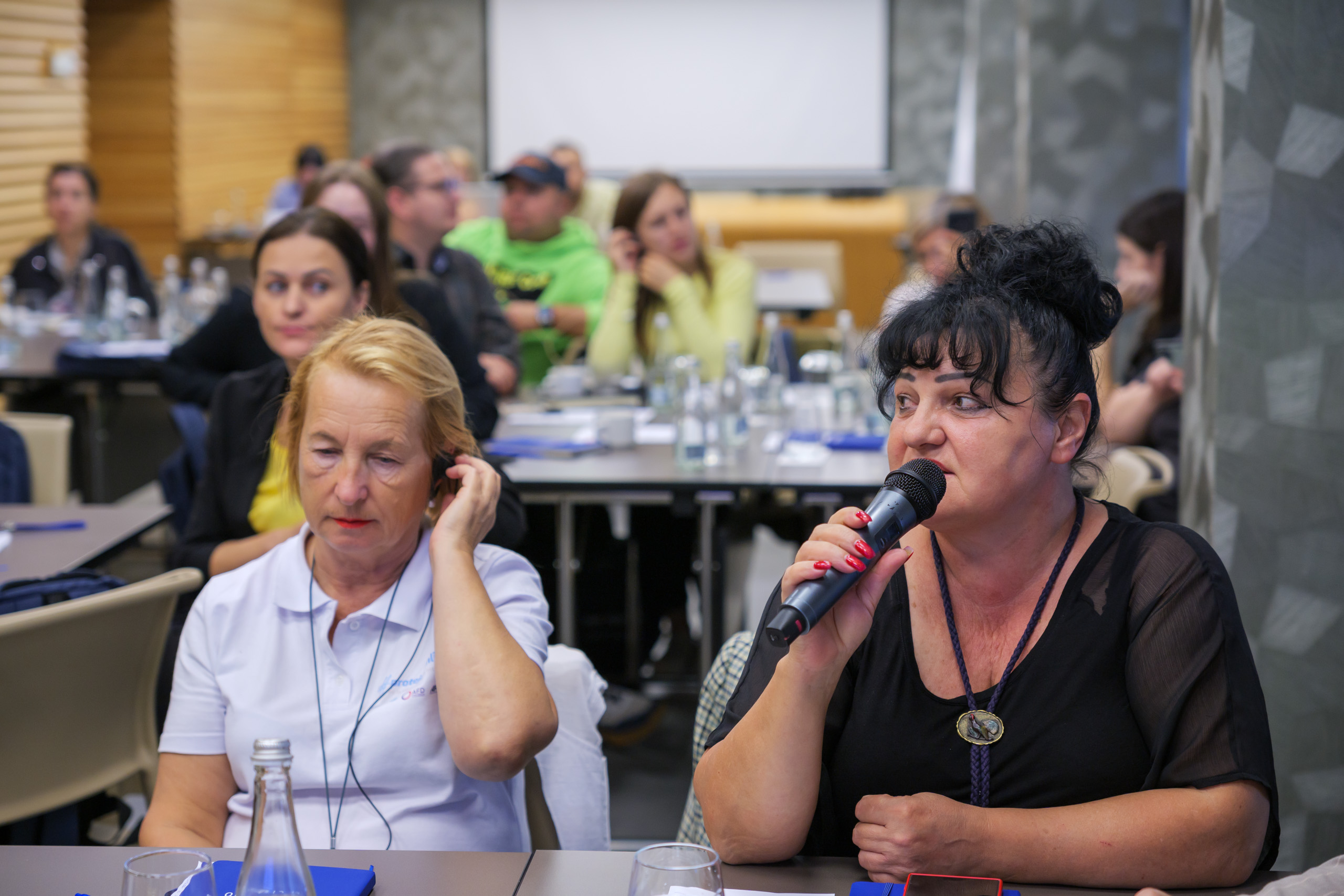
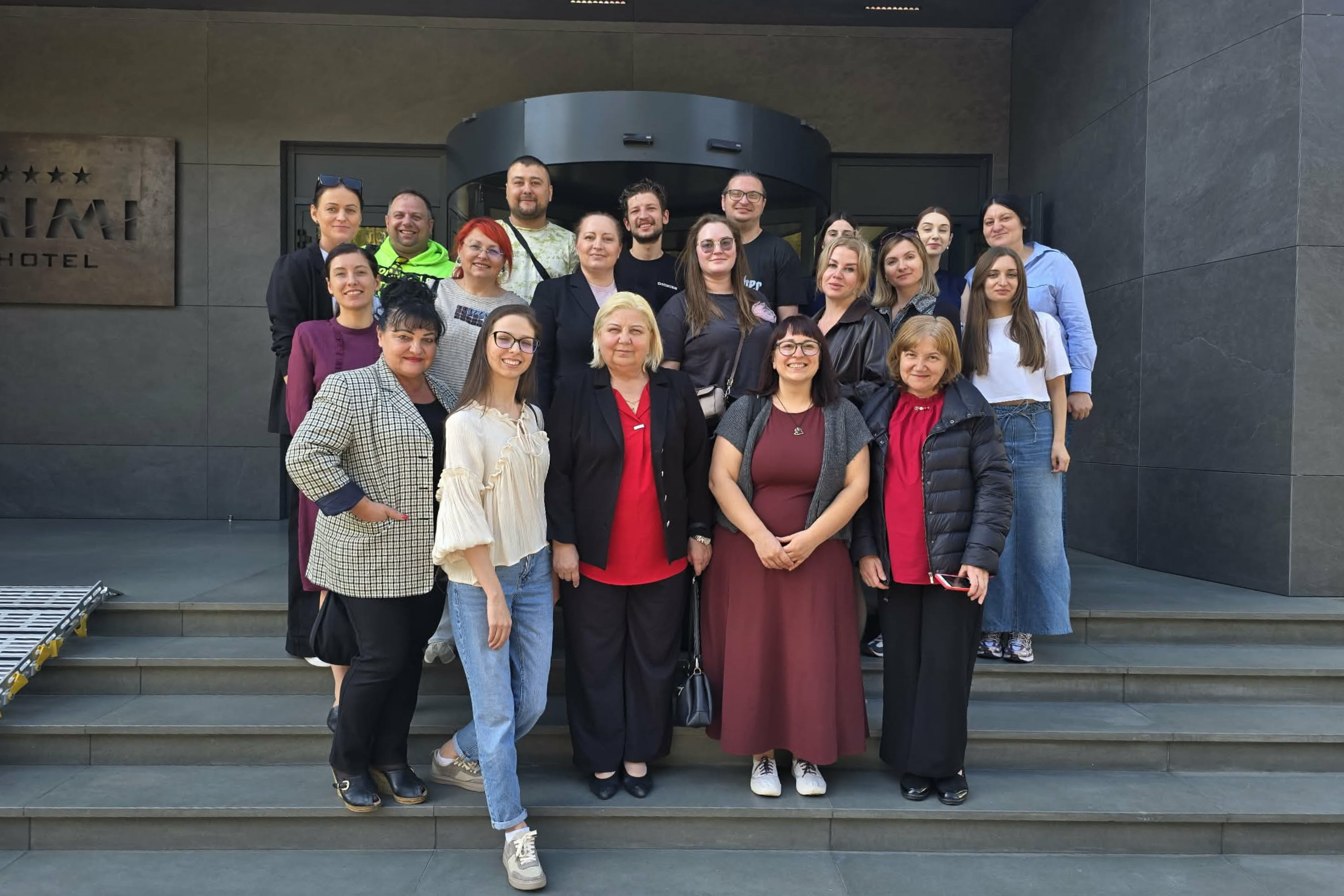
At the end of the training programme, participants will receive mentoring for three months, during which time they will produce journalistic pieces that promote respect for human rights, with a focus on minorities and other vulnerable groups, and which contribute to a fair and objective presentation of these groups in the media.
The training programme was organised as part of the project ‘Amplifying minority voices: advancing inclusive, rights-based media on both banks of the Nistru/Dniester River’, implemented by the Independent Journalism Center with the financial support of the UN Human Rights Office in Moldova (OHCHR), under the project ‘Strengthening the rights of minorities in the Republic of Moldova’ (Phase II), funded by the European Union.
