


IJC and DW Akademie have formed a new group of teachers who will integrate MIL content into Romanian and English language classes
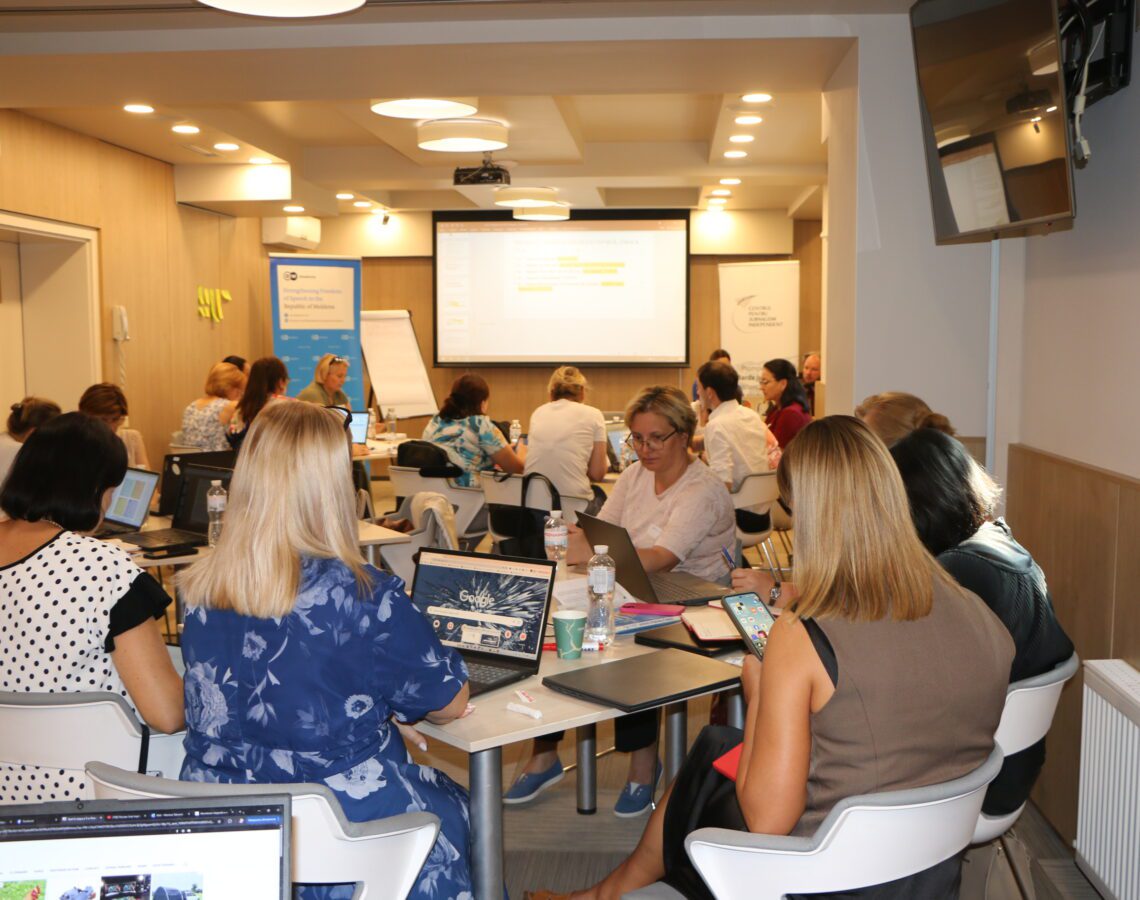
In the 2025-2026 academic year, the Program on Integrating Media Education Content into Core Subjects will be implemented in other 10 educational institutions in the Republic of Moldova. In five of these schools, the program will be implemented in Romanian lessons for 6th grade, while in the other five it will be delivered in English lessons for 10th grade. The initiative, implemented the third consecutive year, is supported by the Ministry of Education and Research of the Republic of Moldova (MER) and realized by the Independent Journalism Center (IJC) in partnership with DW Akademie.
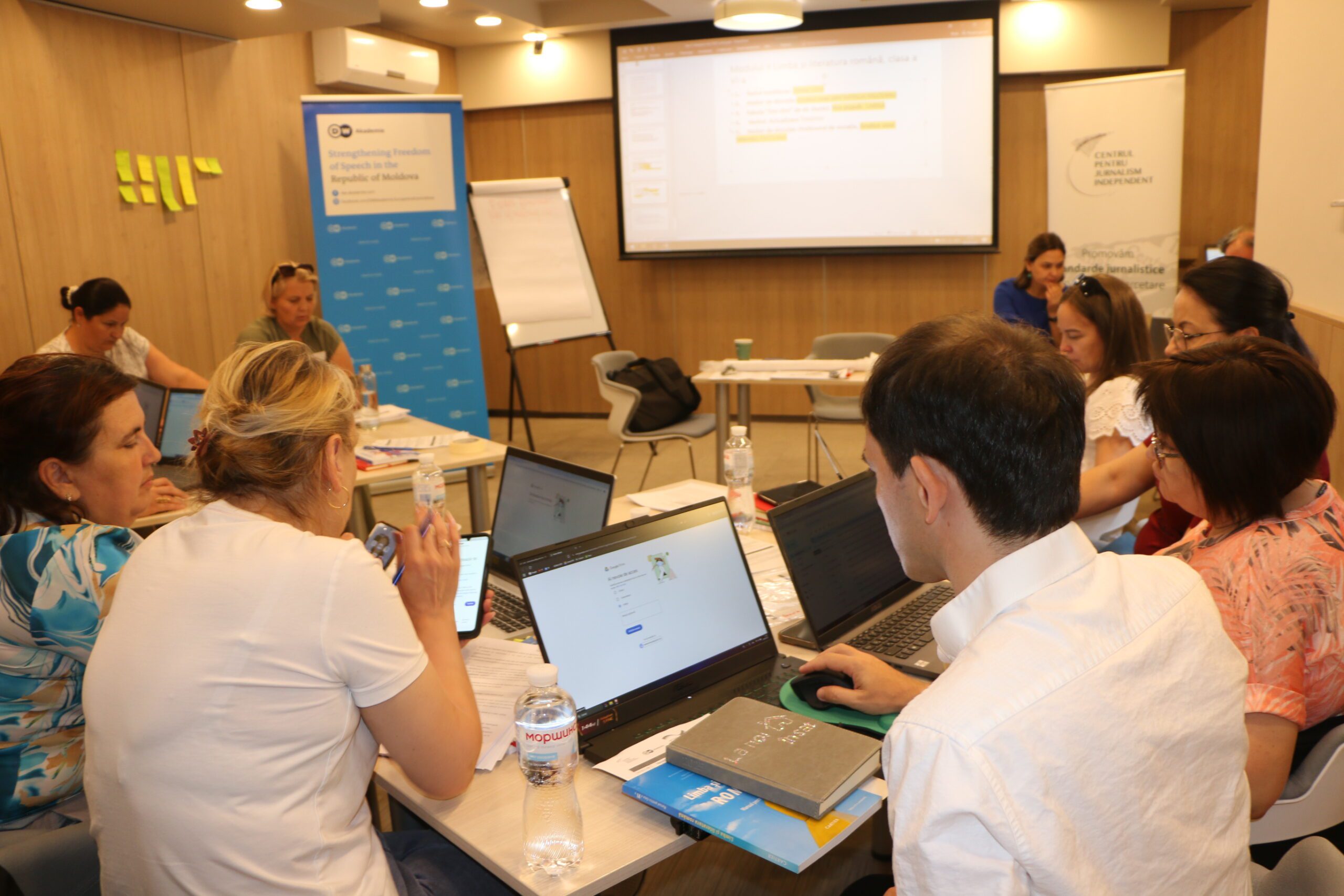
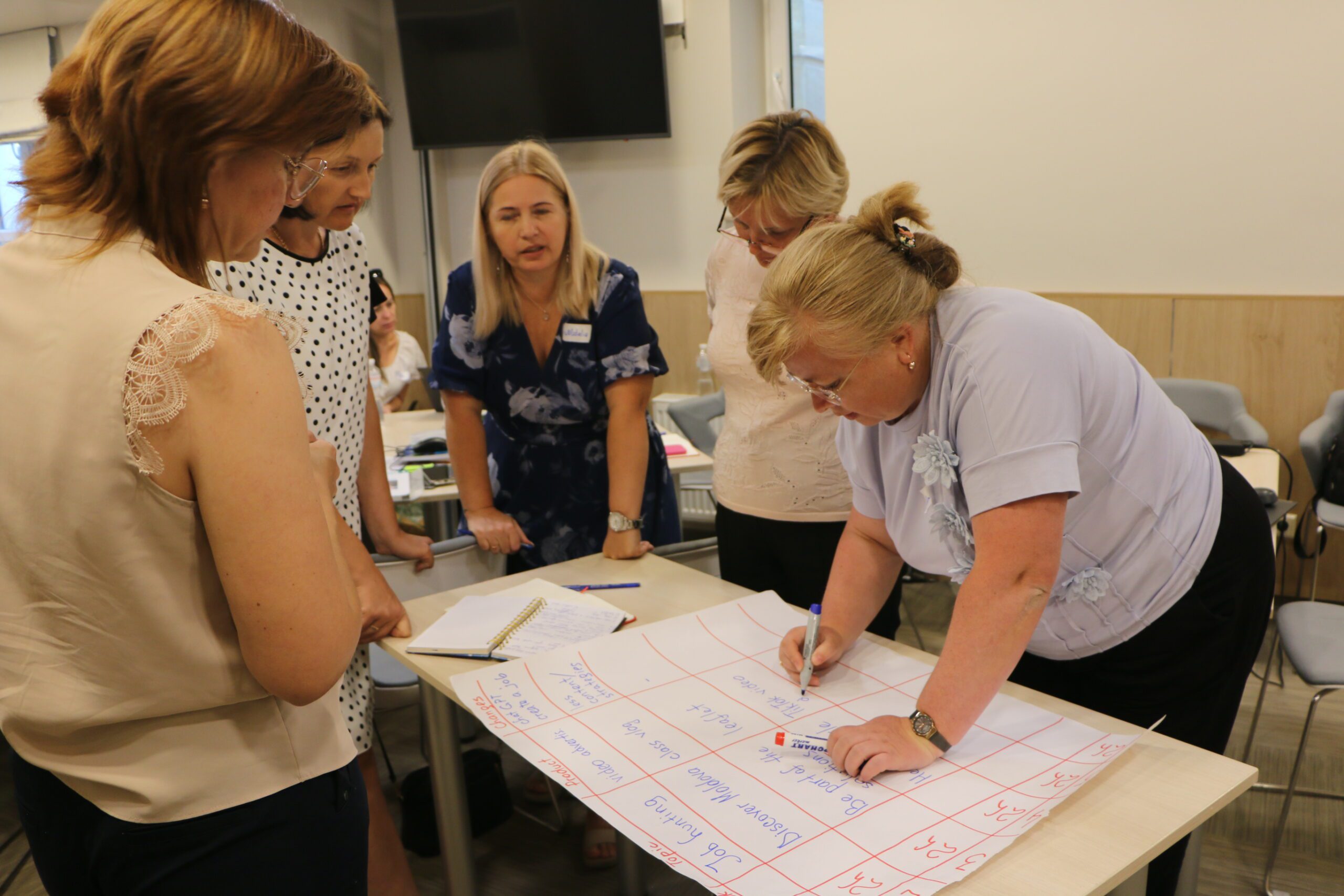
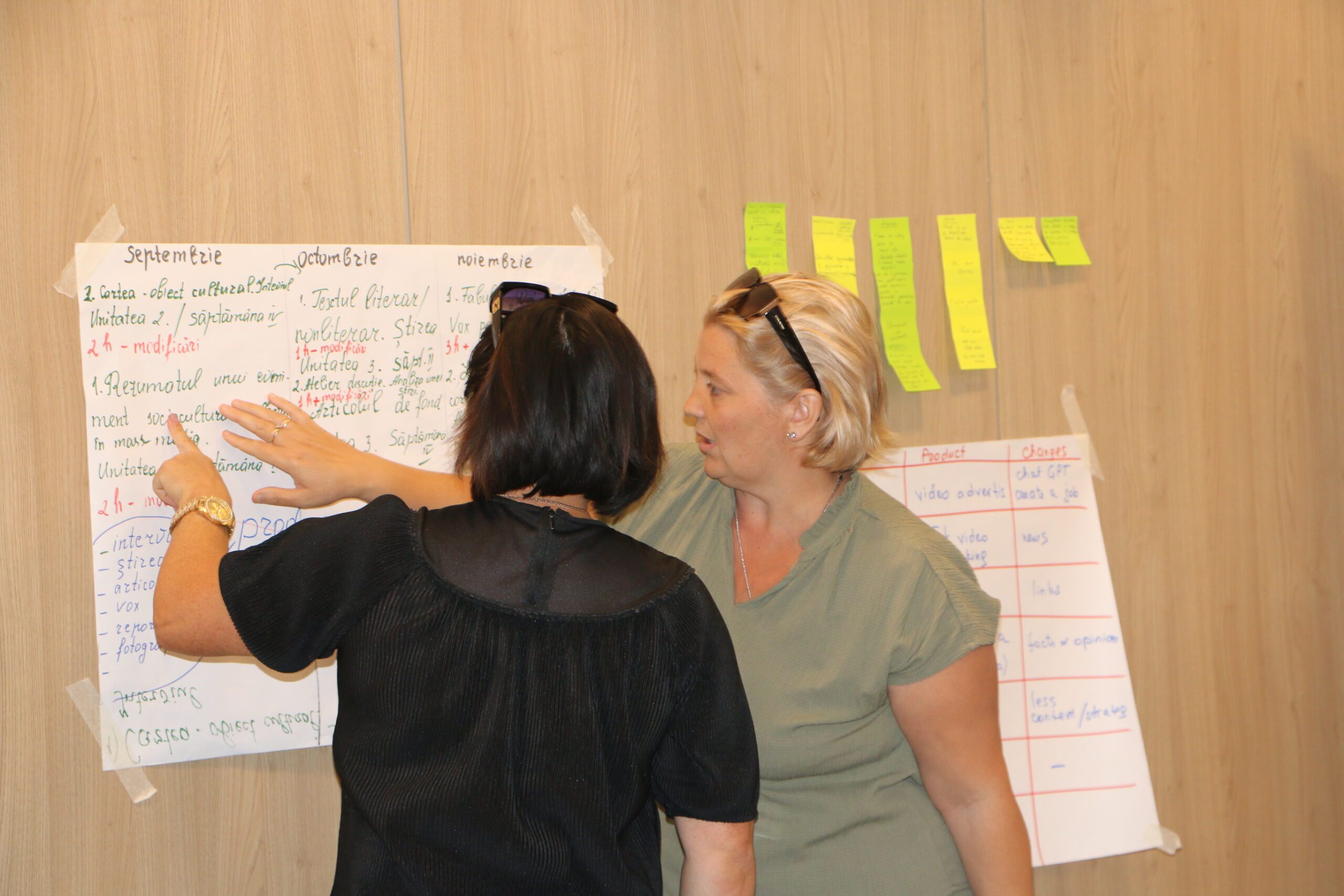
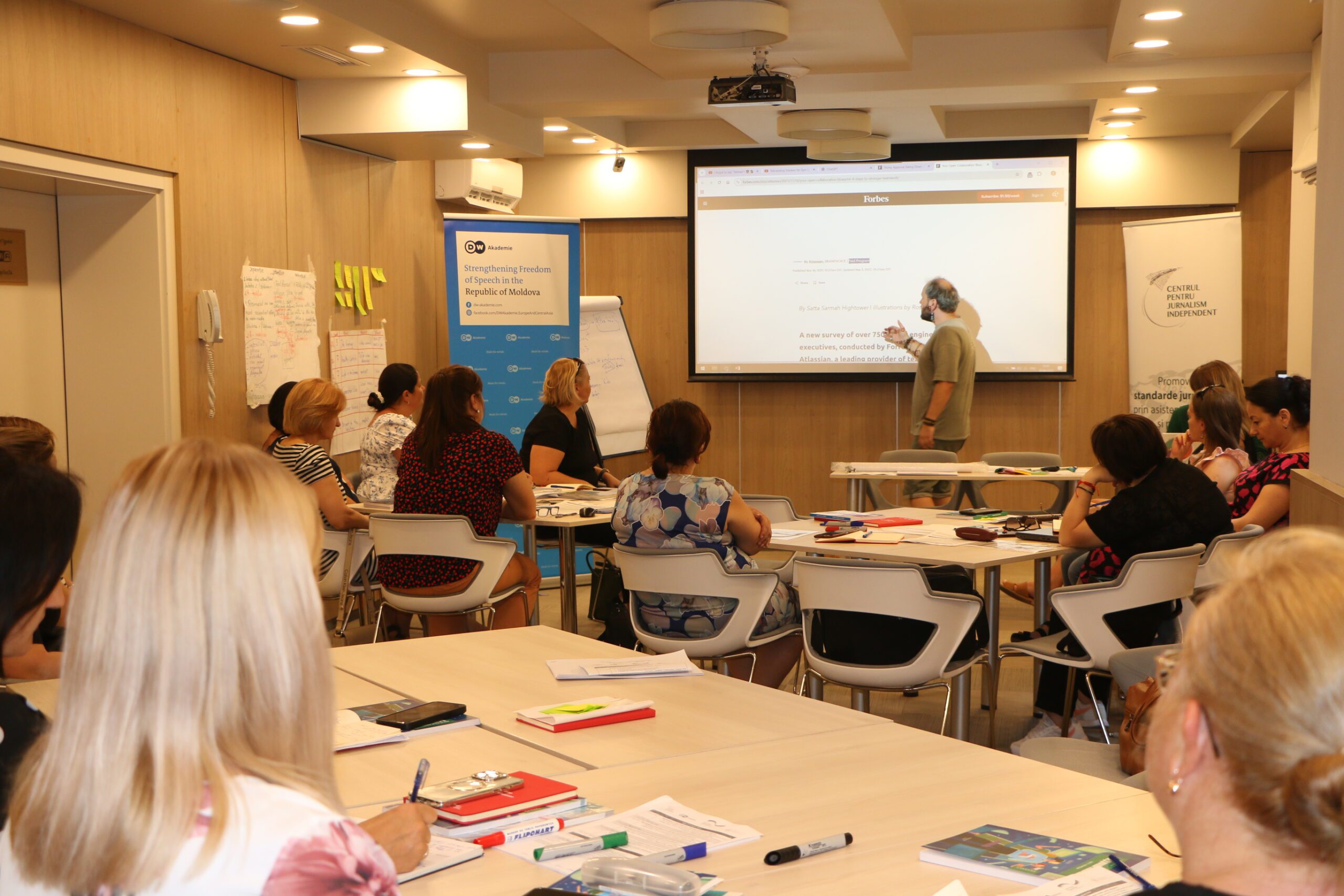
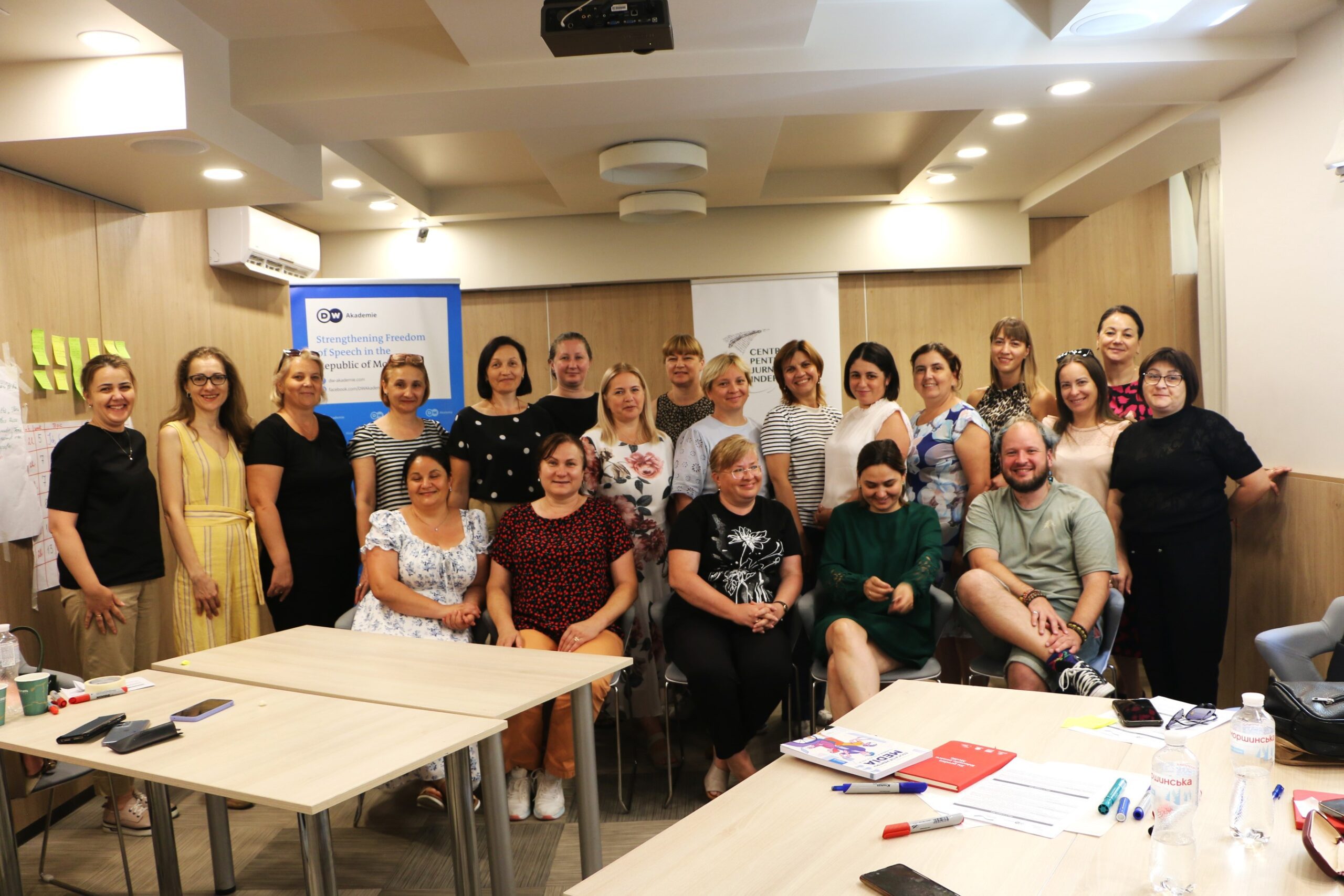
Twenty teachers from the 10 participating schools implementing the program in the 2025-2026 academic year have enhanced their media literacy skills and learned how to integrate media education concepts into Romanian language lessons for 6th grade and English language lessons for 10th grade, as part of a training held in Chisinau from August 7-9, 2025.
Mariana Tabuncic, Program Manager at IJC, provided an overview of the program, starting from the 2023-2024 school year when the initiative was first introduced in Romanian language classes, followed by its implementation in English language classes in the next academic year.
„The experience of two years of program implementation in schools has shown us that the initiative is viable and can add real value to the educational process. Romanian and English language lessons with integrated media education elements have become more interesting, interactive, and have encouraged greater student participation. We hope you will share this view by the end of the program’s implementation,” said Mariana Tabuncic.
Cristina Leva, Project Officer for DW Akademie in the Republic of Moldova, noted that this year’s training group is a mixed one, comprising 10 secondary teachers of Romanian for 6th grade and 10 high school teachers of English for 10th grade. „Experts will support you in integrating key media education concepts into your subjects so that you can equip students with the skills needed to critically analyze information, understand how the media works, and become active, responsible consumers of digital content. This is an important step to help your students face today’s informational challenges,” emphasized Cristina Leva.
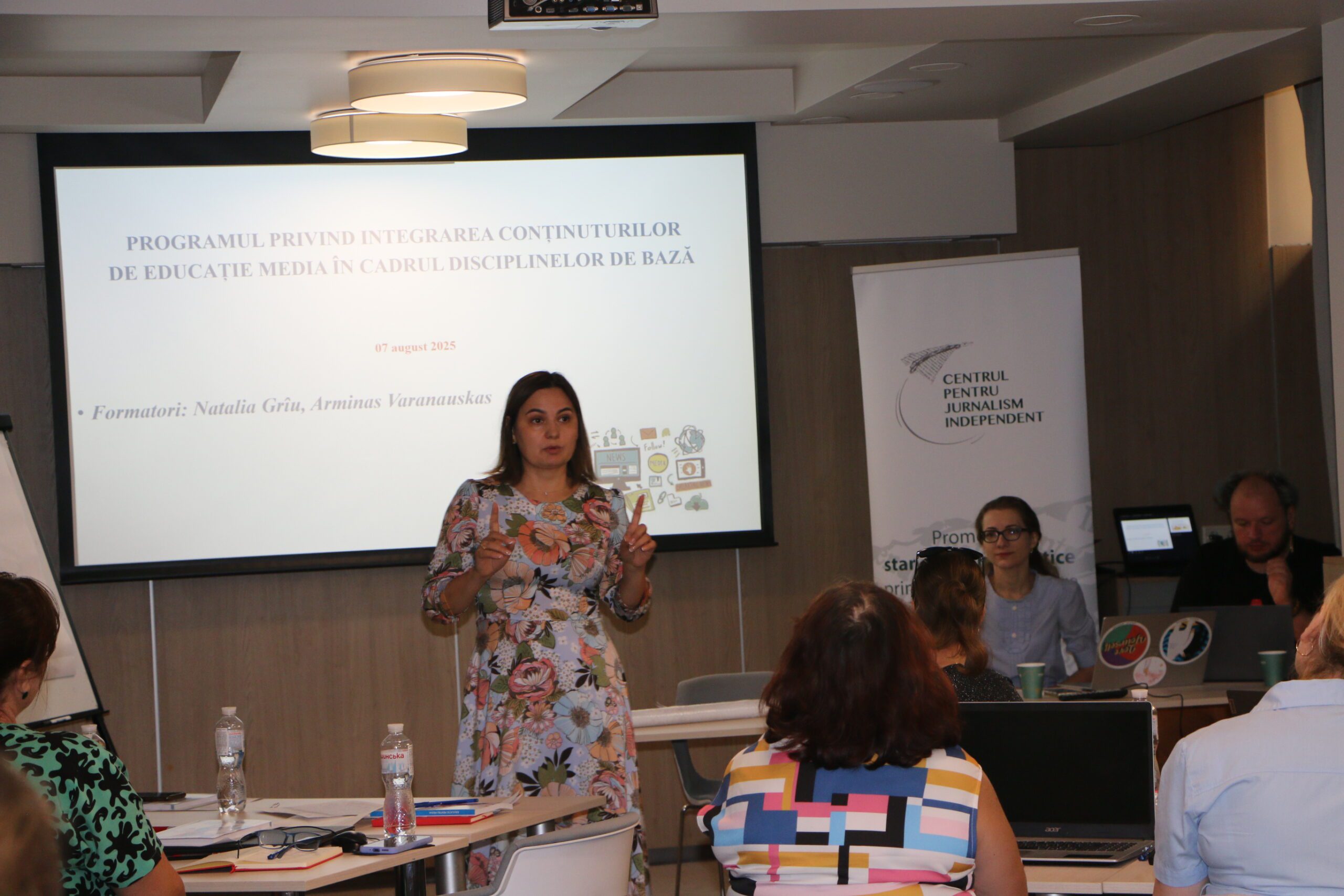
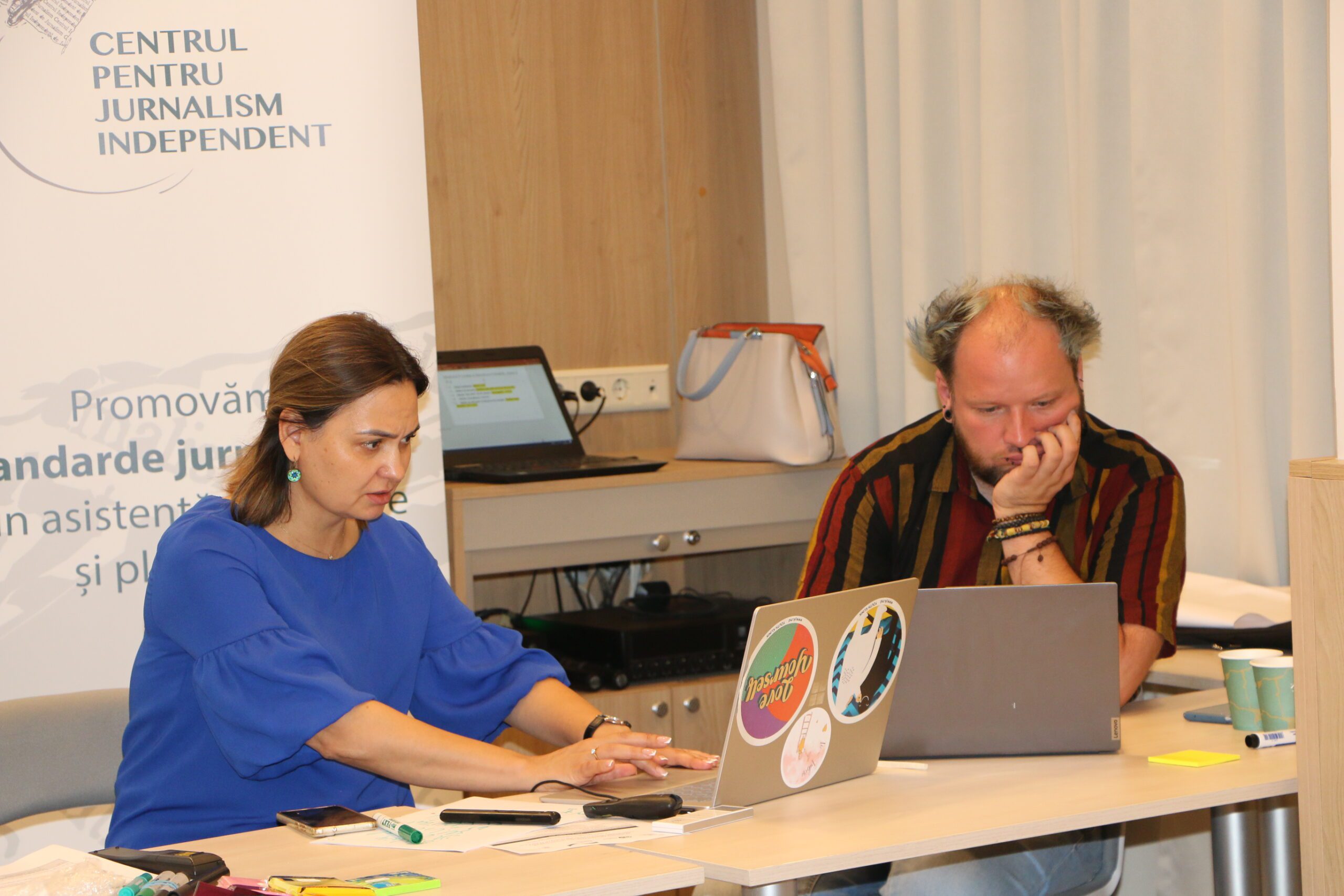
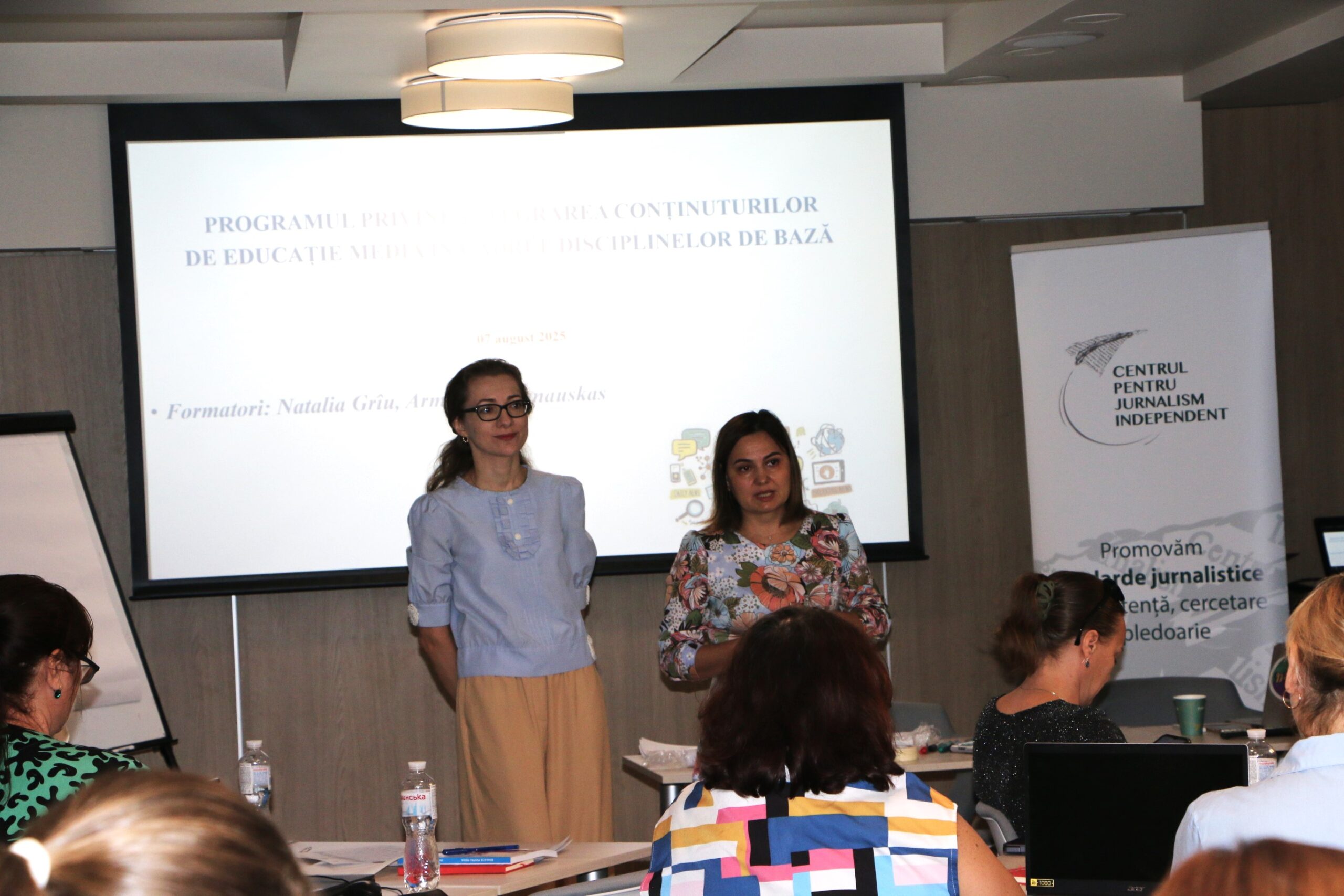
Over three days, guided by trainer Natalia Grîu and Arminas Varanauskas, project manager for Media Education in Lithuania, the teachers explored Romanian and English textbooks to identify the best opportunities and perspectives for integrating media education concepts into the two subjects. They also had access to the integration methodology and modules developed during the first two years of the pilot.
„Every school subject works with information, which means there are real opportunities to integrate media education content into any discipline. Media education requires each teacher to be empathetic, creative, and willing to adapt their approaches to the realities of each class, based on students’ needs and abilities. Romanian and English are subjects where media education can be integrated very organically,” believes Natalia Grîu.
„In the context of an already overloaded curriculum, integrating media education concepts into existing subjects is not only a viable solution, but also the only realistic option. Media education essentially means developing critical thinking and information literacy skills-competencies that are essential in any field of study,” says Arminas Varanauskas.
During the three-day training, participants explored various aspects of media education, discussed the difference between facts and opinions, and examined media topics that can be integrated into Romanian and English language lessons. They also analyzed the 2025 curriculum reform launched by the MER. Working in pairs, they studied the integration methodology and developed learning units as part of their long-term planning.
Participants appreciated the theoretical content and practical activities and believe that including media education concepts into Romanian and English language lessons will contribute to developing students’ critical thinking skills. They also noted that “the exchange of good practices during the training was clear, engaging, interactive, and innovative.”
Irina Mutruc, English teacher at „Ion Creangă” Theoretical Lyceum, Bălți:
Piloting the Program on Integrating Media Education Concepts into Core Subjects – Romanian and English – is a great opportunity to highlight the importance of media education. I was impressed by the quality of the training and the materials provided, from the methodology for integrating media education into English teaching to the well-structured lesson plans rich in interesting methods, with a focus on using and creating media products popular among students. The trainers equipped us with the knowledge and tools needed to put what we learned into practice. This is a program where everyone learns – both teachers and students – through cooperation and collaboration. The knowledge gained will help us contribute to raising young people who are better prepared and more competent in using media sources.”
Ștefan Belei, Romanian teacher at „Hyperion” Theoretical Lyceum, Durlesti:
Integrating media education into Romanian language lessons will allow students to develop critical thinking and form their own opinions about certain facts or processes. I am convinced that this new integrated approach will encourage responsibility among students, encouraging them to reflect on social values, concepts such as manipulation and propaganda, and to analyze media products and information from an ethical perspective. Moreover, students will learn how to use media creatively and constructively, especially through role play, by expressing opinions and sharing personal experiences. They will also build their media skills to navigate more safely in an increasingly complex digital world.”
Natalia Ursu, English teacher at „Vasile Alecsandri” Theoretical Lyceum, Bălți:
During this training, I discovered how important media education is and how easily its concepts can be integrated into English lessons. Together with my colleagues, I worked on teaching projects that will help my students not only improve their English skills but also develop critical thinking, attention to detail, and the ability to analyze information accurately. I plan to engage students in practical activities – analyzing news from different sources, comparing headlines and images to see how they can influence perception, creating articles and posts that follow media ethics, and working in teams to formulate well-argued conclusions. I can’t wait to bring these ideas into my English classes with lively discussions and analyses.”
Dorina Vacari, English teacher at „Bogdan Petriceicu-Hasdeu” Theoretical Lyceum, Drochia:
Over the three days of activities, we tested innovative teaching methods that integrate authentic media products – such as videos, podcasts, and articles – into English lessons. I learned how to develop students’ media skills, stimulate critical thinking, and help them distinguish between facts and opinions – essential abilities in the digital age. This experience was extremely valuable, giving us the tools to create an interactive and relevant learning environment that meets the needs of today’s students.”
In the 2023-2024 school year, the Program on Integrating Media Education Content into Core Subjects was implemented in Romanian language classes for 6th grade, and in the 2024-2025 school year it was introduced in English language classes for 10th grade. Over the two years, a total of 41 teachers from 21 educational institutions integrated media education elements into Romanian and English lessons.
The program is implemented by IJC in partnership with DW Akademie, with the support of the Ministry of Education and Research of the Republic of Moldova.
The project „Strengthening of Media and Information Literacy (MIL) in the Republic of Moldova: Piloting the integrative approach in formal education” is implemented by the IJC in partnership with Deutsche Welle Akademie and with the support of the Federal Ministry for Economic Cooperation and Development (BMZ), Germany.
